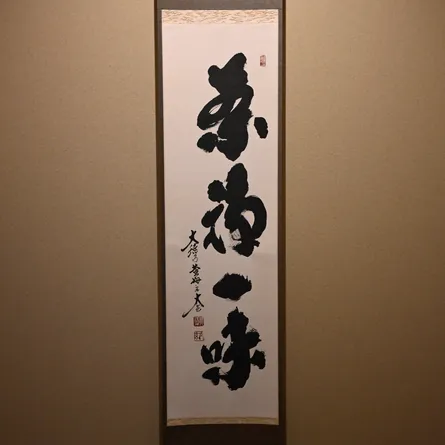
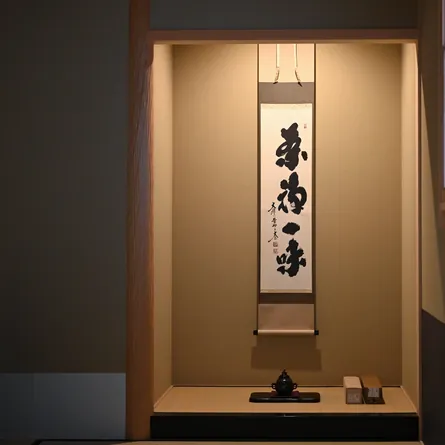
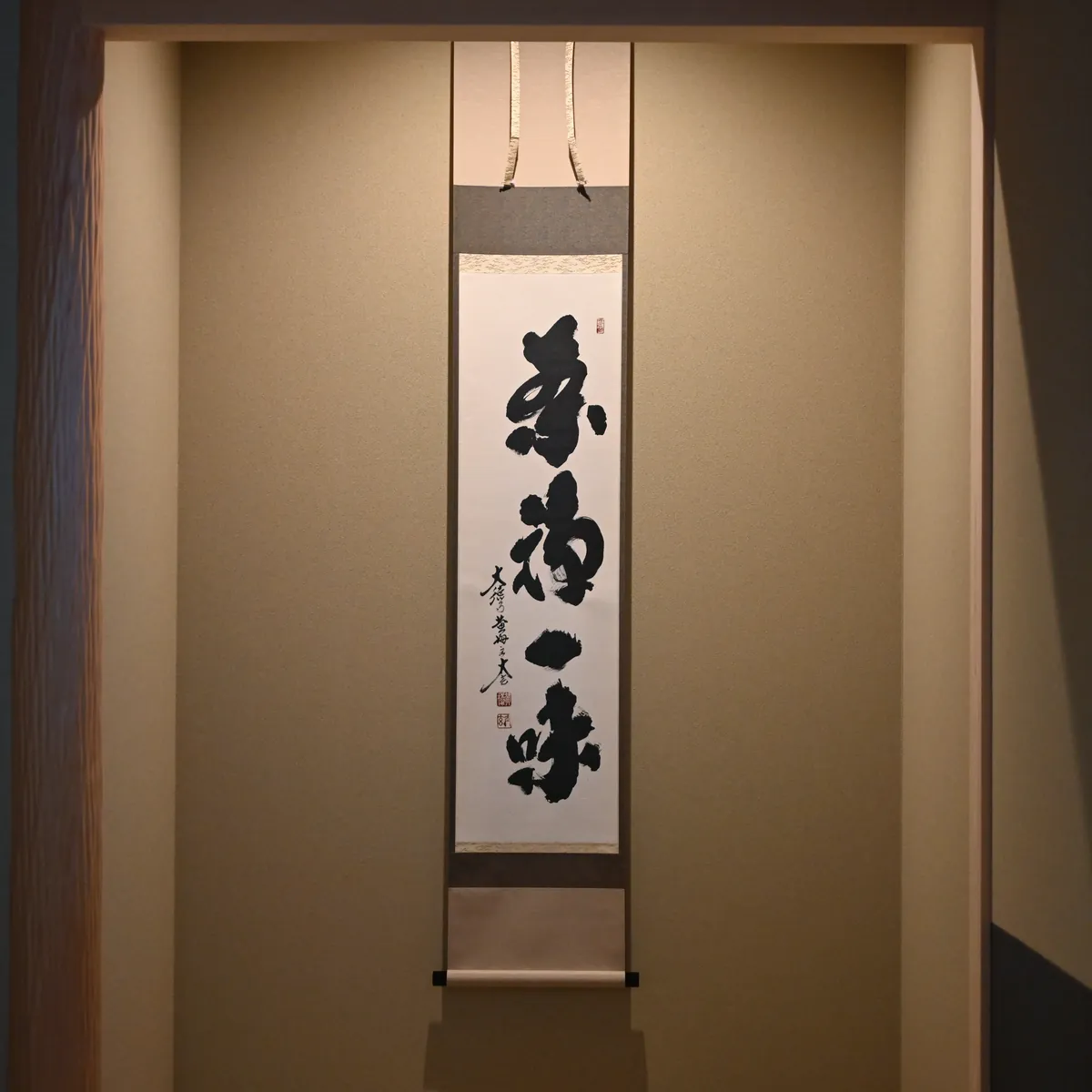
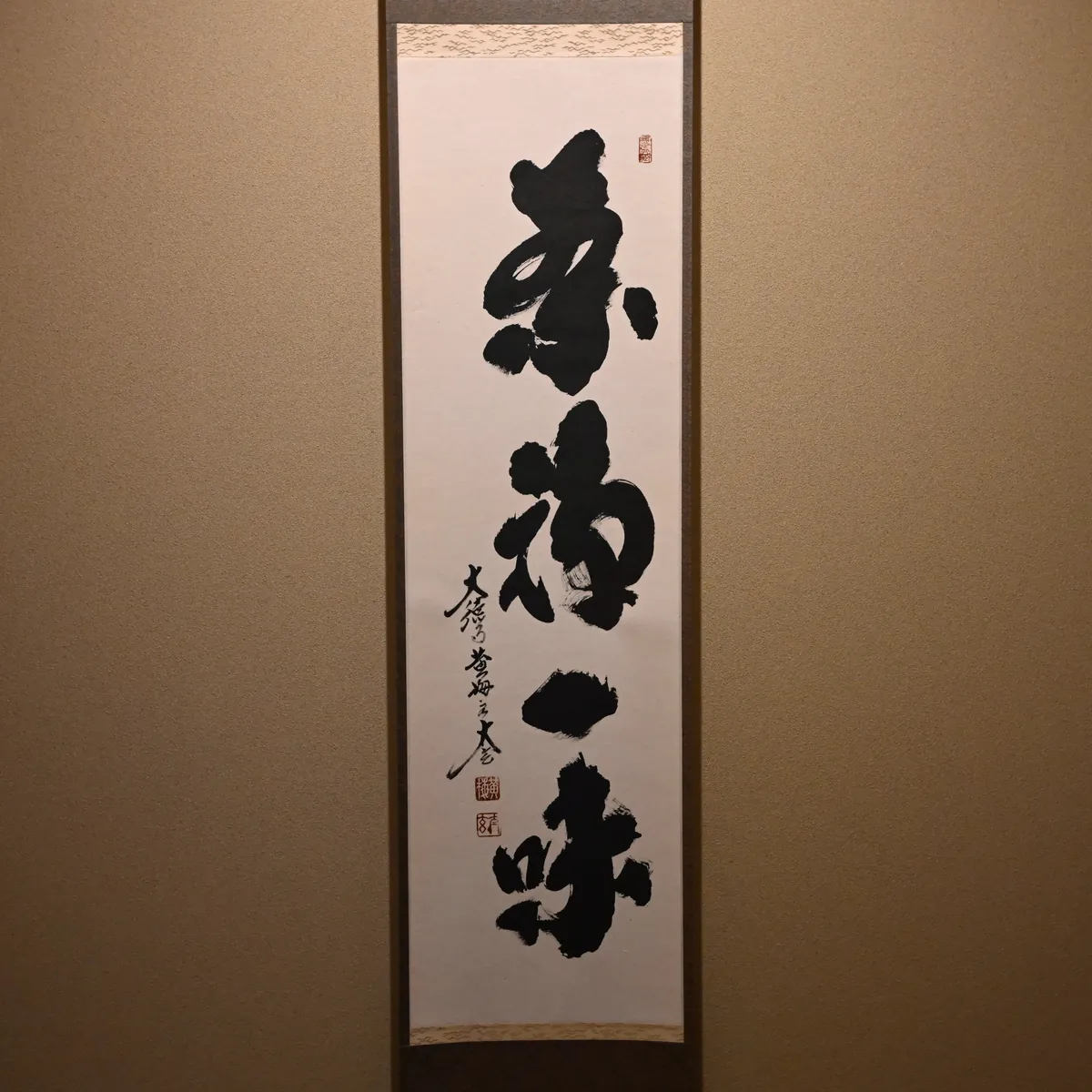
Japanese hanging scroll painted by Kobayashi Taigen
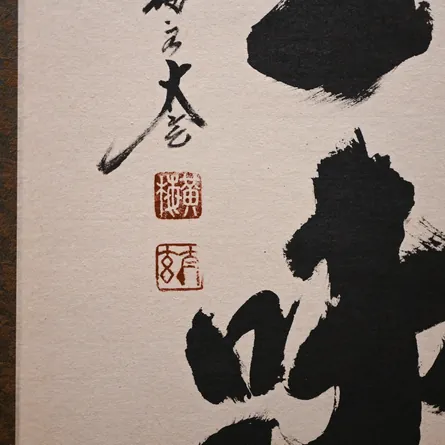
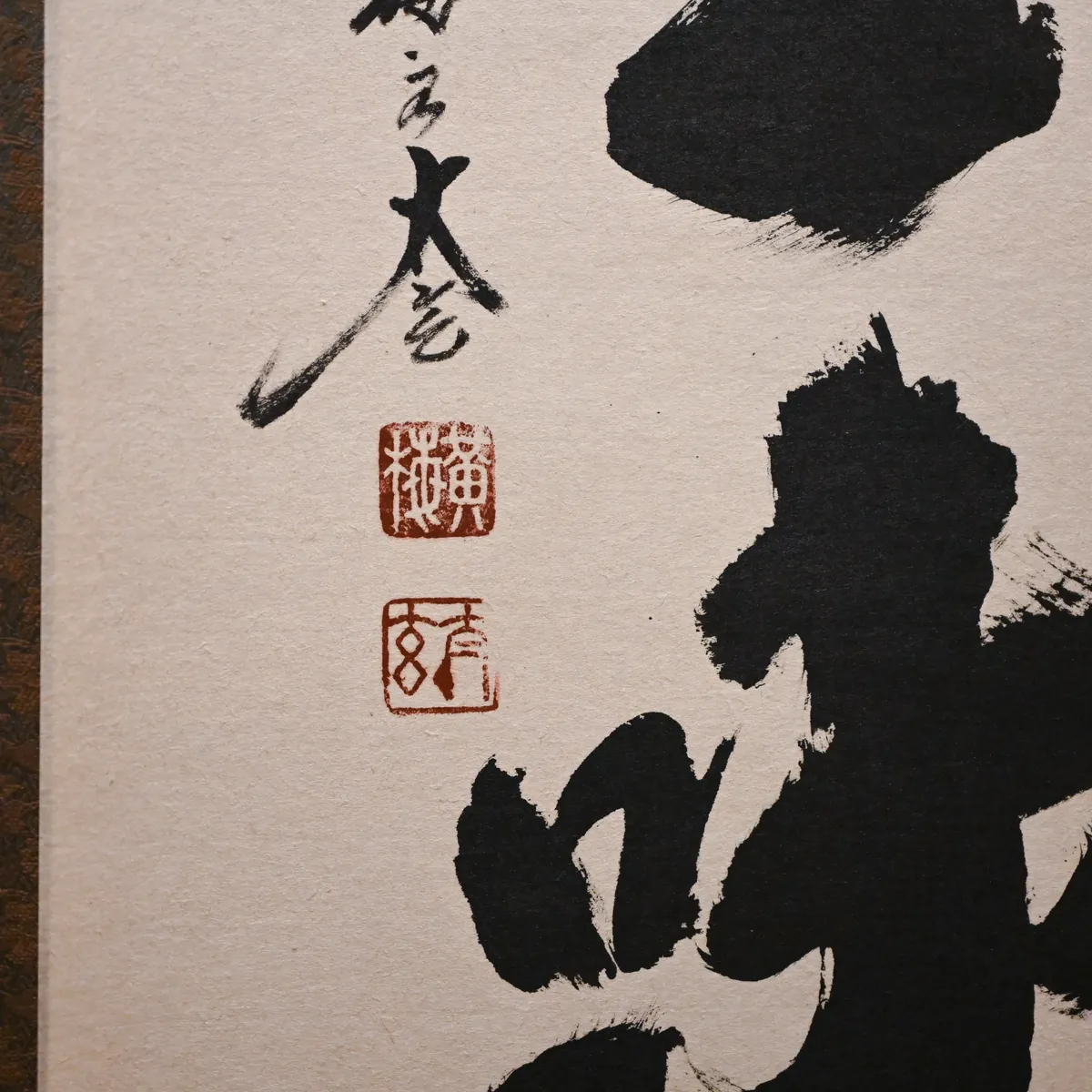
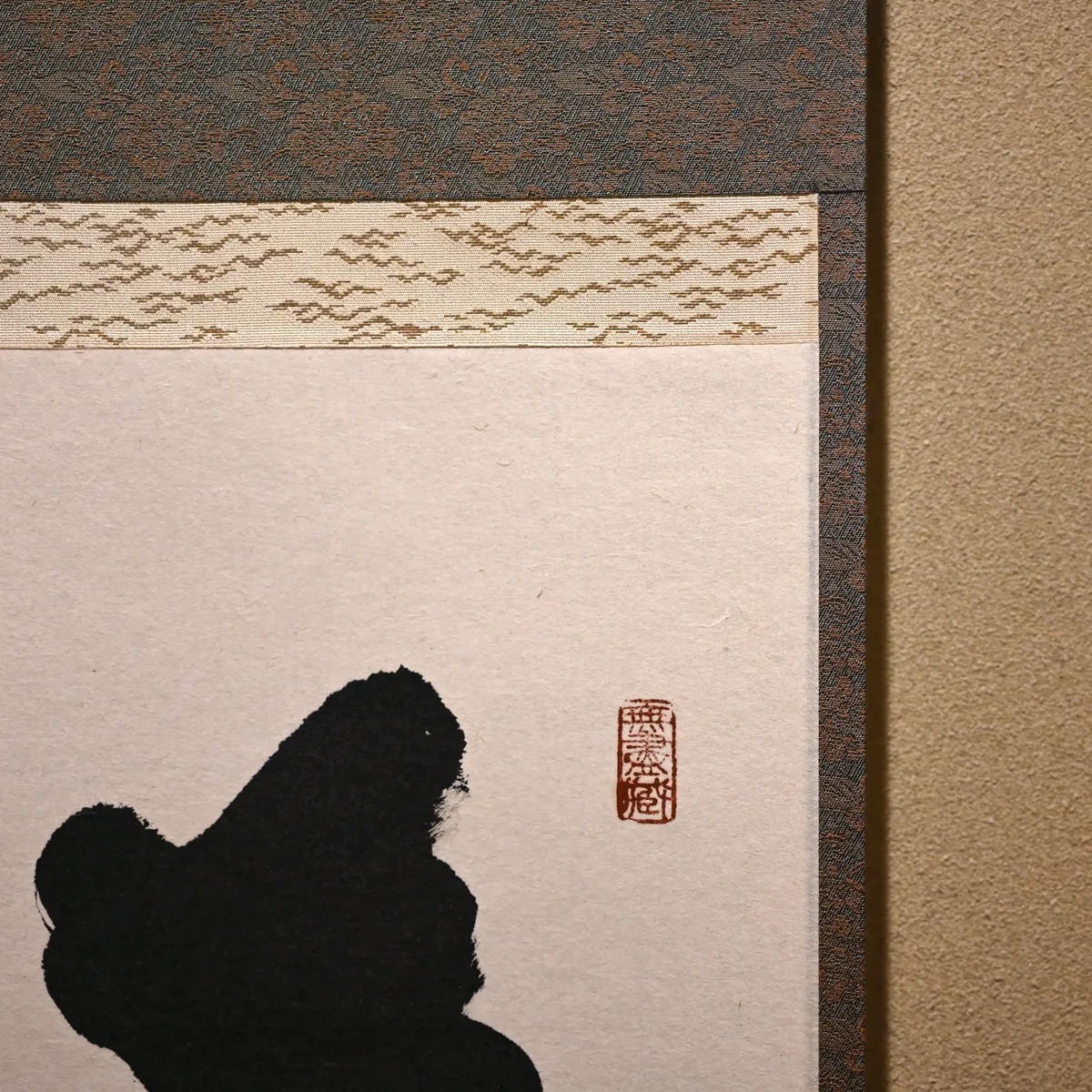
Hand-painted calligraphy by Kobayashi Taigen, who serves as a monk in Daitokuji temple.
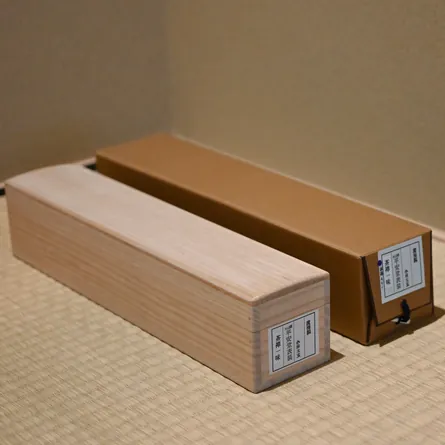
The scroll comes in a paulownia wooden box signed by the master.
The philosophy of "Cha Zen Ichi Mi"
The calligraphy on the scroll says "Cha Zen Ichi Mi". The phrase can be translated as “Tea and Zen share the same essence” or “Tea and Zen are one in spirit.” It is a Zen expression that describes the relationship between tea and Zen Buddhism.
"Cha Zen Ichi Mi" appears in a verse by the Zen master Dairin Sōtō (1480-1568), written on a portrait of the tea master Takeno Jōō (1502–1555). Dairin Sōtō was a Zen monk and poet who served first at Daitoku-ji Temple in Kyoto and later at Nanshū-ji Temple in Sakai. Takeno Jōō was his student and trained in Zen under Sōtō. Jōō was one of the great founding figures of the Japanese tea ceremony. He helped develop wabi-cha, a style of tea that emphasizes simplicity and understated beauty, and later became the teacher of Sen no Rikyū.
The era in which the tea ceremony developed was one of the most unsettled periods in Japanese history, when wars ravaged the land continuously for more than a century. Tea offered an escape from this gruelling reality. A tea room was a place where even the most powerful warlord had to enter without his sword, where the hustle and bustle of the warring world could not enter, and where people had to slow down and focus solely on the sound of the hearth and the clacking of tea tools. Tea rooms became islands of peace, and tea became a powerful symbol of peace, as well as an appreciation of human connection and the present moment.
"Cha Zen Ichi Mi" embodies that the practice of tea ceremony and the practice of Zen Buddhism share a common underlying spirit: the spirit of tea embodies the spirit of Zen.
In practice, four key ideas help explain the meaning of this phrase:
Mindfulness: Give your full attention to the tea you are preparing and drinking, rather than allowing your mind to wander.
Simplicity: Appreciate what is essential, without being distracted by excess or unnecessary decoration.
Sincerity and respect: Treat the tea, the utensils, the host, and the guests with genuine care.
Being present: Recognize that each gathering is a unique moment that cannot be repeated in exactly the same way.
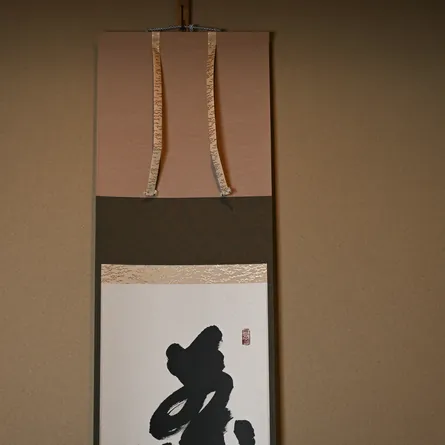
Hanging scrolls were originally hung in temples, and then in the "tokonoma" - alcove displaying ornaments - of the Japanese tea room. They used to be changed often, depending on the season. Lotus however due to its complex symbolism, can be a beautiful and meaningful decoration throughout the whole year.
About Kobayashi Taigen
Kobayashi Taigen, also known as Taigen Gitō, was born in 1938 in Fengtian, present-day Shenyang, China. After losing both parents at the age of six, he entered the Buddhist priesthood. He graduated from Hanazono University in 1961 and pursued Zen training at Sōkoku-ji, studying under Ōtsu Rekidō. In 1975, he became the head priest of Ōbai-in, a subtemple of Daitoku-ji in Kyoto. He later returned to Hanazono University to study social welfare, graduating in 1991. Ōbai-in is home to Sakumuken, a tea room associated with Takeno Jōō, and a front garden associated with Sen no Rikyū, reflecting the temple’s strong connections to the Japanese tea ceremony and Zen Buddhist tradition.
Reviews:
To write a review, please log in. (Only purchasers can write a review.)
Share this page with your friends:
Item code: TIO100
Artisan: Kobayashi Taigen
Origin: Kameoka City, Kyoto Prf., Japan
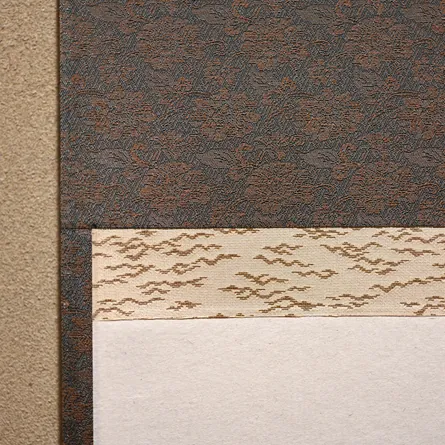
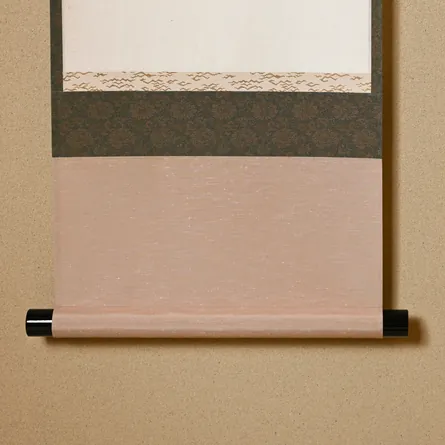
Material: paper, silk, cotton, wood
Dimensions: 173 x 36 cm
This product is unavailable at the moment. Please visit this page again in a few weeks.
SHIPPING DETAILS
Ship to:
Worldwide (List of Countries)
Delivery service:
DHL, FedEx, Yamato Transport, Yu-Pack, S.F. Express, Pick-Up (See conditions)
Estimated posting:
within 3 business days
Payments:
• PayPal • Bank card payment • Bank transfer • Cash on delivery (Learn more here)
The customs duties do not belong to our competence. It may occur that duties have to be paid on receipt of the parcel. About the current rates of customs duties in your country please contact local authority. To learn about international shipping, read more here.
Posting time can vary due to the manufacturers capacity, Japanese national holidays, as well as natural disasters or accidents, etc., and we can not guarantee posting dates.
List of Countries
Albania Algeria Argentina Armenia Australia Austria Azerbaidjan Bahrain Bangladesh Barbados Belgium Bhutan Bosnia and Herzegovina Botswana Brunei Darussalam Bulgaria Cambodia Canada Chile Croatia Cyprus Czech Republic Denmark Djibouti Ecuador Egypt El Salvador Estonia Ethiopia Faroe Islands Fiji Finland France Gabon Georgia Germany Germany Ghana Gibraltar Guam (USA) Honduras Hong Kong Hungary Hungary Iceland India Indonesia Ireland Israel Italy Ivory Coast (Cote D'Ivoire) Jamaica Japan Japan Jordan Kenya Kuwait Kyrgyzstan Laos Latvia Liechtenstein Lithuania Luxembourg Macau Macedonia Madagascar Malaysia Maldives Malta Mauritius Mexico Moldova Monaco Mongolia Montenegro Morocco Myanmar Nepal Netherlands New Caledonia (French) New Zealand Nigeria Norway Pakistan Panama Papua New Guinea Paraguay Peru Philippines Poland Portugal Puerto Rico Qatar Reunion Island Romania Rwanda San Marino Saudi Arabia Senegal Serbia Sierra Leone Singapore Sint Maarten Slovak Republic Slovenia South Africa South Korea Sri Lanka Sudan Sweden Switzerland Tahiti (French Polynesia) Taiwan Tanzania Thailand Togo Tonga Trinidad and Tobago Tunisia Uganda Ukraine United Arab Emirates United Kingdom United Kingdom United States of America United States of America Uruguay Uzbekistan Venezuela Vietnam Zimbabwe
Should you have any questions, please do not hesitate to contact us
Handling precautions
The hanging scroll is made of fine fabrics and paper. Always handle it carefully with clean hands.
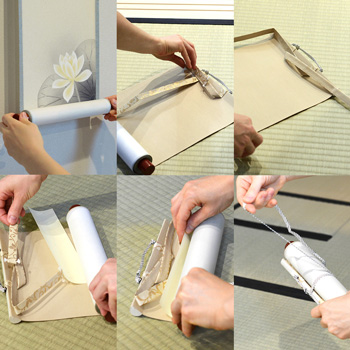
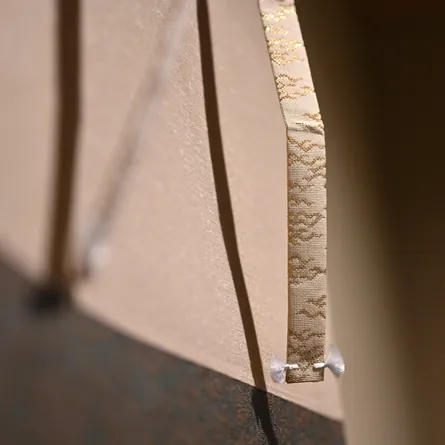
If you would like to store it away, roll it up slowly and carefully either still hanging on the wall or laid out on the floor. Try to touch only the wooden handles. Fold the two hanging silk stripes under the rolled-up scroll, and protect them with the yellow sheet included in the box. Finally to secure it, wrap the scroll with the string. (See the picture above.)
Avoid placing it in areas exposed to direct sunlight, high humidity, or strong drafts. If it is not displayed regularly, air it out twice a year during mild weather.
Follow Us on Instagram
Add comment
X
We use cookies on this site for the purpose of personalising your SAZEN experience. Find out more
By clicking or navigating the site, you agree to allow our collection of information for the purpose of personalising your Sazen experience. The information is stored on your computer in so called Cookies, that you can manage or delete any time. Your trust matters to us, that's why we protect your information and use it responsibly. We are committed to the protection of your privacy and the security of your personal data. Check our Privacy Policy for detailed information on how we do that.
 BREAKING NEWS:
Oct 22, 2026







 The customs duties do not belong to our competence. It may occur that duties have to be paid on receipt of the parcel. About the current rates of customs duties in your country please contact local authority. To learn about international shipping,