




Karado Kimen Buro Kama
Wind hearth and kettle for Japanese tea ceremony
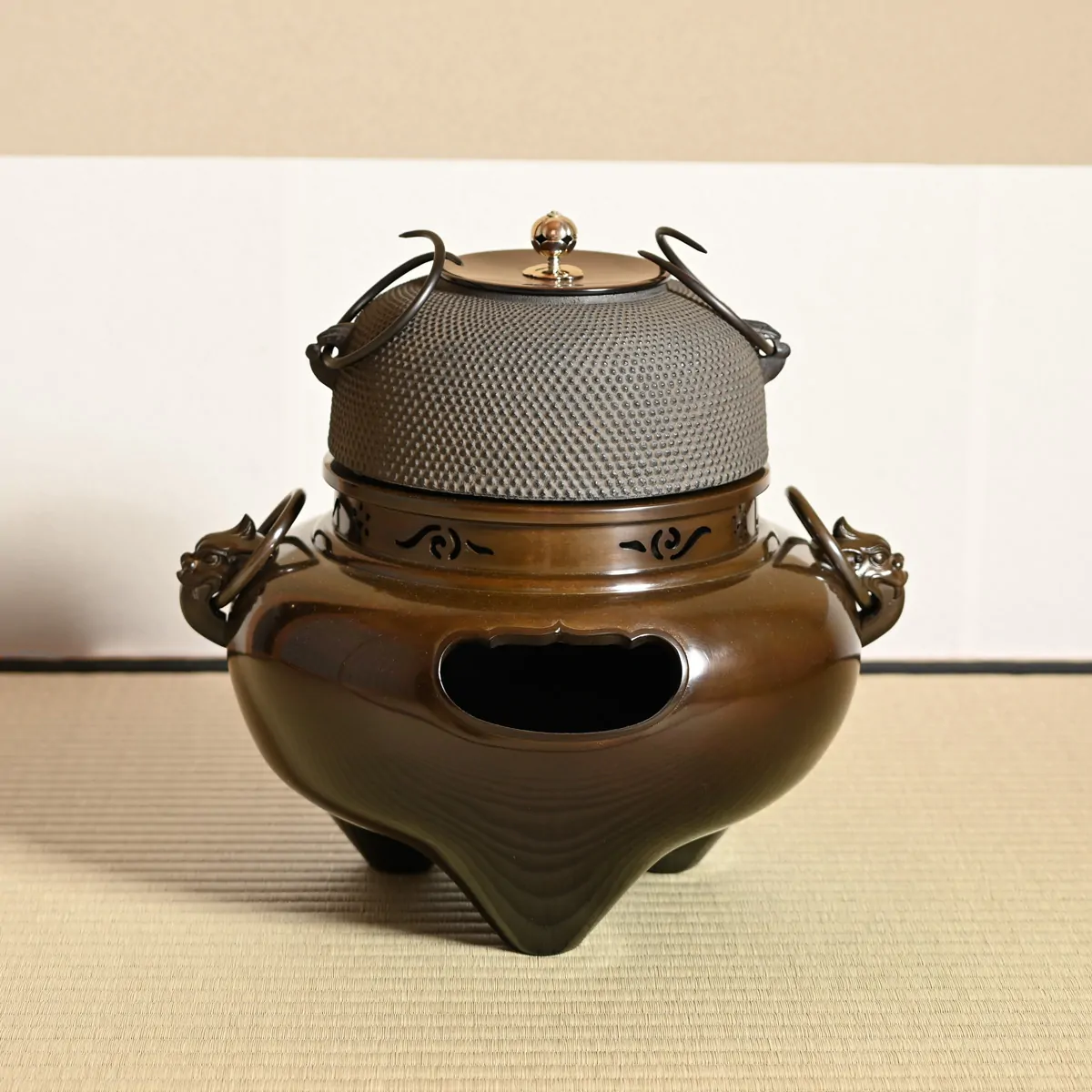
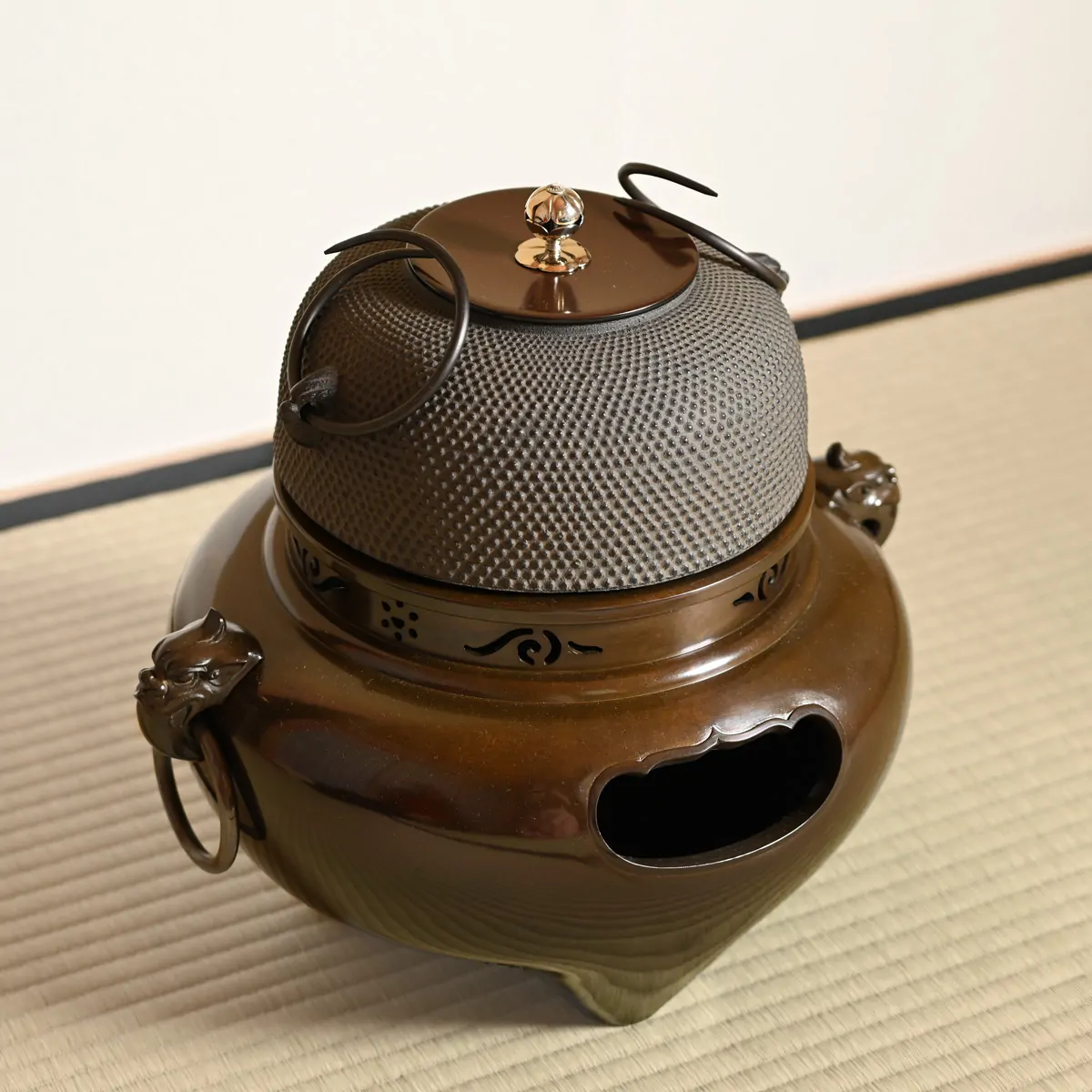


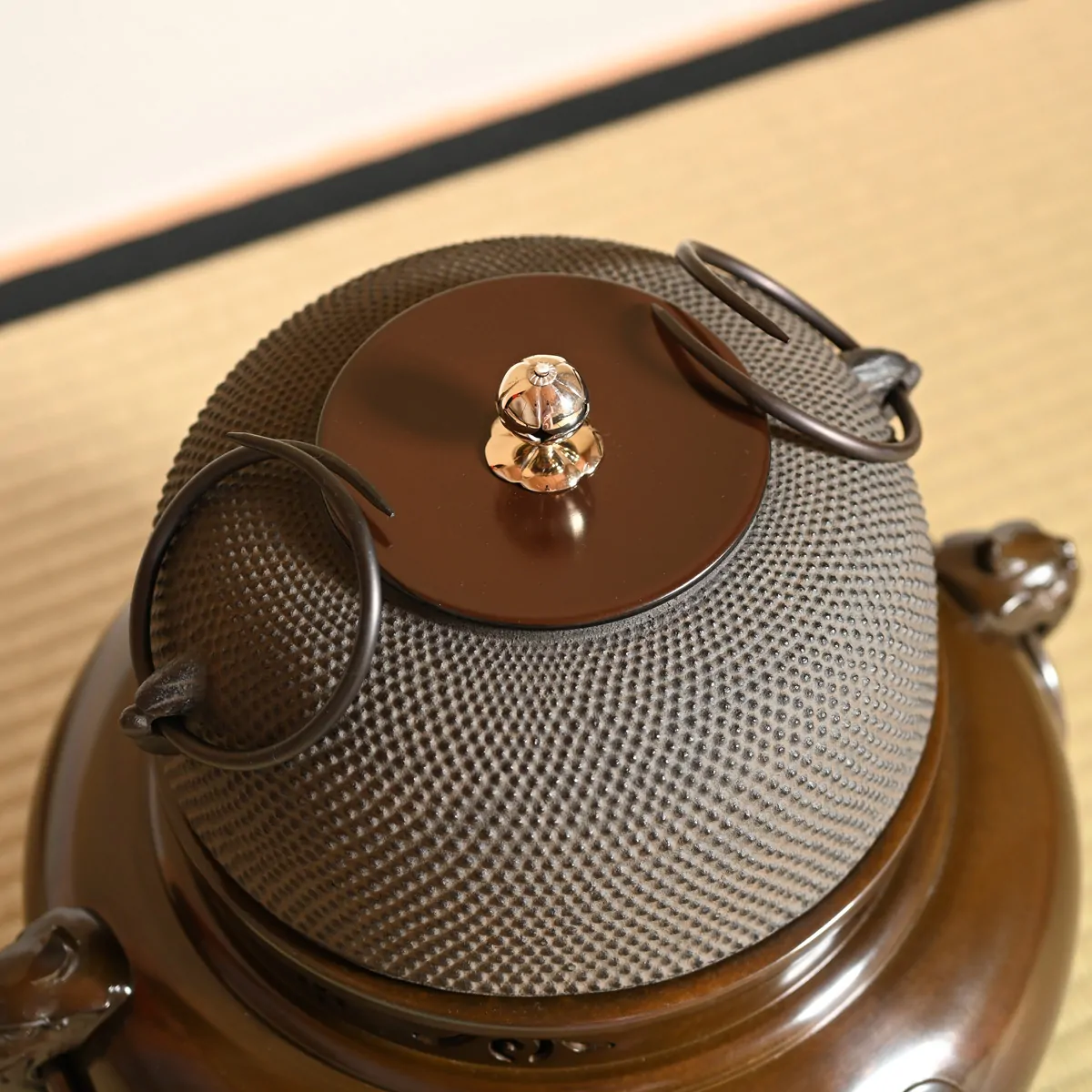

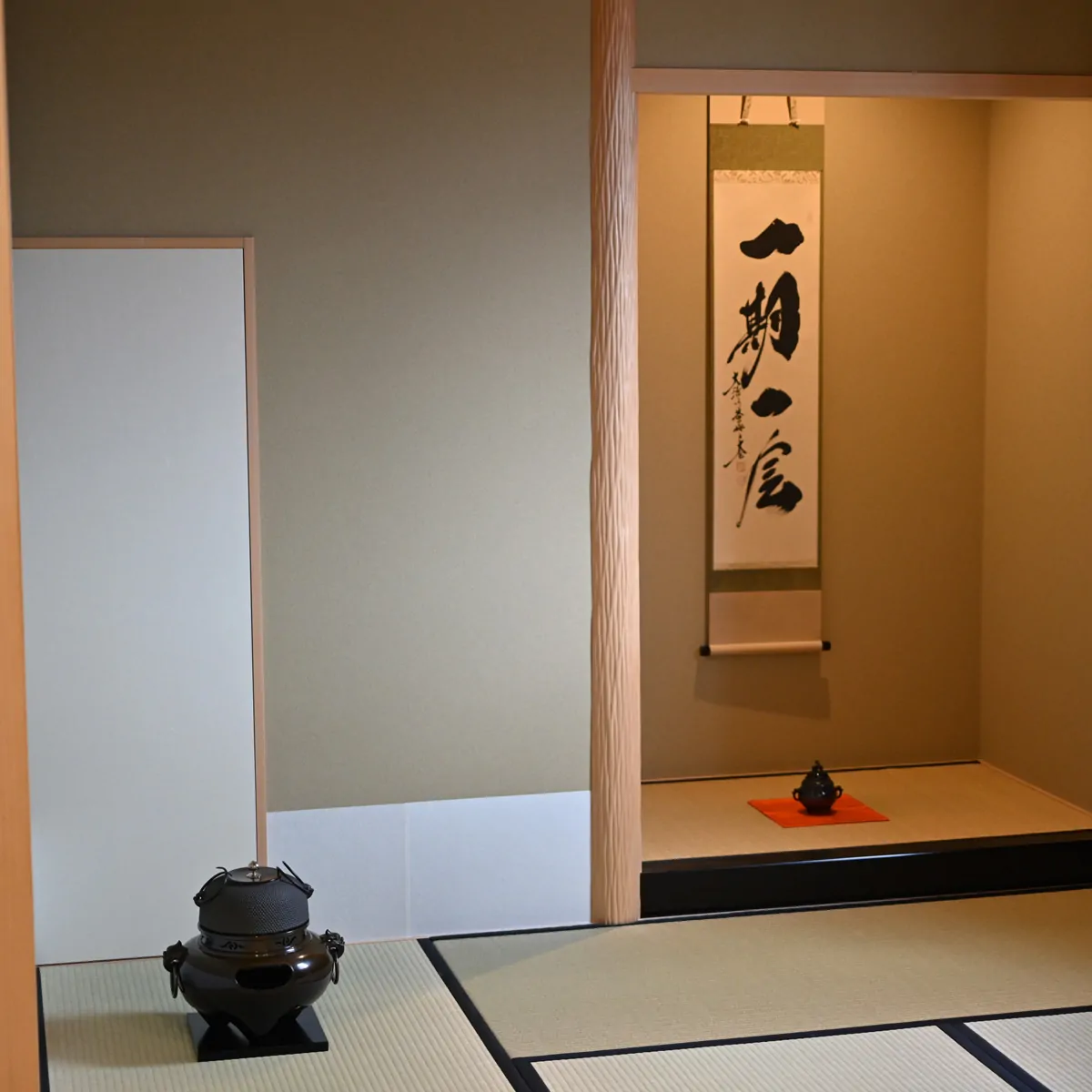
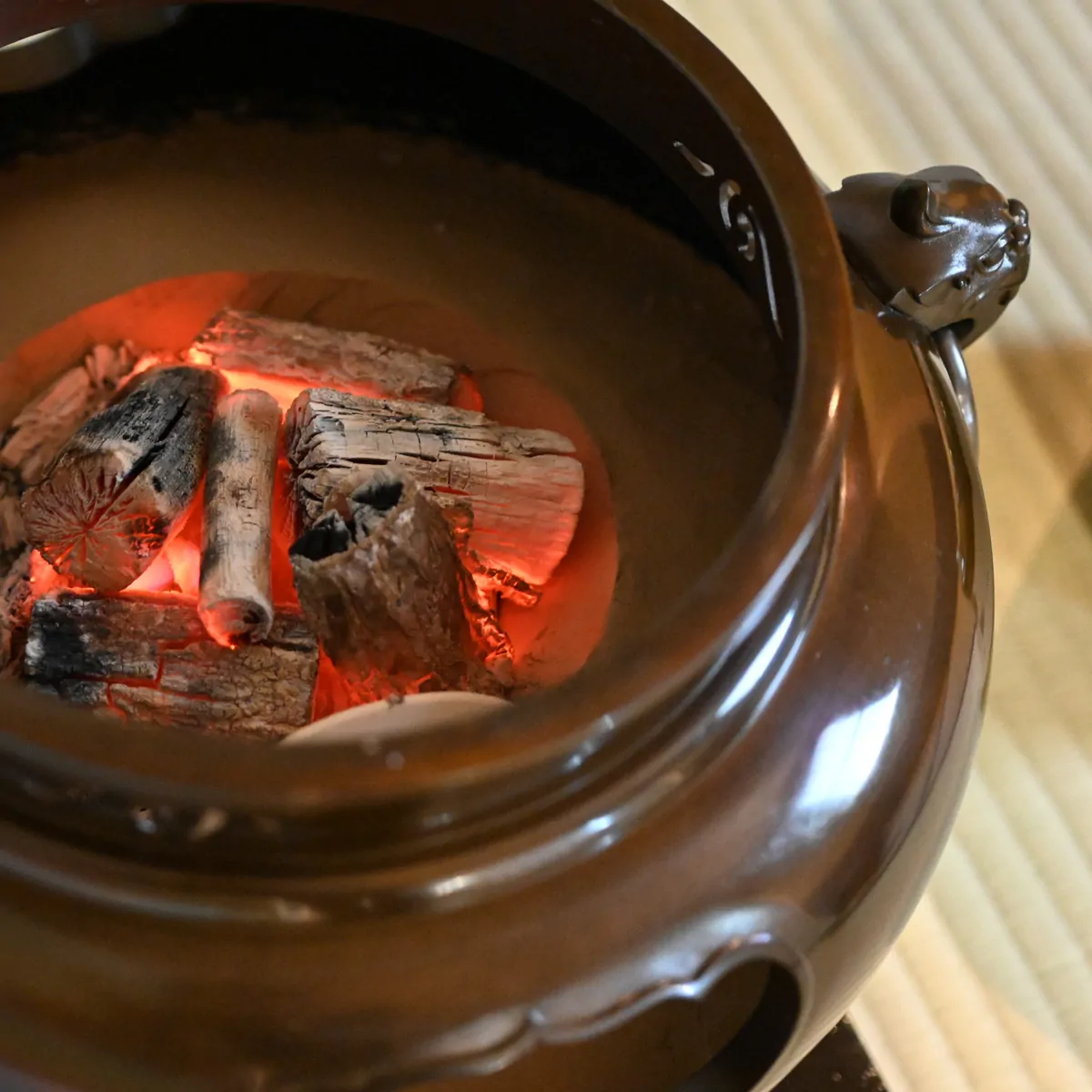
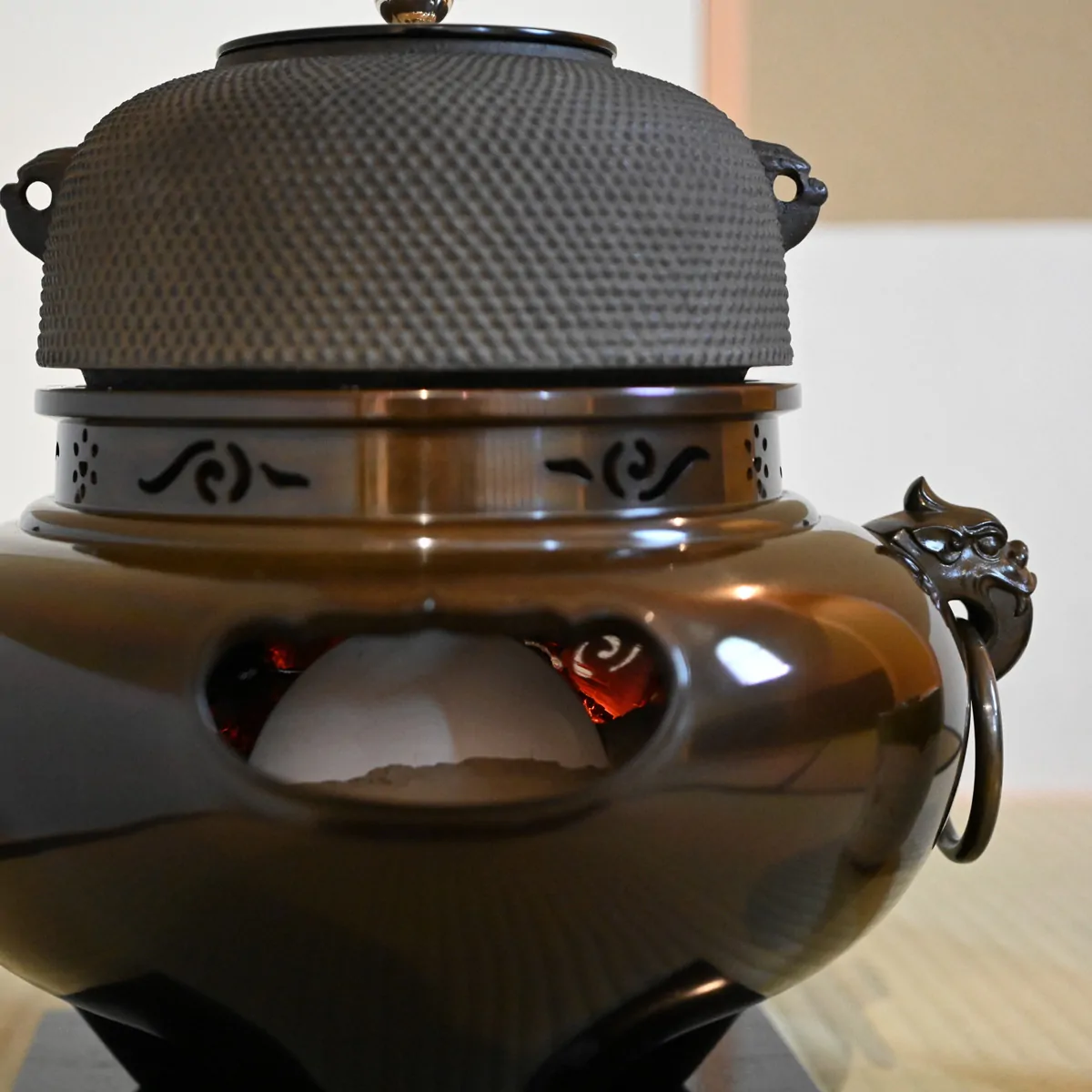
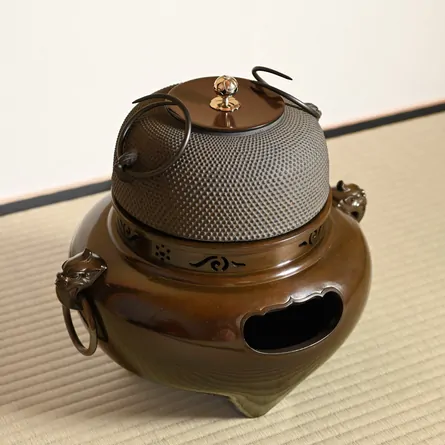
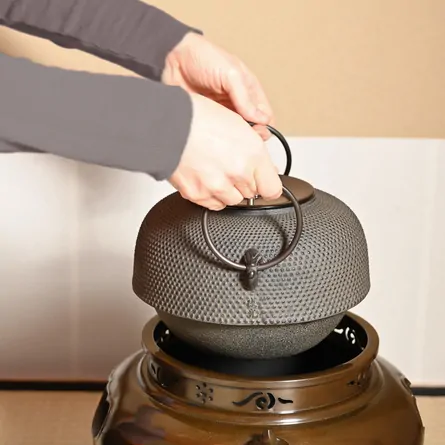
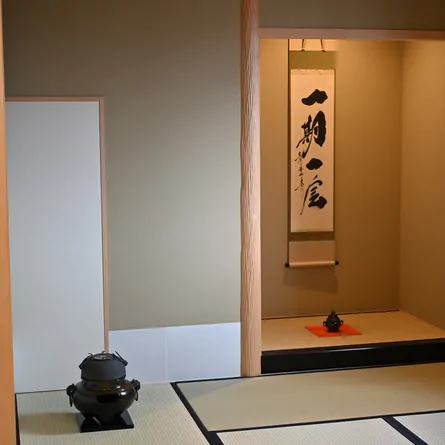
A set of bronze furo (brazier) and cast iron kama (kettle).
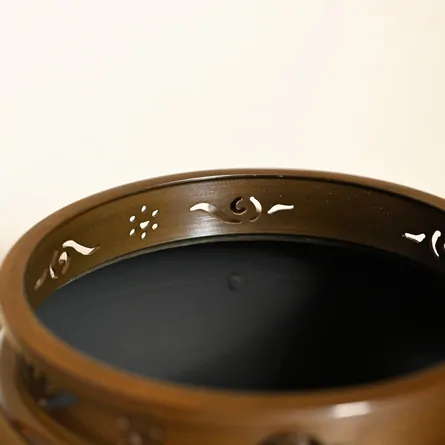
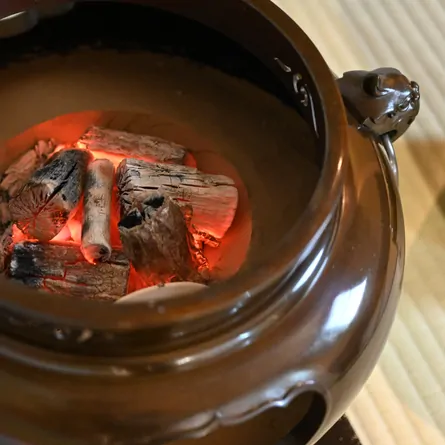
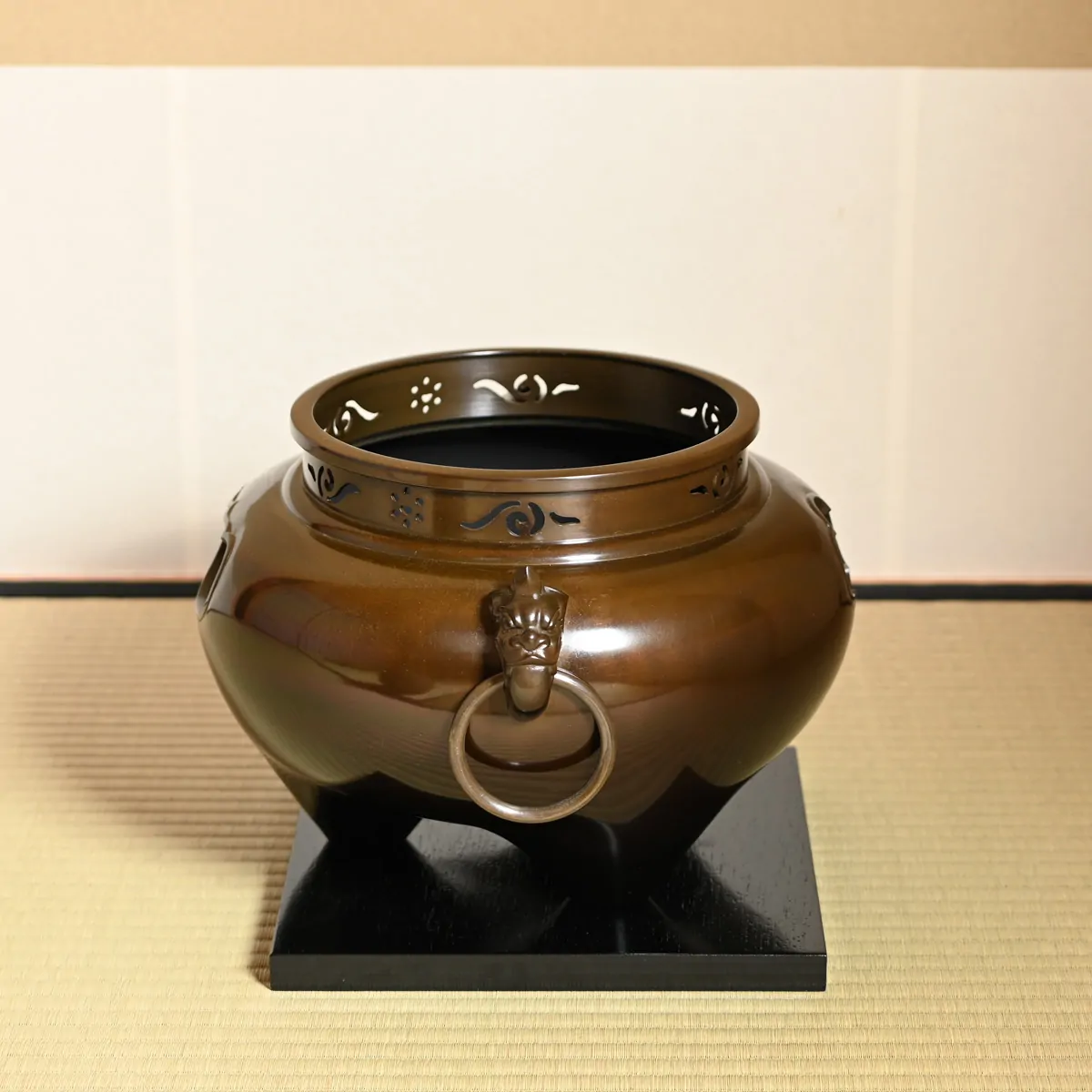
A furo is a portable, fire-resistant wind-hearth, used to kindle a fire and hang a kettle during the tea ceremony. It is a wide, spherical vessel with an open top, supported by three legs. This open-style furo partially reveals the carefully shaped ash bed, known as the hai-gata or ash form. When the charcoal fire is rebuilt and the kama (kettle) is removed, guests are invited to observe the ash bed and the arrangement of the charcoal fire inside the furo.
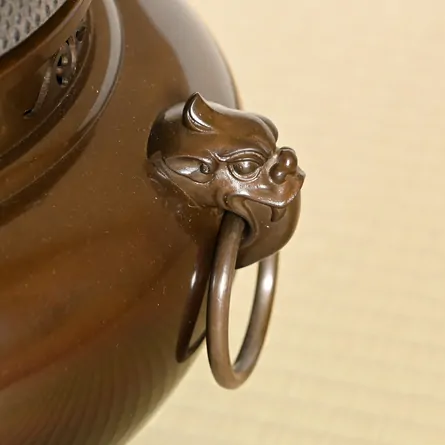
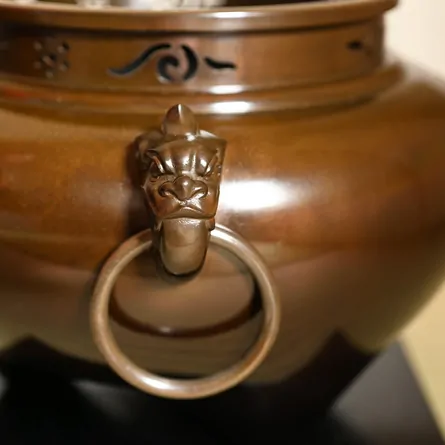
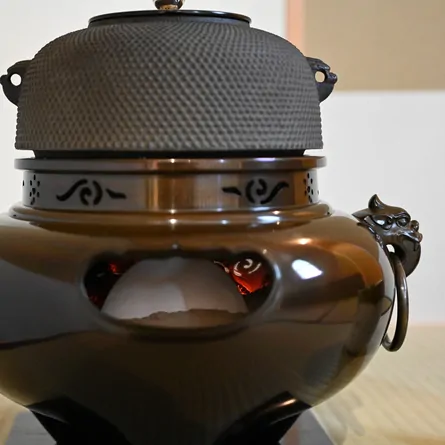
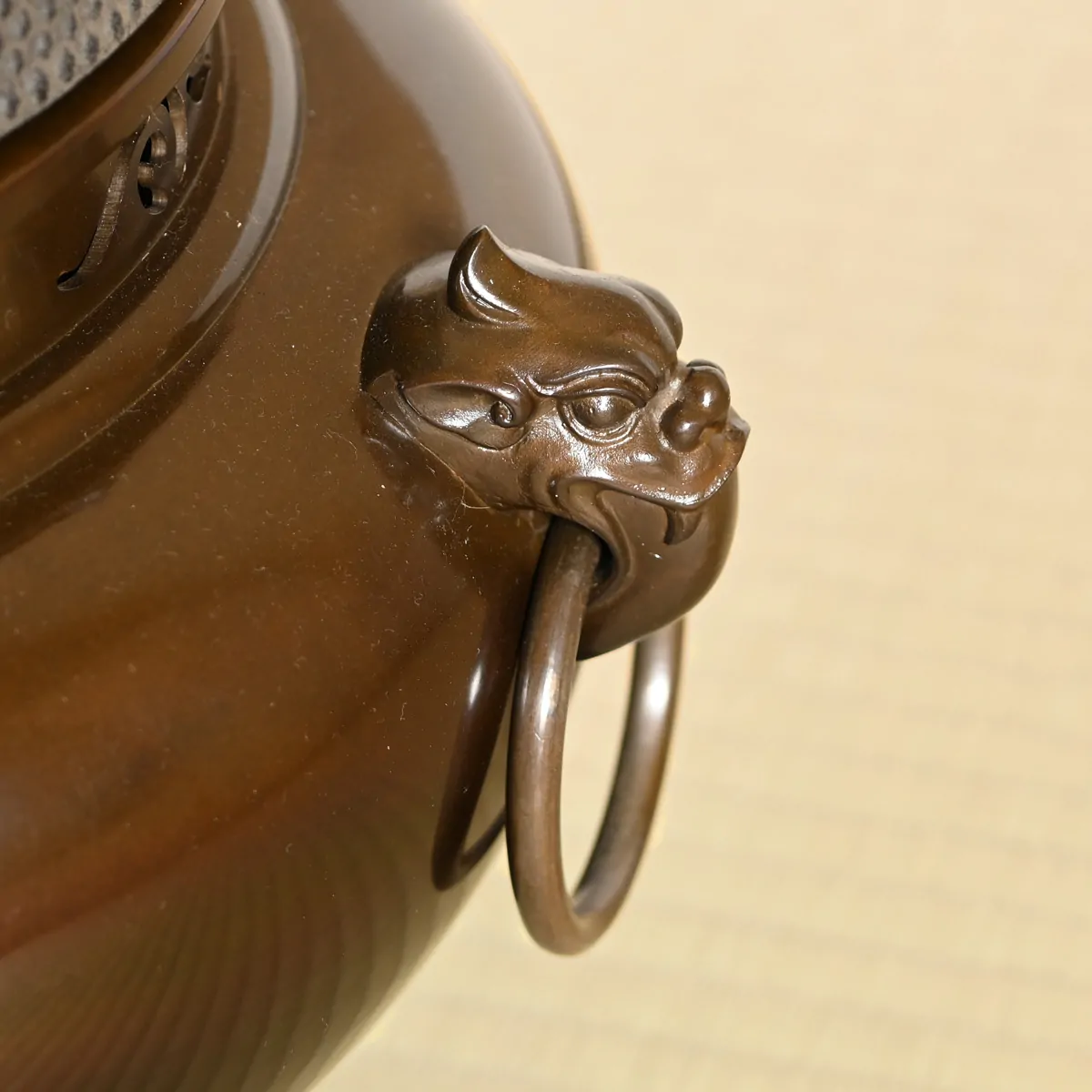
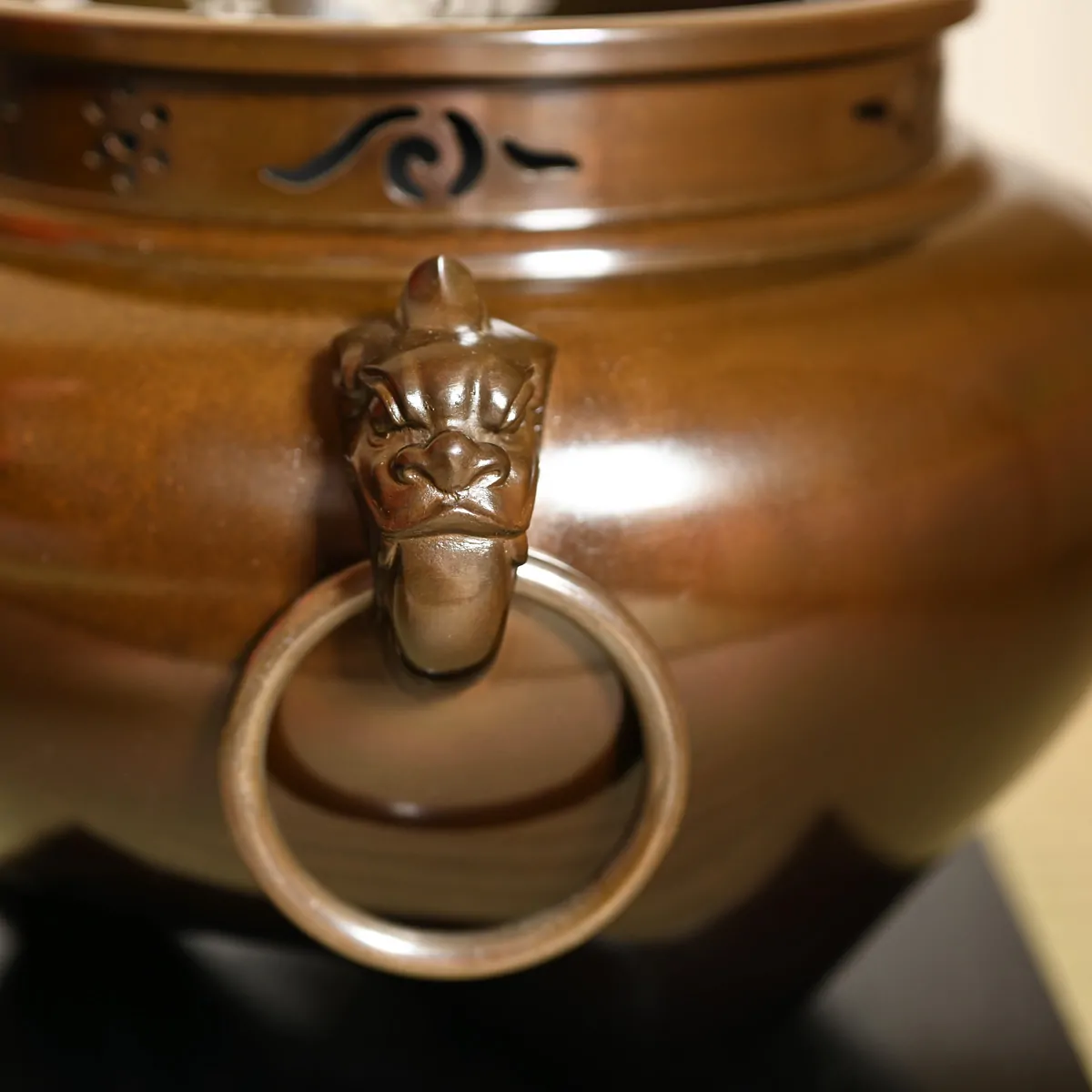
This type of hearth is known as a Kimen Buro Gama, distinguished by two demon masks (kimen) adorning the body of the brazier. The design of the kimen buro is heavily influenced by Chinese design and concept. The demon motif may be likened to the dragon, which is a symbol of enlightenment in Buddhism. The metal rings were for transporting the furo and kama. The fierce expressions are believed to serve as powerful talismans, warding off evil and misfortune. The dragon also brings rain, and thus provides protection against fire.
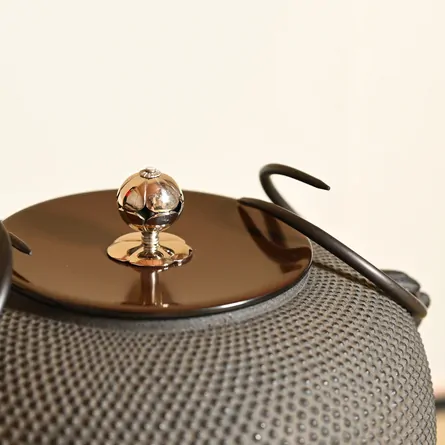
Placed on the furo, there is a cast iron kettle (kama) for heating tea water. The kama for tea ceremony has no spout or handle, and is moved with a pair of loose "kan", metal rings.
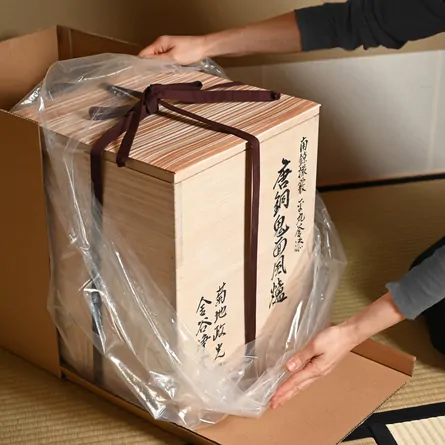
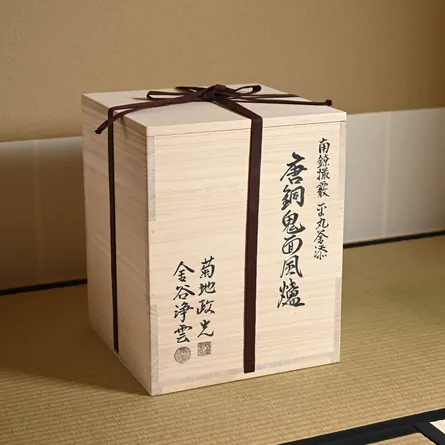
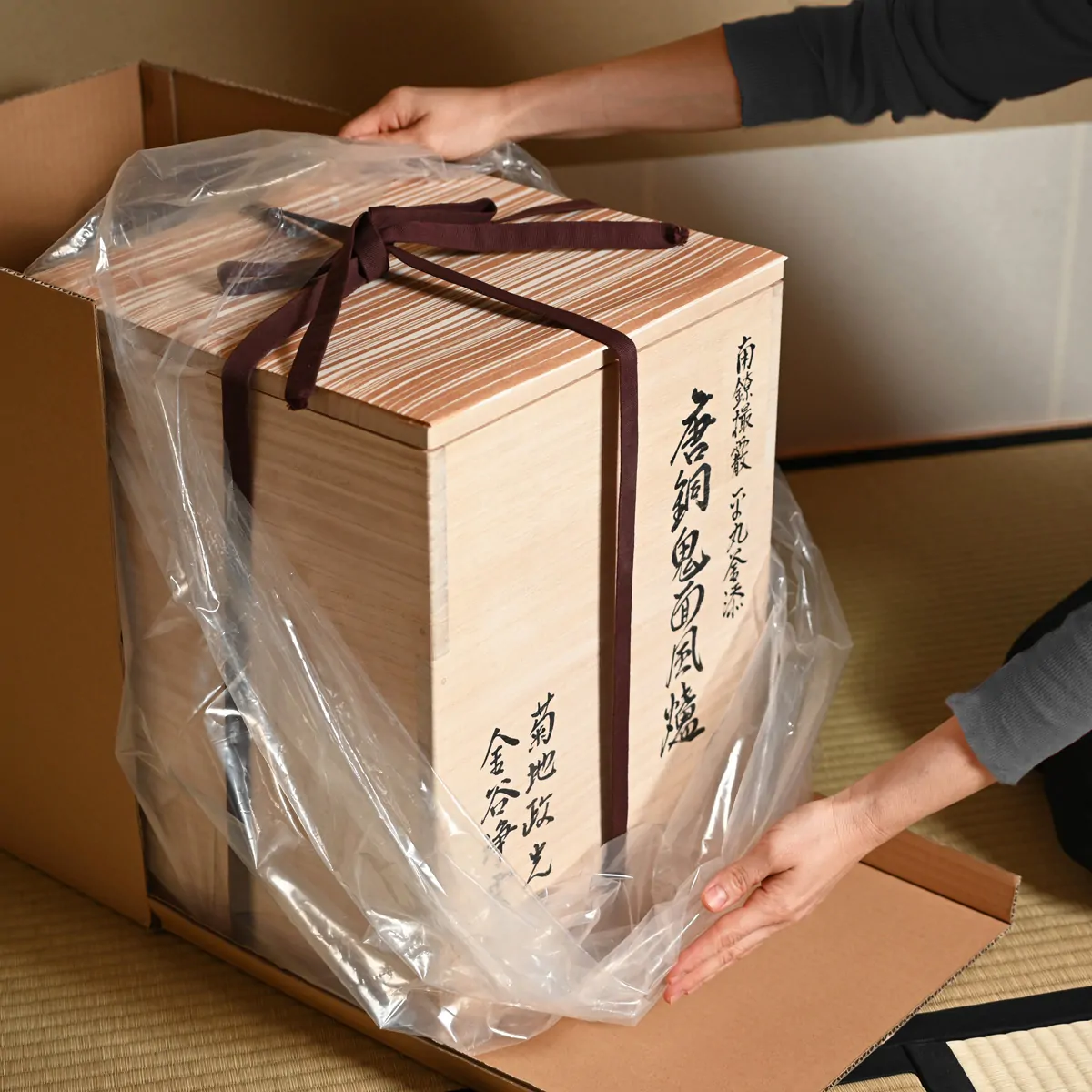
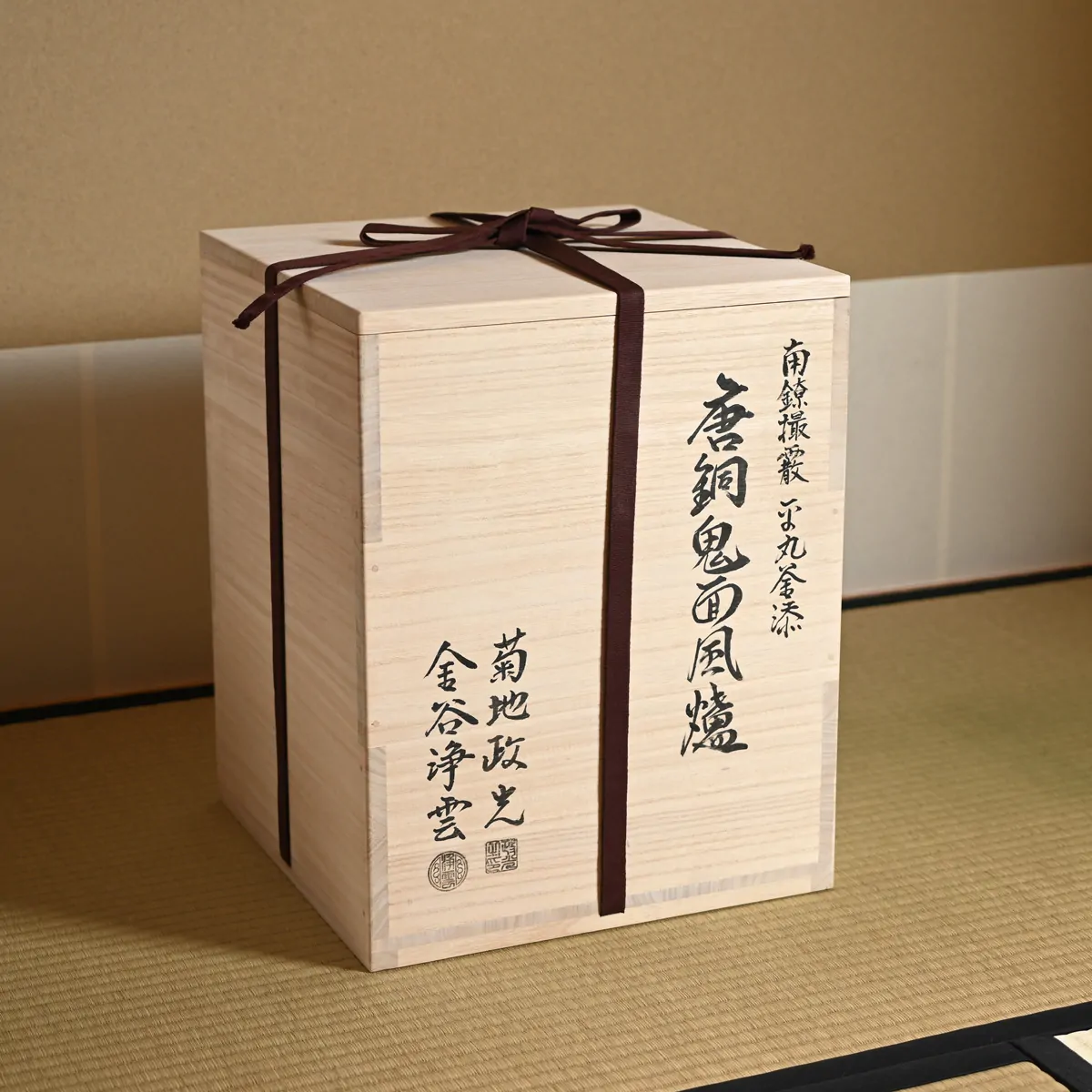
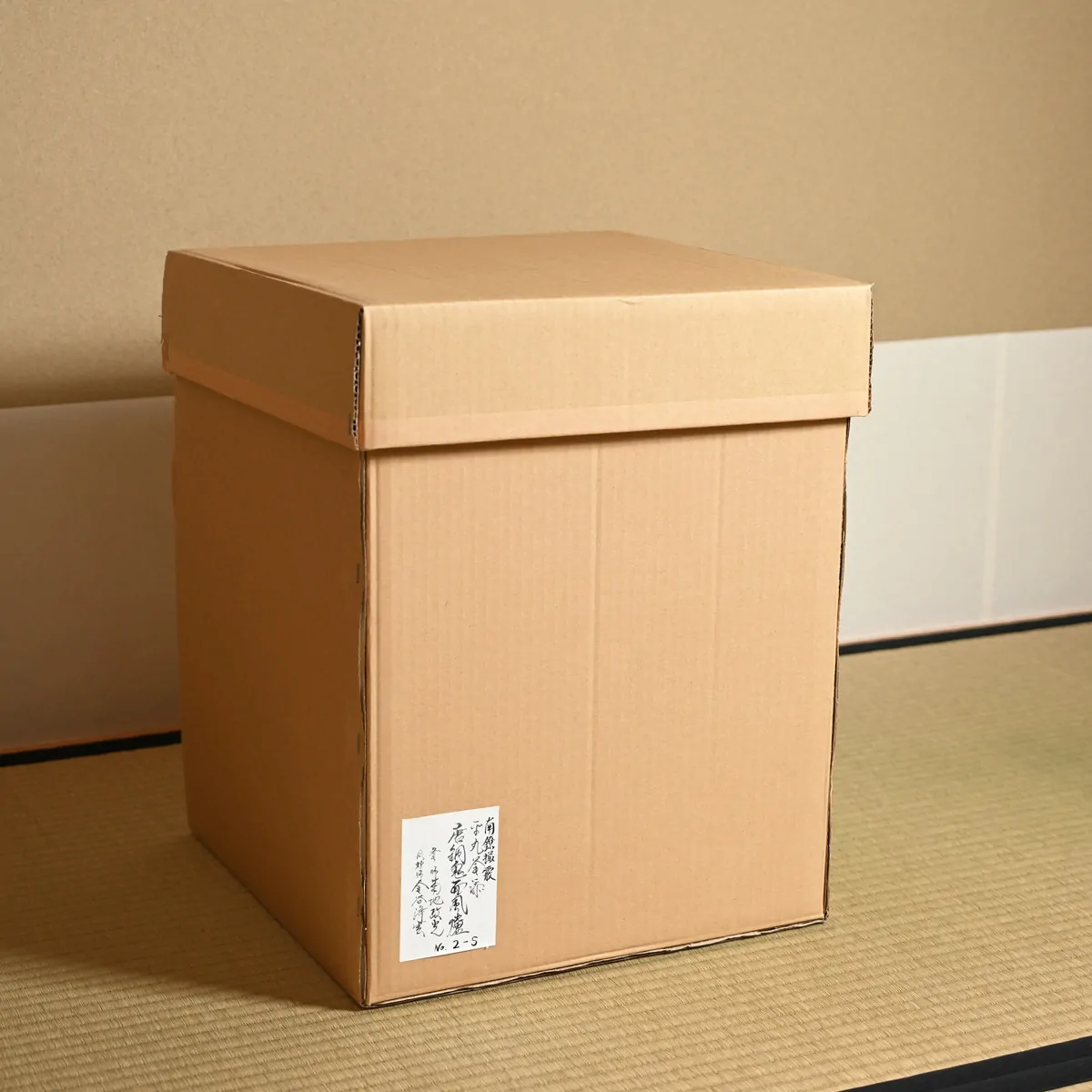
A lacquered wooden board is included in the set, serving as a base for the brazier. The Karado Kimen Buro comes in a wooden box.
History of furo:
The furo is a portable brazier used in the Japanese tea ceremony to heat water for tea preparation. Its origins trace back to China, and was introduced to Japan by the Buddhist monk Nanpo Jomyō during the early Kamakura period (12th–13th centuries). He brought back Buddhist altar fittings from China, including the furo, which were then incorporated into Japanese tea practices.
Furo as a seasonal tool in tea ceremony:
Initially, the furo was employed year-round in the tea ceremony. However, during the Muromachi period (14th–16th centuries), tea masters began to distinguish between seasonal practices. The furo became associated with the warmer months, typically used from early May to early November, while the "ro", a sunken hearth, was reserved for the colder months.
To write a review, please log in.
(Only purchasers can write a review.)
Item code: TDO049
Origin: Aichi prefecture, Japan
Dimensions: H: cm, ø: cm
This product is unavailable at the moment. Please visit this page again in a few weeks.
SHIPPING DETAILS


- Ship to:
- Worldwide (List of Countries)
- Delivery service:
- DHL, FedEx, Yamato Transport, Yu-Pack, S.F. Express, Pick-Up (See conditions)
- Estimated posting:
- within 3 business days
- Payments:
- • PayPal • Bank card payment • Bank transfer • Cash on delivery (Learn more here)
- Returns:
- 10 days money back (See conditions)
 The customs duties do not belong to our competence. It may occur that duties have to be paid on receipt of the parcel. About the current rates of customs duties in your country please contact local authority. To learn about international shipping, read more here.
Posting time can vary due to the manufacturers capacity, Japanese national holidays, as well as natural disasters or accidents, etc., and we can not guarantee posting dates.
List of Countries
Albania
Algeria
Argentina
Armenia
Australia
Austria
Azerbaidjan
Bahrain
Bangladesh
Barbados
Belgium
Bhutan
Bosnia and Herzegovina
Botswana
Brunei Darussalam
Bulgaria
Cambodia
Canada
Chile
Croatia
Cyprus
Czech Republic
Denmark
Djibouti
Ecuador
Egypt
El Salvador
Estonia
Ethiopia
Faroe Islands
Fiji
Finland
France
Gabon
Georgia
Germany
Germany
Ghana
Gibraltar
Guam (USA)
Honduras
Hong Kong
Hungary
Hungary
Iceland
India
Indonesia
Ireland
Israel
Italy
Ivory Coast (Cote D'Ivoire)
Jamaica
Japan
Japan
Jordan
Kenya
Kuwait
Kyrgyzstan
Laos
Latvia
Liechtenstein
Lithuania
Luxembourg
Macau
Macedonia
Madagascar
Malaysia
Maldives
Malta
Mauritius
Mexico
Moldova
Monaco
Mongolia
Montenegro
Morocco
Myanmar
Nepal
Netherlands
New Caledonia (French)
New Zealand
Nigeria
Norway
Pakistan
Panama
Papua New Guinea
Paraguay
Peru
Philippines
Poland
Portugal
Puerto Rico
Qatar
Reunion Island
Romania
Rwanda
San Marino
Saudi Arabia
Senegal
Serbia
Sierra Leone
Singapore
Sint Maarten
Slovak Republic
Slovenia
South Africa
South Korea
Sri Lanka
Sudan
Sweden
Switzerland
Tahiti (French Polynesia)
Taiwan
Tanzania
Thailand
Togo
Tonga
Trinidad and Tobago
Tunisia
Uganda
Ukraine
United Arab Emirates
United Kingdom
United Kingdom
United States of America
United States of America
Uruguay
Uzbekistan
Venezuela
Vietnam
Zimbabwe
Should you have any questions, please do not hesitate to contact us
How to prepare
with coal
Handling precautions
Care and Handling of the Kettle (Kama) and Brazier (Furo)
To ensure the longevity and beauty of your kama (iron kettle) and furo (brazier), handle them with care and attention.
Avoid contact with sweat or oil, keep them clean at all times, and protect them from moisture and sudden temperature changes. After each use, gently wipe them dry and never pour water directly over a hot kettle.
Kettle (Kama) — Handling & Maintenance
✦ Avoid direct contact with hands. Use a fukusa (silk cloth) or kaishi (paper) when handling. Oils and moisture from your hands can leave residue on the kettle’s surface. Over time, this can oxidize, leading to rust spots or uneven patina.
✦ Always use high-quality water free from metallic taste or impurities.
✦ Avoid adding cold water to a heated kettle or placing a cold kettle over strong heat, as it may cause cracking. Warm it gradually by adding hot water first before heating.
✦ After each use, rinse gently with hot water to remove ash and mineral deposits.
✦ Wipe the surface thoroughly with a soft cloth to remove all moisture.
✦ Allow the kettle to dry completely, using the residual heat of the hearth if possible.
✦ When drying the lid, place it knob-side down to ensure thorough drying.
Brazier (Furo) — Handling & Maintenance
✦ Wipe the surface with a soft damp cloth, then dry carefully with a clean, dry cloth to remove any remaining moisture without scratching.
✦ Remove water immediately!
✦ If water or tea spills onto the surface, wipe it off at once to prevent marks or stains.
Ash storage
✦ Ash easily absorbs moisture. Before storing the brazier, remove the ash to keep the interior clean and dry.

