

Customers who bought this item also bought
-


Extraordinary matcha with the name of ‘long life’ for making thick tea (koicha)
$49.68 / 20 g -
Taiwanese high mountain oolong with creamy-vanilla notes
$21.60 / 30 g
 BREAKING NEWS:
Oct 10, 2026
BREAKING NEWS:
Oct 10, 2026
15% off all teapots until October 15 ‼️ Use the coupon code: POTBALANCE-15
For more details, click HERE.
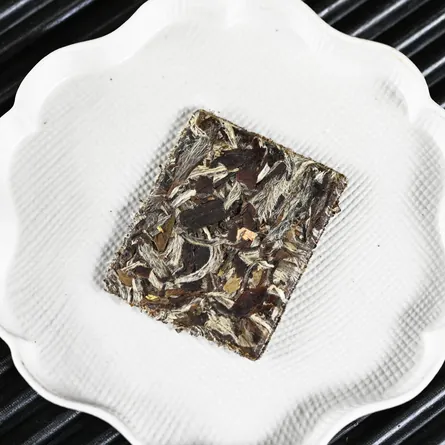
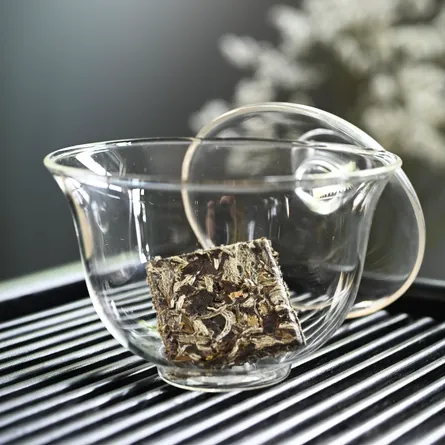
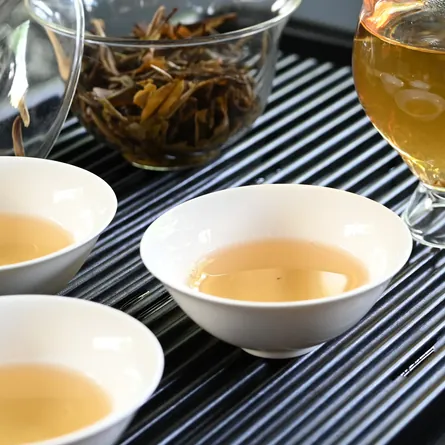
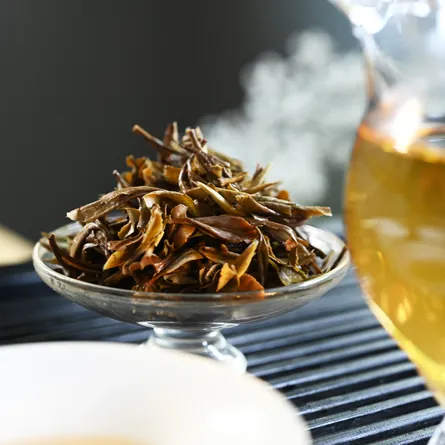
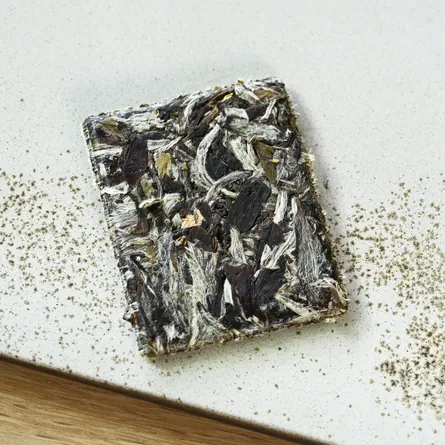
Compressed fine white tea scented 8 times with jasmine blossom from Fuding Province, China
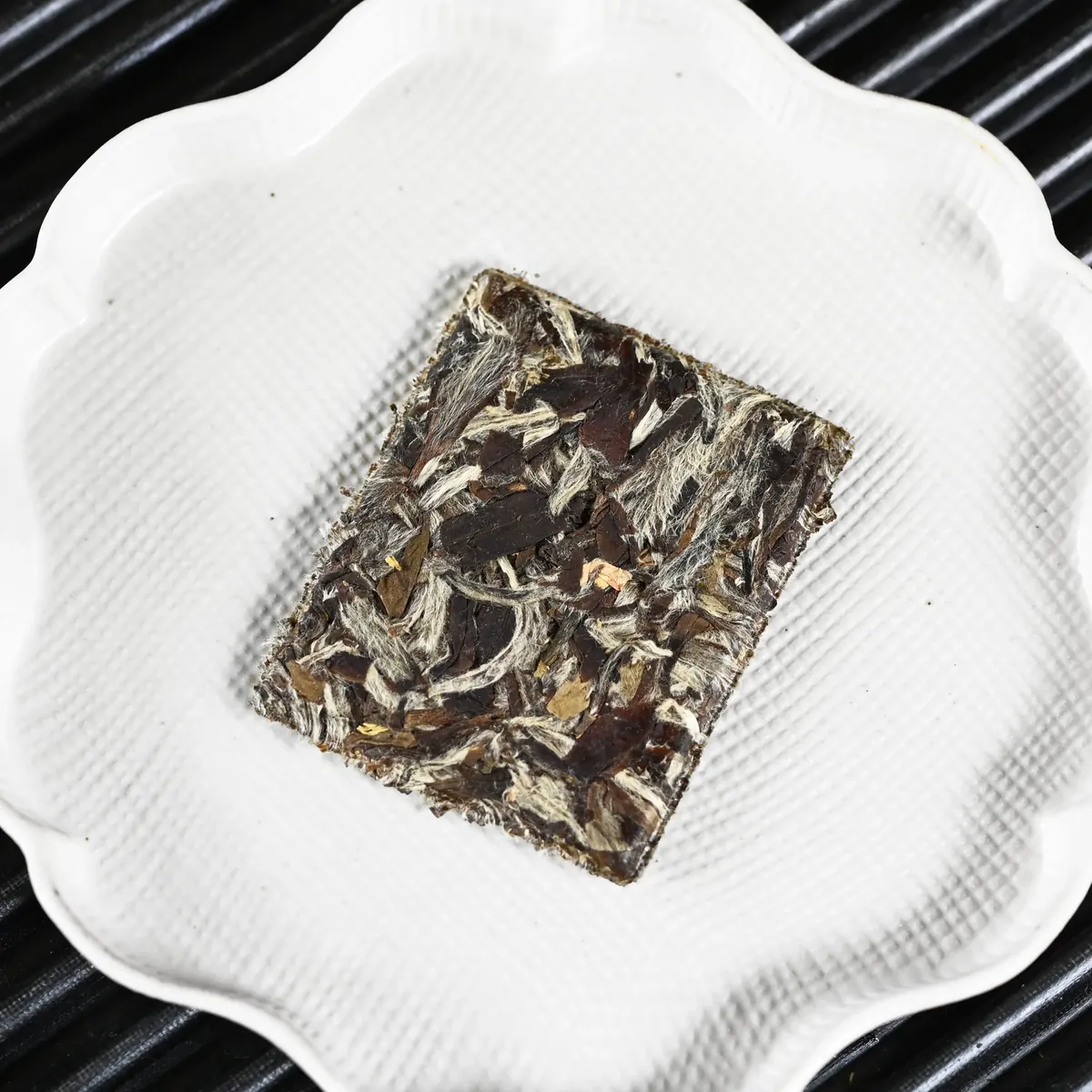
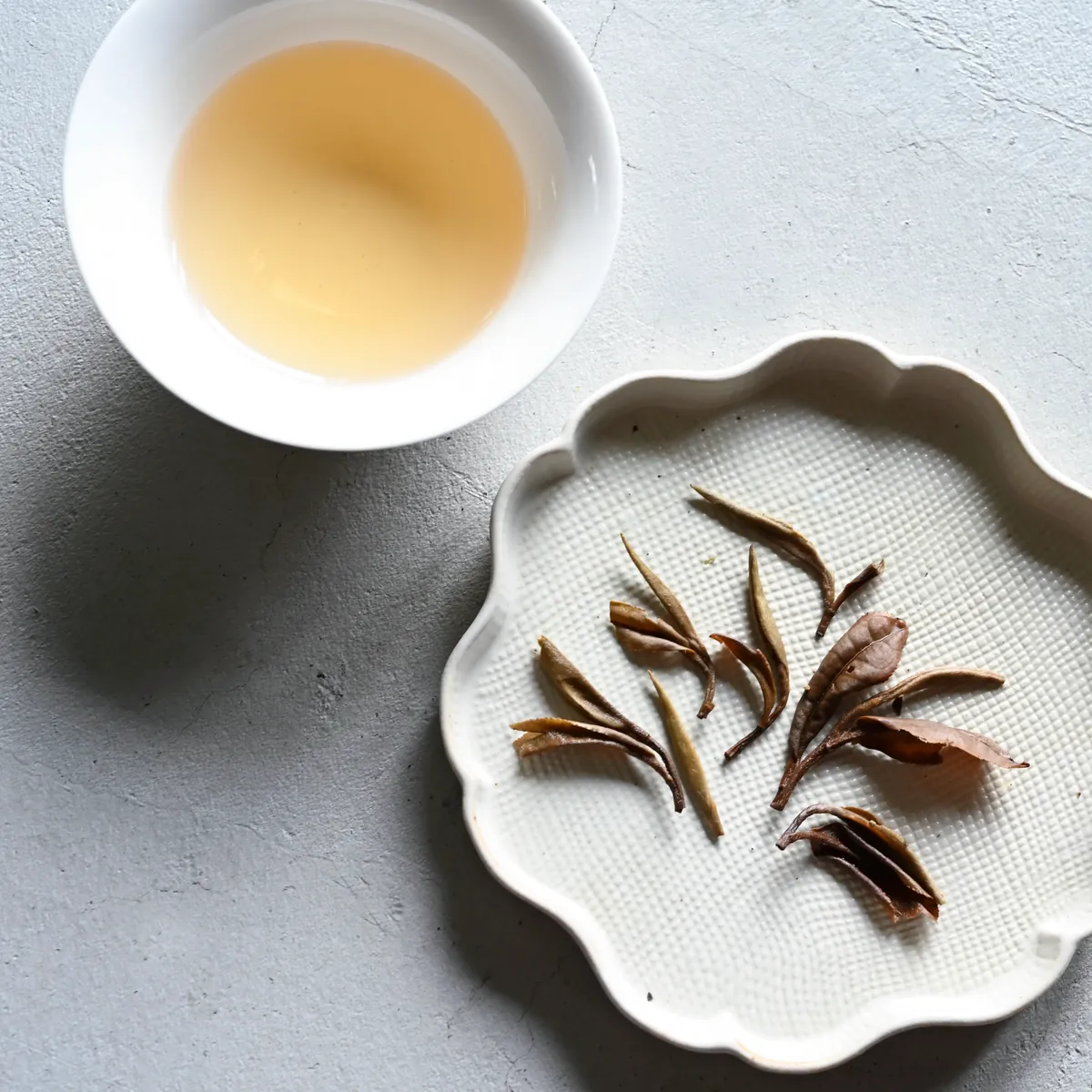
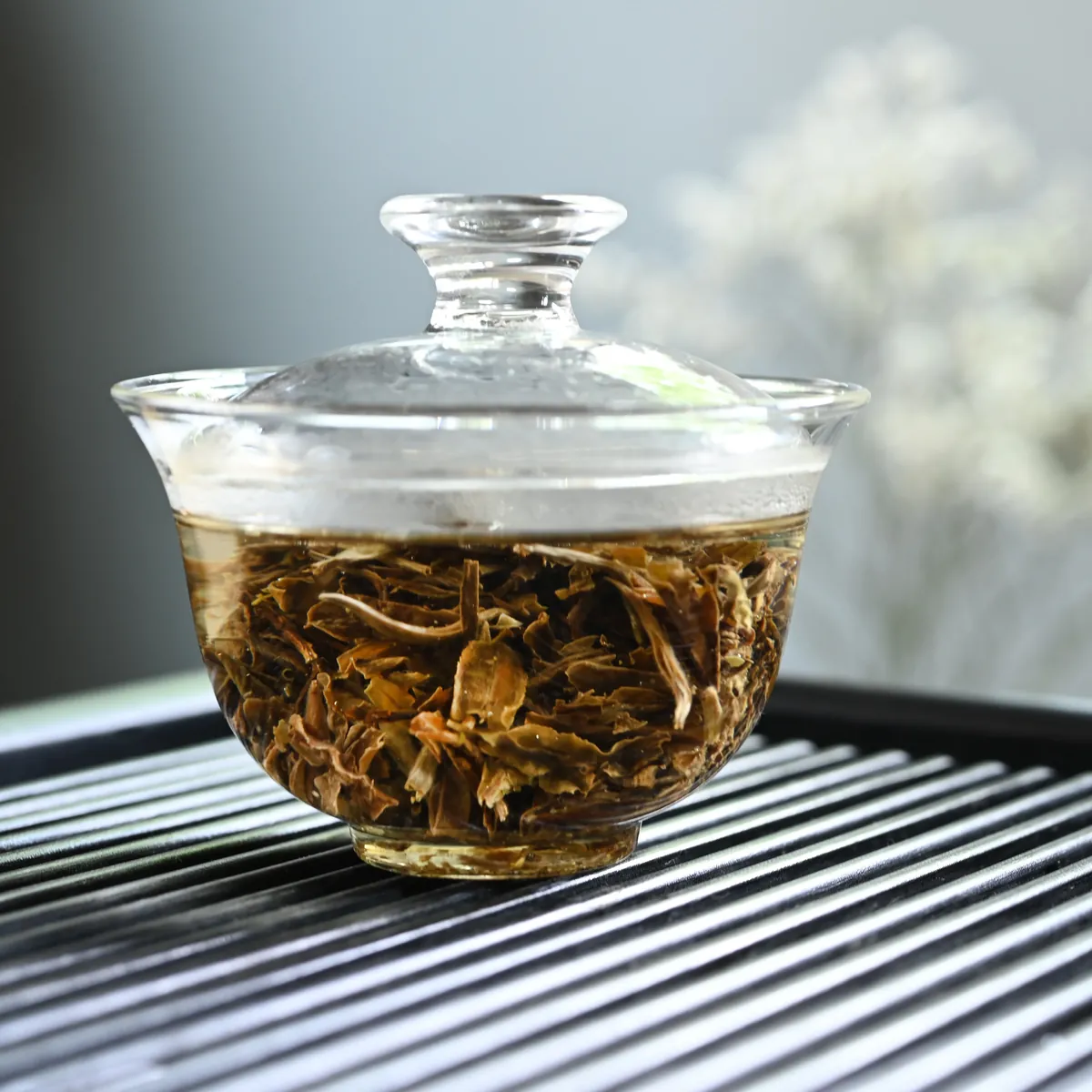
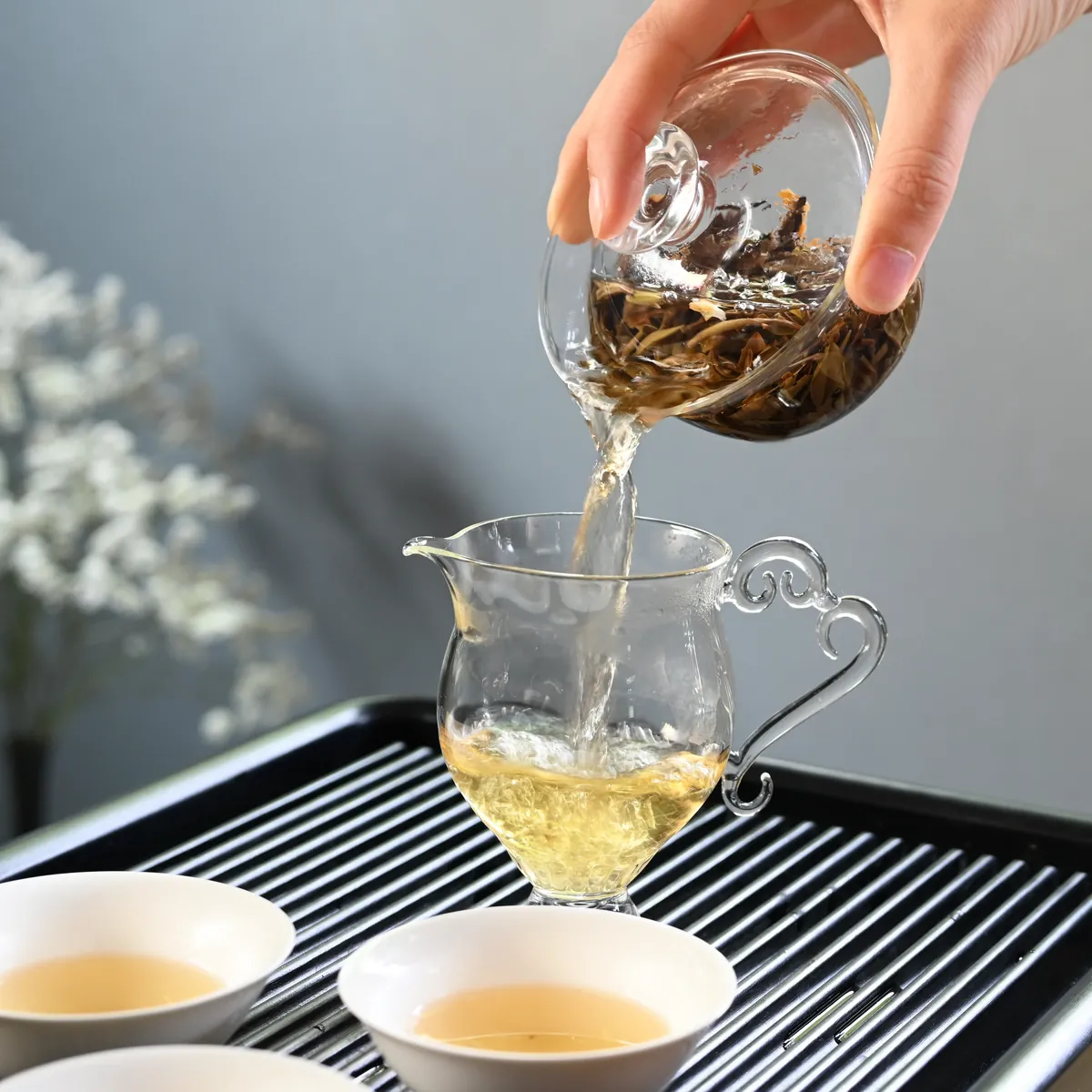
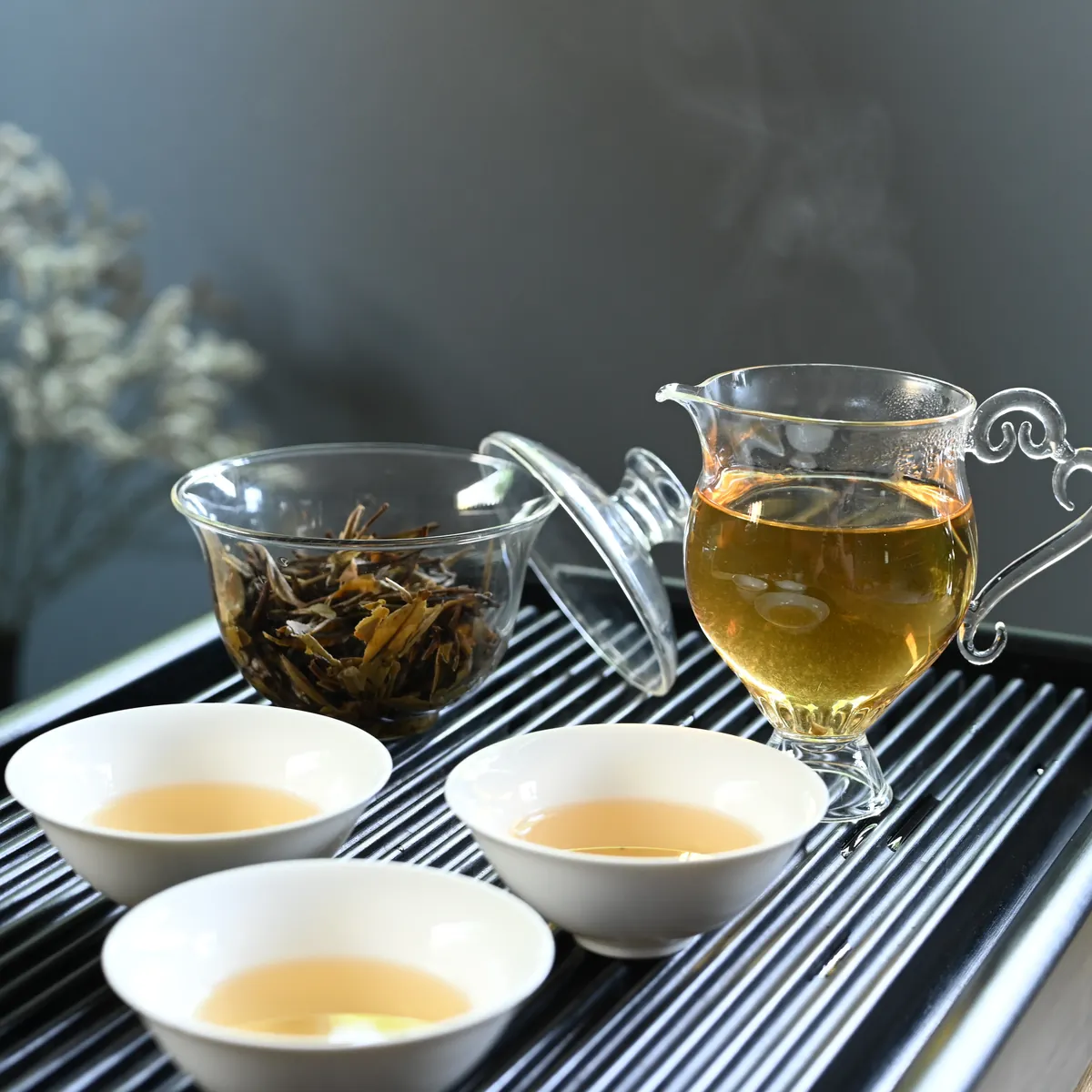
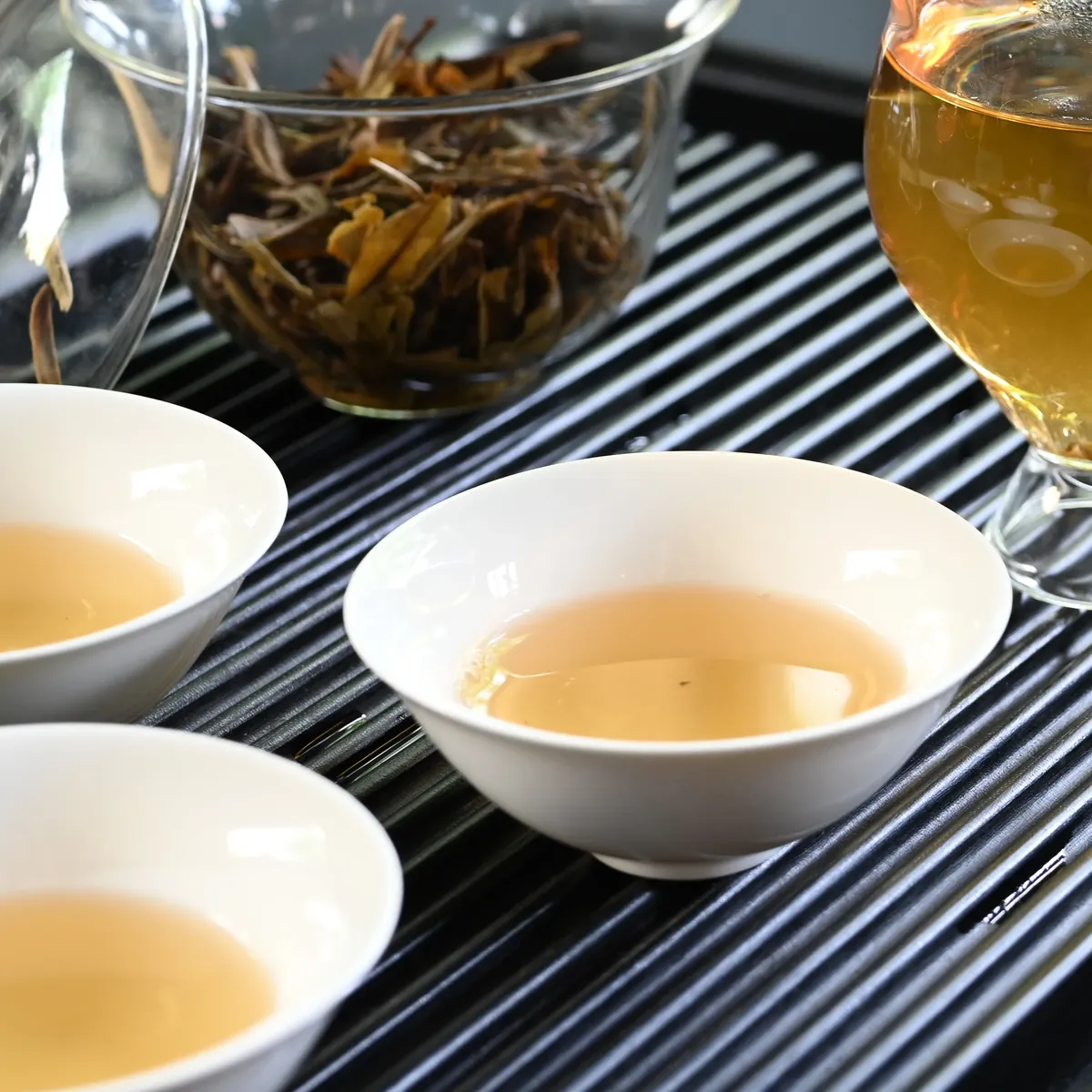
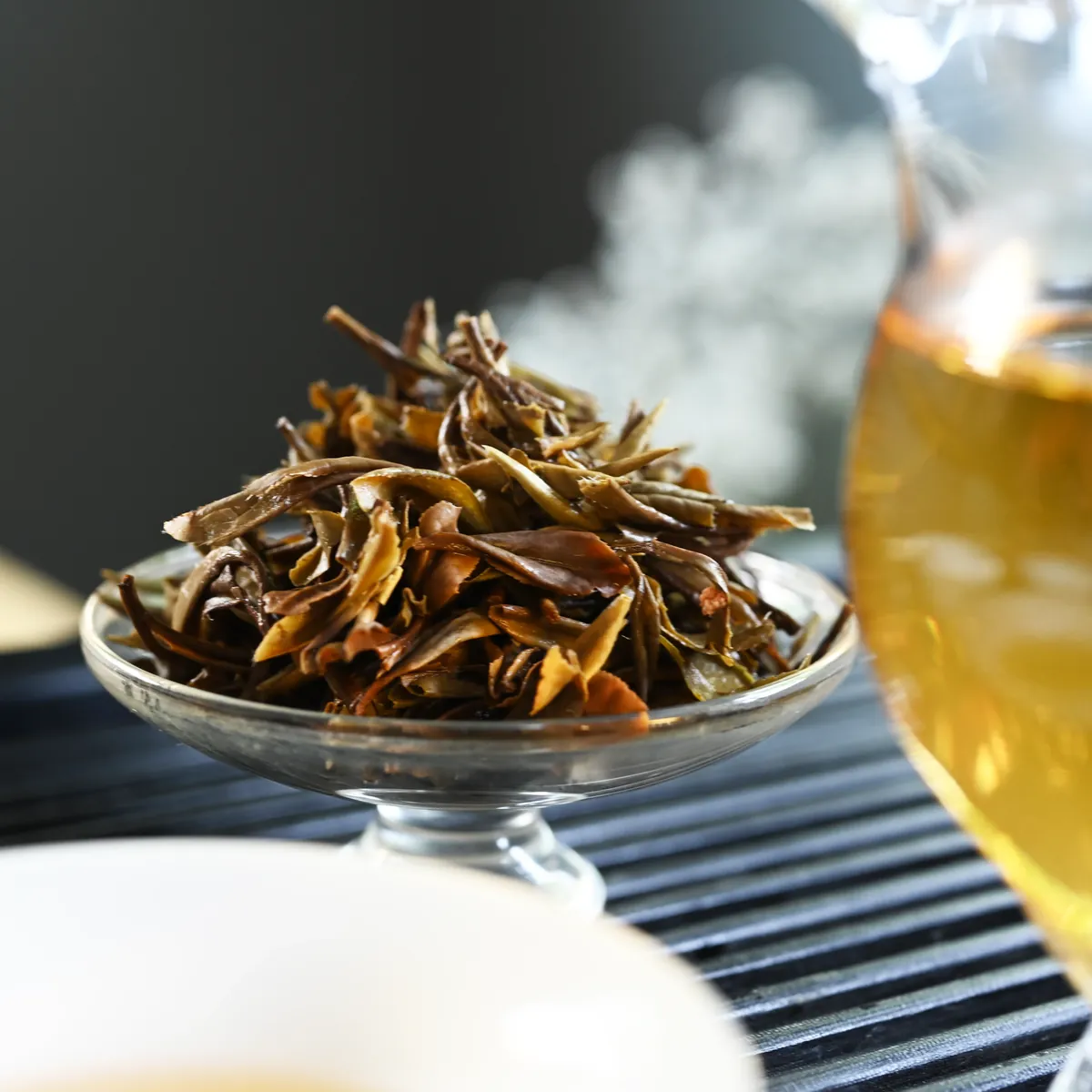
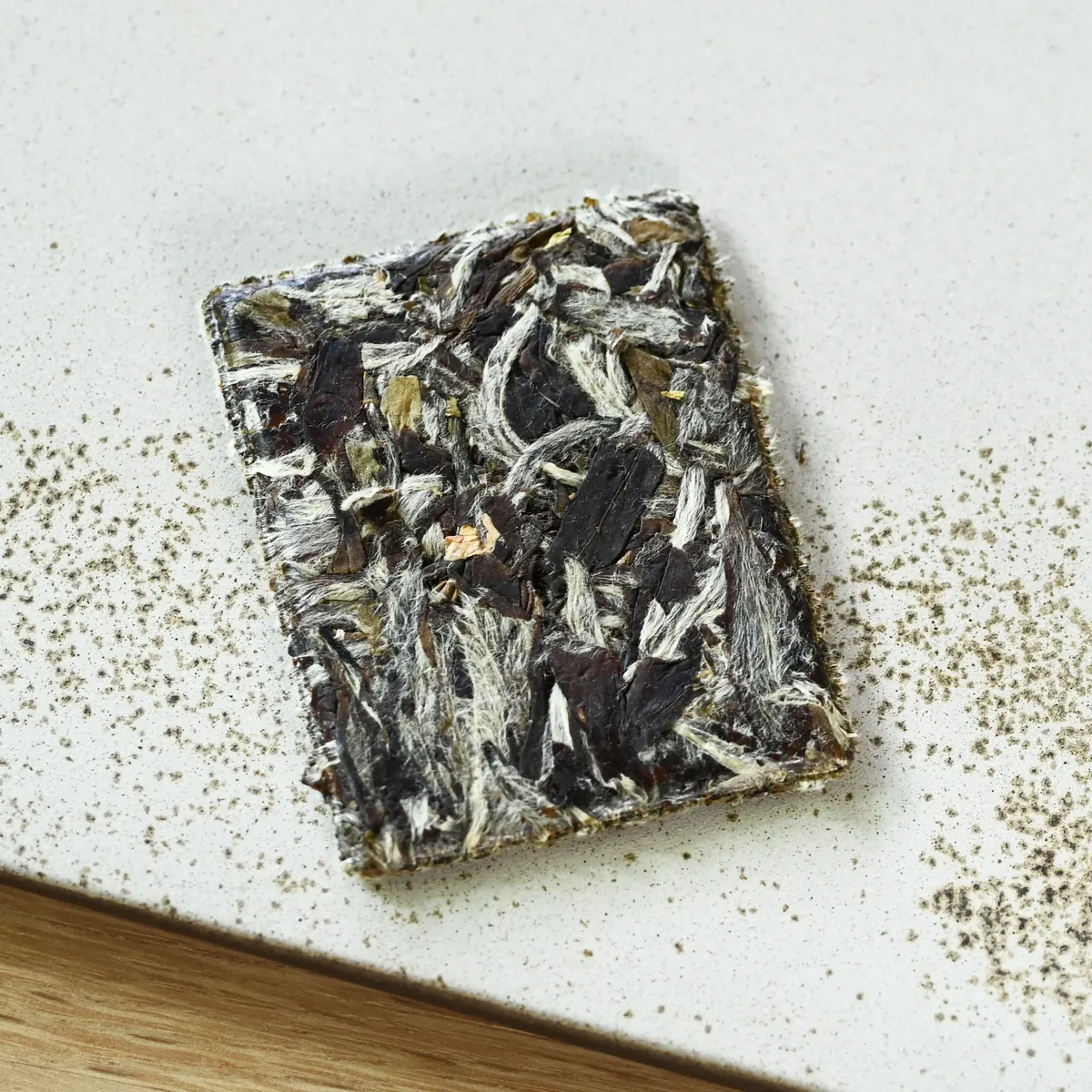
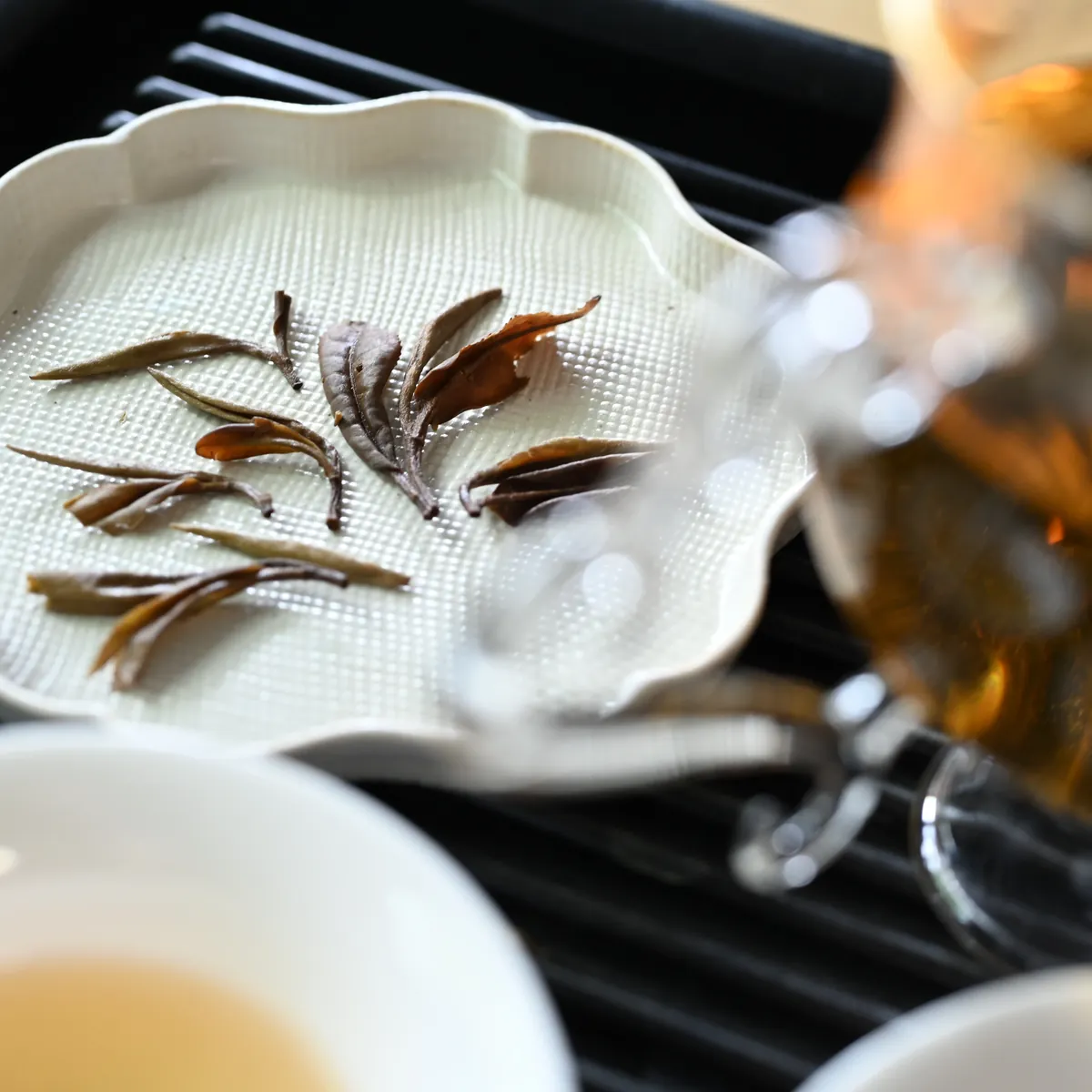

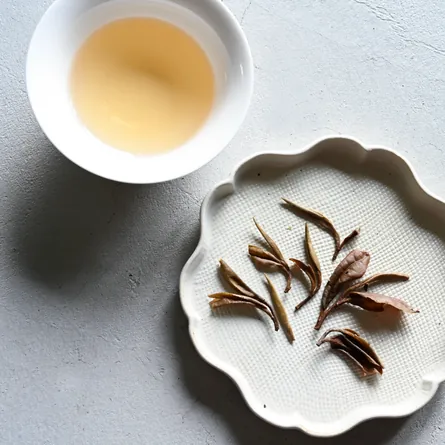
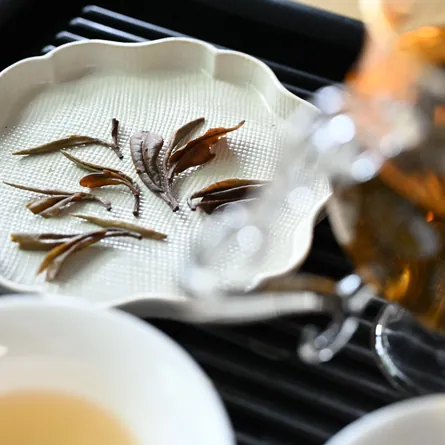
A rare compressed white tea from Fuding, Fujian, made from the classic Fuding Da Bai cultivar. Bai Mudan, which translates as White Peony, takes its name from the way the silvery-white buds rest among the green leaves, resembling a peony flower just beginning to open. It is produced from spring buds with one or two young leaves. The white leaf buds remain intact and distinctly bud-like even after multiple infusions. This tea has undergone eight full rounds of scenting before being pressed into small 8 g cakes.
Although most everyday jasmine tea uses a green tea base, white tea is also employed for higher-grade versions. In the traditional Fujian method, tea leaves are mixed with jasmine buds. As the flowers open at night, they release their fragrance, which the leaves absorb during the stacking with flowers. The mixture is then aerated to control heat and moisture; the flowers are removed (though some jasmine petals may remain in the tea) and the tea is lightly re-baked. This cycle is repeated. Ordinary grades may receive three to seven rounds; eight rounds is the maximum, producing the most intense and persistent fragrance.
TASTE NOTES
The first steep is light and delicate while the leaf is still opening.
For subsequent steeps, the tea becomes noticeably sweet, with fruit notes of apple and banana alongside the jasmine.
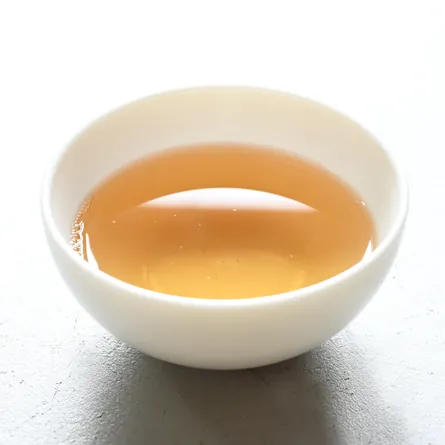
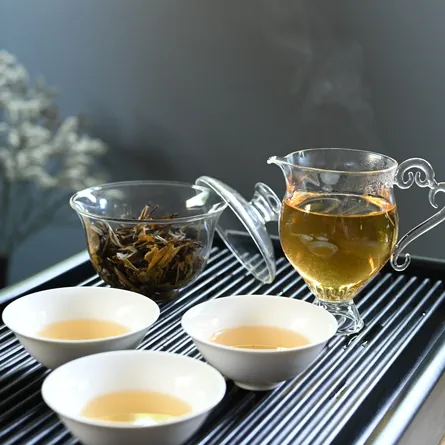
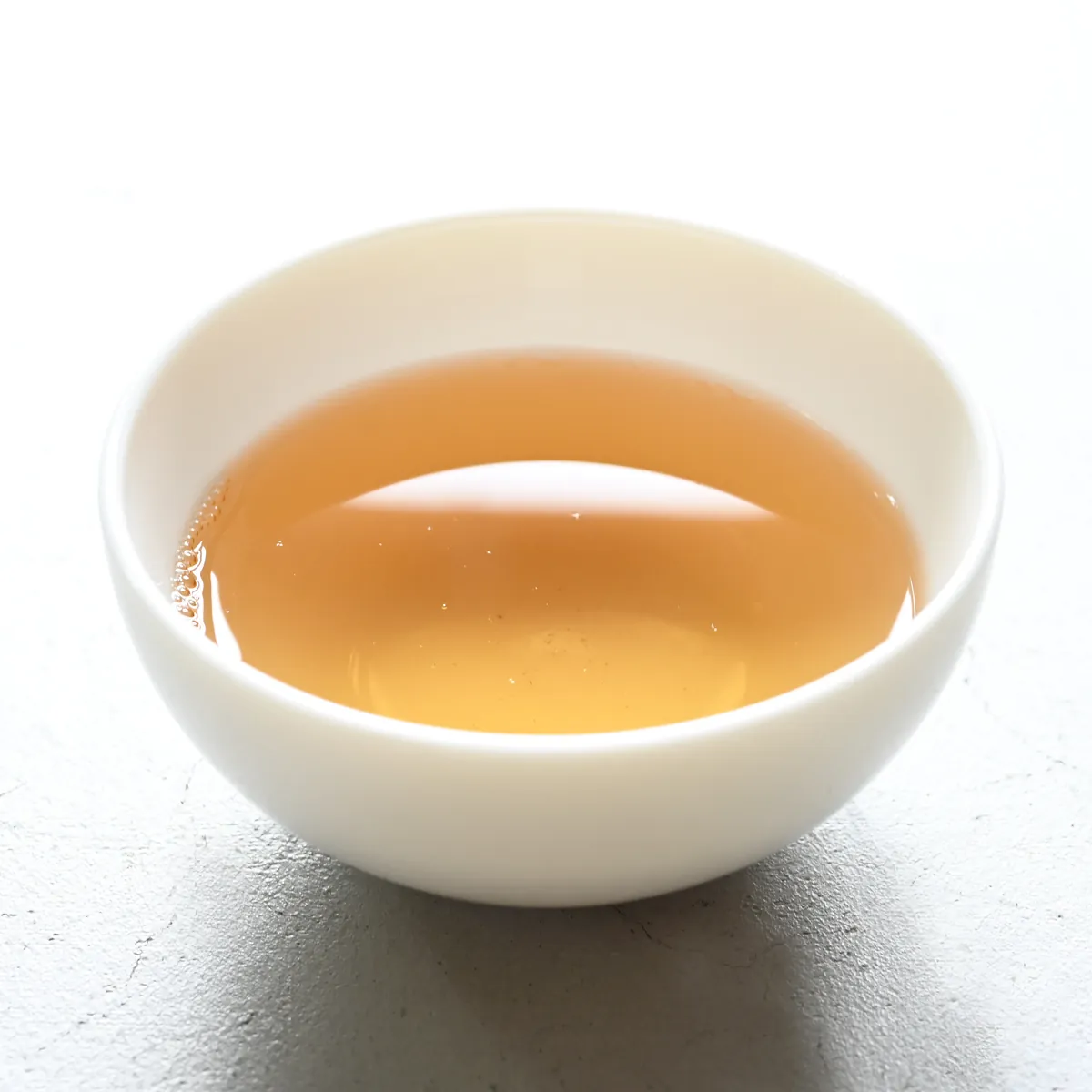
Middle steeps give robust yet pleasant jasmine fragrance with light mixed-fruit sweetness; apple notes remain present. Liquor color deepens to a classic white-tea yellow, later turning toward darker amber.
With later steeps, the jasmine gradually softens, and the underlying white tea aroma becomes more pronounced. Shorter infusions are ideal once the leaf has fully scattered.
The tea holds well and can easily give 10 enjoyable steeps. The aftertaste is reminiscent of honey and honeysuckle, with a soft matured, almost crystallizing honey-like quality.
True to the character of fine white tea, the liquor is refreshing and has a revitalizing yet calming effect. As traditional knowledge notes for white tea taken during a moment’s rest, the taste is faintly sweet with a light orchid-like fermented fragrance, said to release tension, helping the body and mind relax.
BREWING RECOMMENDATIONS
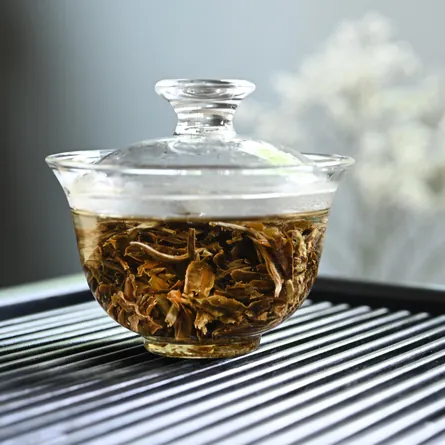
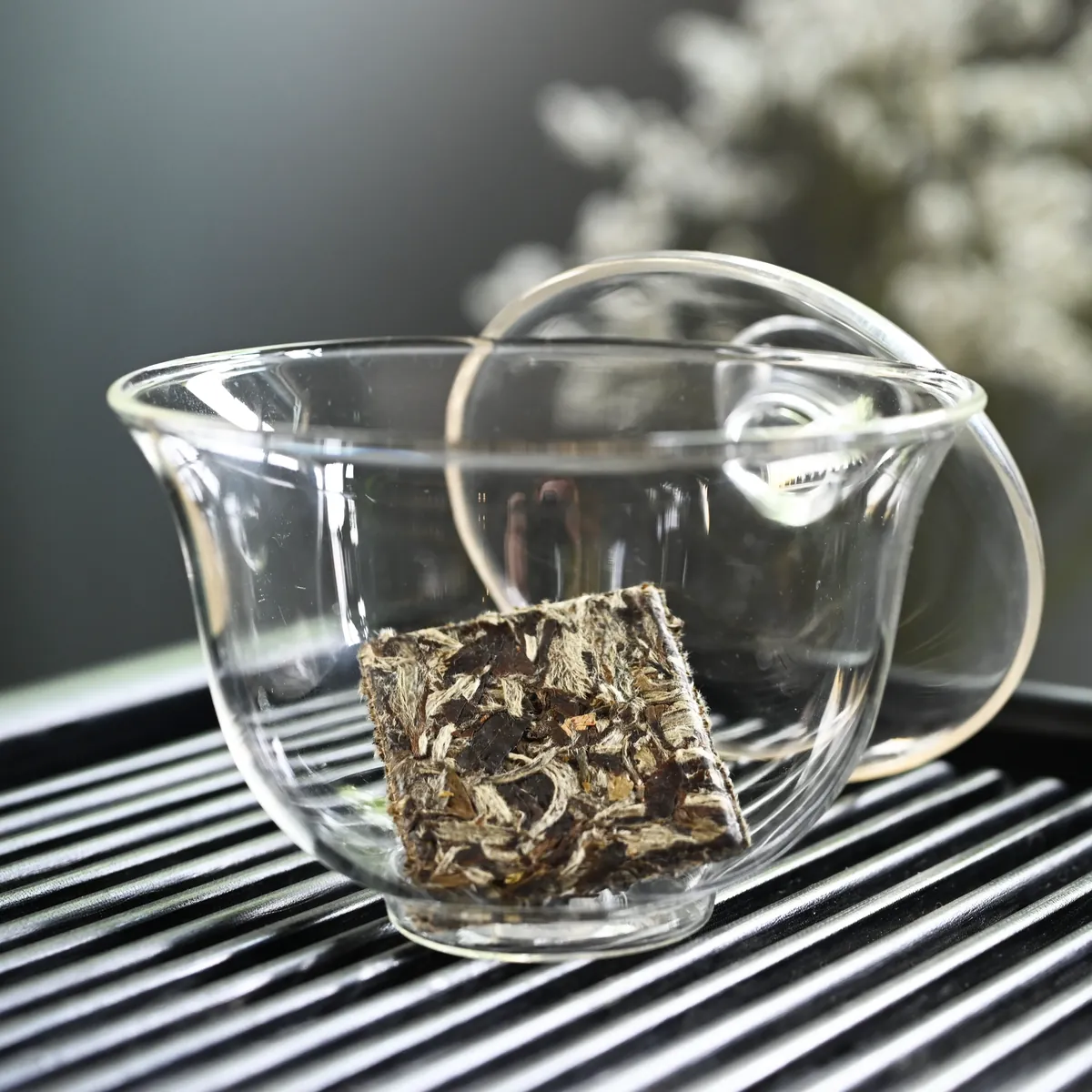
We recommend brewing this tea in a gaiwan for the best results. Try Ichimatsu Gaiwan Celadon Green.
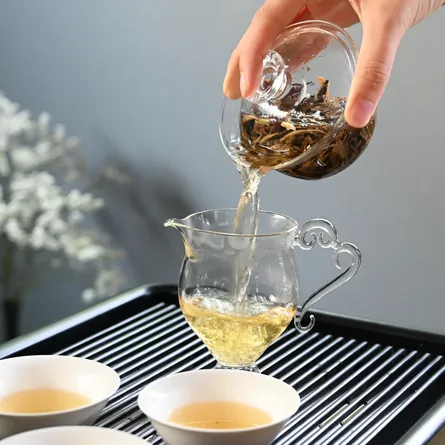
For a group of six, half of one cake is sufficient; the remaining half can be saved for later. Because the leaves can separate from the compressed form, using a chakoshi (tea strainer) when pouring is recommended to keep the liquor clear.
Early infusions can be brewed at a slightly higher temperature with shorter steep times to highlight the light, mild jasmine aroma. As the session progresses and the white tea character becomes more dominant, 85°C for around 30 seconds works well. The tea is quite brew-flexible and responds well to adjustments.
Place of Origin: Fuding, Fujian Province, China
Cultivar: Fuding Da Bai (福鼎大白種)
Scenting: 8 rounds (八韻)
To write a review, please log in.
(Only purchasers can write a review.)
Item code: TCH128
Origin: Fuding Prov., CHINA
Ingredients: white tea
Best before: OCT / 2027


 The customs duties do not belong to our competence. It may occur that duties have to be paid on receipt of the parcel. About the current rates of customs duties in your country please contact local authority. To learn about international shipping, read more here.
Posting time can vary due to the manufacturers capacity, Japanese national holidays, as well as natural disasters or accidents, etc., and we can not guarantee posting dates.
Albania
Algeria
Argentina
Armenia
Australia
Austria
Azerbaidjan
Bahrain
Bangladesh
Barbados
Belgium
Bhutan
Bosnia and Herzegovina
Botswana
Brunei Darussalam
Bulgaria
Cambodia
Canada
Chile
Croatia
Cyprus
Czech Republic
Denmark
Djibouti
Ecuador
Egypt
El Salvador
Estonia
Ethiopia
Faroe Islands
Fiji
Finland
France
Gabon
Georgia
Germany
Germany
Ghana
Gibraltar
Guam (USA)
Honduras
Hong Kong
Hungary
Hungary
Iceland
India
Indonesia
Ireland
Israel
Italy
Ivory Coast (Cote D'Ivoire)
Jamaica
Japan
Japan
Jordan
Kenya
Kuwait
Kyrgyzstan
Laos
Latvia
Liechtenstein
Lithuania
Luxembourg
Macau
Macedonia
Madagascar
Malaysia
Maldives
Malta
Mauritius
Mexico
Moldova
Monaco
Mongolia
Montenegro
Morocco
Myanmar
Nepal
Netherlands
New Caledonia (French)
New Zealand
Nigeria
Norway
Pakistan
Panama
Papua New Guinea
Paraguay
Peru
Philippines
Poland
Portugal
Puerto Rico
Qatar
Reunion Island
Romania
Rwanda
San Marino
Saudi Arabia
Senegal
Serbia
Sierra Leone
Singapore
Sint Maarten
Slovak Republic
Slovenia
South Africa
South Korea
Sri Lanka
Sudan
Sweden
Switzerland
Tahiti (French Polynesia)
Taiwan
Tanzania
Thailand
Togo
Tonga
Trinidad and Tobago
Tunisia
Uganda
Ukraine
United Arab Emirates
United Kingdom
United Kingdom
United States of America
United States of America
Uruguay
Uzbekistan
Venezuela
Vietnam
Zimbabwe
Should you have any questions, please do not hesitate to contact us
 |
 |
 |
 |
| 4 g 0.1 oz 1 US tsp |
85°C 185°F |
100 ml 3.4 fl oz 100 cc |
30 sec.~ |
STEP 1) Warm your teapot. Pour boiling water into a gaiwan or teapot, let it sit for a little while, then discard all the water.
STEP 2) Brew. Put the pressed tea into your gaiwan or teapot. Pour hot, but not boiling water on the tea leaves and brew for 30 seconds.
STEP 3) Serve. Pour the tea into a pitcher, and then into cups.
STEP 5) Brew again.
❖ For the second infusion, steep it for about 20 seconds.
❖ Make sure to open the lid of the teapot between infusions, to prevent the leaves from cooking.
❖ This is how we recommend brewing this tea, but we all have our preferences, so try experimenting to find the way you like it the most.
Extraordinary matcha with the name of ‘long life’ for making thick tea (koicha)
Taiwanese high mountain oolong with creamy-vanilla notes

