BREAKING NEWS:Jun 16, 2026Please note that DHL courier service is limited to a maximum gross package weight of 2 kg. FedEx is available without restrictions. Thank you for your understanding!
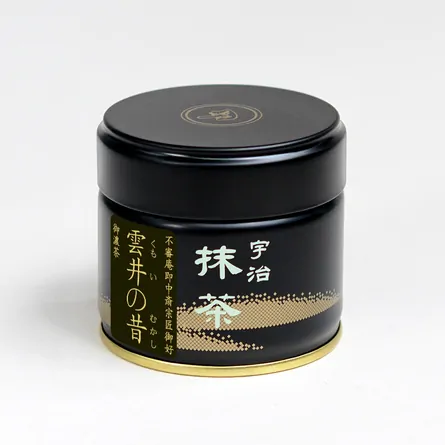
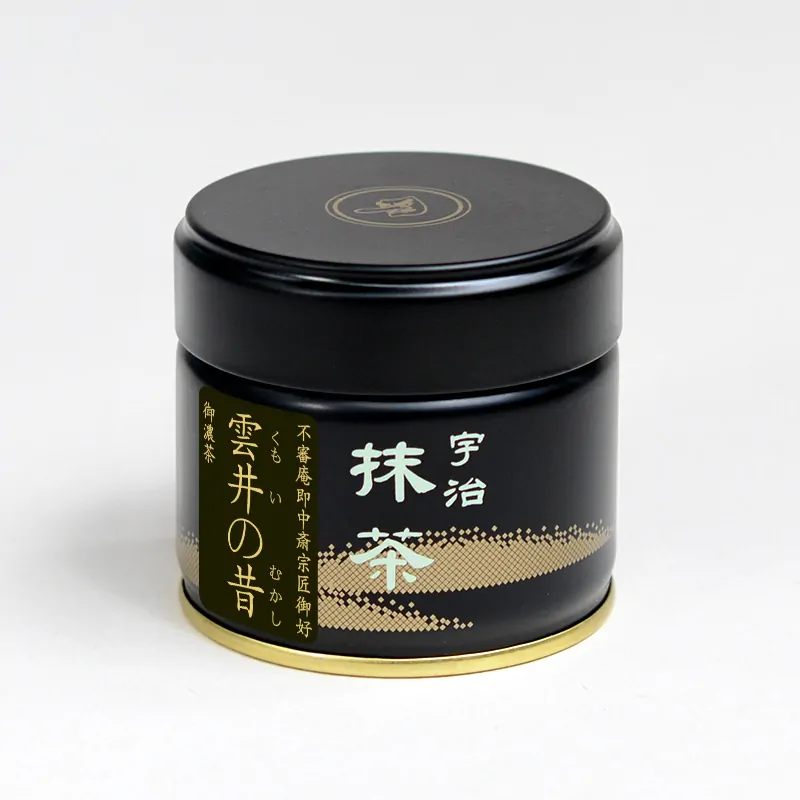
Powdered green tea favoured by Sokuchusai, the 13th generation grand tea master of Omotesenke
The meaning of Kumoi no Mukashi "雲井の昔" :
雲井 (Kumoi) is used to describe the capital where the imperial palace is located. Since it seems that "Kumoi no mukashi" and "Miyako no fuji" were named at or around the same time, it is believed that "kumoi" refers to the capital. (for an explanation of the usage of "mukashi" and "shiro", please refer to the general notes)
◆The general notes of the usage of "mukashi" and "shiro":
The expressions "Mukashi" and "Shiro" at the end of tea names have a grading connotation and are used to distinguish between thick and thin teas, respectively.
Only "Mukashi" was likely to have been used originally, with the expression "Shiro” coming into use later on.
"Mukashi" is said to be a combination of the Chinese characters for "twenty" (廿) and "day" (日). Crucially, March 20th (廿日) of the lunar calendar is when it was said that the very best tea is picked.
"Shiro" became common during the reign of the third shogun, Tokugawa Iemitsu, and is said to have originated when the feudal lords of the time actively asked Uji tea masters to make their tea “thin" or "light". It is not clear what the expression “shiro" specifically meant at that time, but it is thought to have referred to the differences in taste, as records show that Furuta Oribe preferred dark green tea while Kobori Enshu preferred it to be lighter.
Perhaps the difference between 'dark' and 'light' tea can also be explained by the difference in the preparation methods of the tea in Uji.
Other theories as to the origins of the words “mukashi" and “shiro" exist, but it can be said with reasonable confidence that the word “mukashi" has been used since ancient times, with the word “shiro" coming into use from the Edo period onwards. Later generation tea masters then replaced the traditional word “mukashi" with the term “shiro," both of which had previously been used to describe the grades of the tea, and made it commonplace.
In any case, it is not totally clear how the times and changes in the history of the tea ceremony could have affected the meaning of “shiro" or "mukashi". However, they are words that reflect the trends and changes of the times and have been carried over to the present day.
To write a review, please log in. (Only purchasers can write a review.)
Share this page with your friends:
Item code: MTG013
Maker: Hekisuien
Origin: Kyoto Pref., JAPAN
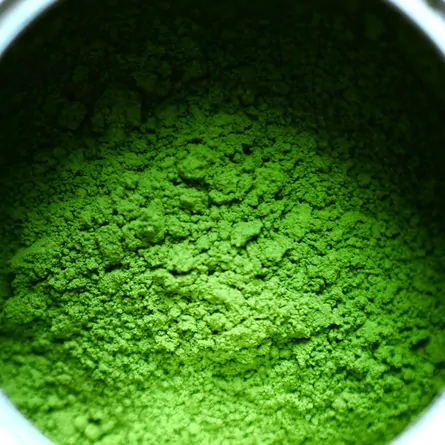
Ingredients: green tea powder
Best before: JAN / 2027
SHIPPING DETAILS
Ship to:
Worldwide (List of Countries)
Delivery service:
DHL, FedEx, Yamato Transport, Yu-Pack, S.F. Express, Pick-Up (See conditions)
Estimated posting:
within 5 business days
Payments:
• PayPal • Bank card payment • Bank transfer • Cash on delivery (Learn more here)
The customs duties do not belong to our competence. It may occur that duties have to be paid on receipt of the parcel. About the current rates of customs duties in your country please contact local authority. To learn about international shipping, read more here.
Posting time can vary due to the manufacturers capacity, Japanese national holidays, as well as natural disasters or accidents, etc., and we can not guarantee posting dates.
List of Countries
Albania Algeria Argentina Armenia Australia Austria Azerbaidjan Bahrain Bangladesh Barbados Belgium Bhutan Bosnia and Herzegovina Botswana Brunei Darussalam Bulgaria Cambodia Canada Chile Croatia Cyprus Czech Republic Denmark Djibouti Ecuador Egypt El Salvador Estonia Ethiopia Faroe Islands Fiji Finland France Gabon Georgia Germany Germany Ghana Gibraltar Guam (USA) Honduras Hong Kong Hungary Hungary Iceland India Indonesia Ireland Israel Italy Ivory Coast (Cote D'Ivoire) Jamaica Japan Japan Jordan Kenya Kuwait Kyrgyzstan Laos Latvia Liechtenstein Lithuania Luxembourg Macau Macedonia Madagascar Malaysia Maldives Malta Mauritius Mexico Moldova Monaco Mongolia Montenegro Morocco Myanmar Nepal Netherlands New Caledonia (French) New Zealand Nigeria Norway Pakistan Panama Papua New Guinea Paraguay Peru Philippines Poland Portugal Puerto Rico Qatar Reunion Island Romania Rwanda San Marino Saudi Arabia Senegal Serbia Sierra Leone Singapore Sint Maarten Slovak Republic Slovenia South Africa South Korea Sri Lanka Sudan Sweden Switzerland Tahiti (French Polynesia) Taiwan Tanzania Thailand Togo Tonga Trinidad and Tobago Tunisia Uganda Ukraine United Arab Emirates United Kingdom United Kingdom United States of America United States of America Uruguay Uzbekistan Venezuela Vietnam Zimbabwe
Should you have any questions, please do not hesitate to contact us
How to prepare
USUCHA
STEP 1: Place 1.5–2 g (approx. ½ tsp or 2 chashaku (traditional tea scoop)) of matcha powder into a suitable tea bowl.
STEP 2: Pour 70 ml (2.4 fl oz) of 80°C (176°F) water over the powder.
STEP 3: Whisk (vigorously) with a chasen (tea whisk) until frothy.
❖ Warm the tea bowl with hot water first, then dry it thoroughly with a cloth. This helps maintain the ideal temperature and brings out the fresh aroma of the matcha.
❖ Sift the matcha powder through a fine strainer before use to prevent clumping (strongly recommended).
❖ Drink the matcha immediately after preparing it, as it may become more bitter as it cools.
❖ After opening the matcha packaging, consume all the tea within one month for the best experience.
KOICHA
STEP 1: Place 3.5–4 g (approx. 1 tsp or 4 chashaku (traditional tea scoop)) of matcha powder into a suitable tea bowl.
STEP 2: Pour 30 ml (2.4 fl oz) of 80°C (176°F) water over the powder.
STEP 3: Gently mix with a chasen until creamy.
❖ Warm the tea bowl with hot water first, then dry it thoroughly with a cloth. This helps maintain the ideal temperature and brings out the fresh aroma of the matcha.
❖ Sift the matcha powder through a fine strainer before use to prevent clumping (strongly recommended).
❖ Drink the matcha immediately after preparing it, as it may become more bitter as it cools.
❖ After opening the matcha packaging, consume all the tea within one month for the best experience.
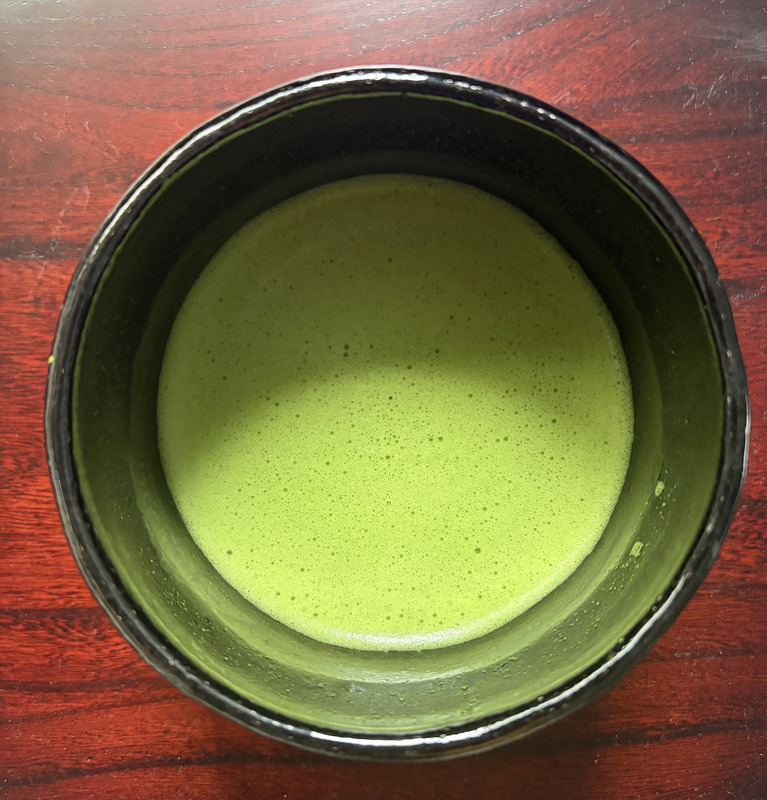
One of my new favorites. As usucha, it is quite mild and balanced; no flavour jumps out. As koicha, the complexity really blooms, from strong umami and sweetness to a deep, exciting flavour.
It foams very beautifully, as is my experience with most matcha from Hekisuien brand.
Did you find this review useful? (5)
Gi******, 2018-03-01 19:04 JST, ITALY
It has a very balanced taste. As usucha it's just a very good matcha, but in my opinion not as multi-faceted as other Sazen matchas from this price range. As koicha, more flavors come out and it's more interesting to me, but there is some bitterness. I prefer other matchas, but it's probably just my taste since I can't easily find any objective flaws.
A top-rated ceremonial Uji matcha with a rich flavor from Hekisuien
$29.16 / 30 g
Follow Us on Instagram
Add comment
X
We use cookies on this site for the purpose of personalising your SAZEN experience. Find out more
By clicking or navigating the site, you agree to allow our collection of information for the purpose of personalising your Sazen experience. The information is stored on your computer in so called Cookies, that you can manage or delete any time. Your trust matters to us, that's why we protect your information and use it responsibly. We are committed to the protection of your privacy and the security of your personal data. Check our Privacy Policy for detailed information on how we do that.




 The customs duties do not belong to our competence. It may occur that duties have to be paid on receipt of the parcel. About the current rates of customs duties in your country please contact local authority. To learn about international shipping,