Next >>
A Few Remarkable Green Teas from Across China
HOW TO CHOOSE YOUR FIRST CHINESE GREEN TEAS?
How to brew Chinese green tea
Teaware for Chinese green tea
Green Tea Storage Guidelines
Reading Time: 20 min.
 In the 1990s, as Taiwanese and Chinese oolongs began to capture the attention of the global tea world, and since then Chinese tea is seen through that lens—rich, aromatic, darker oolongs that felt new and exciting to international drinkers. In reality, however, green tea has always remained the most commonly produced tea in China. Even today, it accounts for about 62% of the country’s total tea production, while oolong makes up only around 9%.
To understand why, it helps to step back into how tea culture actually developed across such a vast country. China is not a single tea-drinking landscape, but many small ones layered together. For centuries, people in each region mostly drank what grew nearby. Tea rarely travelled far. Transport was slow, and by the time tea reached distant places, its fragrance and freshness would often fade. So instead of a unified national preference, tea culture grew as a mosaic of local habits.
Over time, each region built its own loyalty to its local tea. And even as transportation and trade eventually improved, those habits didn’t simply disappear—they stayed. And in many areas the local tea was and remained green tea.
Because it is familiar, accessible—and endlessly versatile.
What is Chinese green tea?
 The earliest forms of tea in China were likely closest to what we now call green tea: minimally oxidized leaves processed through simple heating methods such as steaming or pan-firing.
Over time, the major categories of tea—green, oolong, and black—emerged gradually. Developments during the Tang (618–907) and Song (960–1279) dynasties refined tea culture, while the Ming dynasty (1368–1644) established many of the loose-leaf processing methods that shaped modern production. From around this period onward, teas resembling today’s green tea were widely produced and enjoyed.
At its core, green tea is defined by how oxidation is prevented. This is achieved through careful processing of fresh leaves from the tea plant, Camellia sinensis.
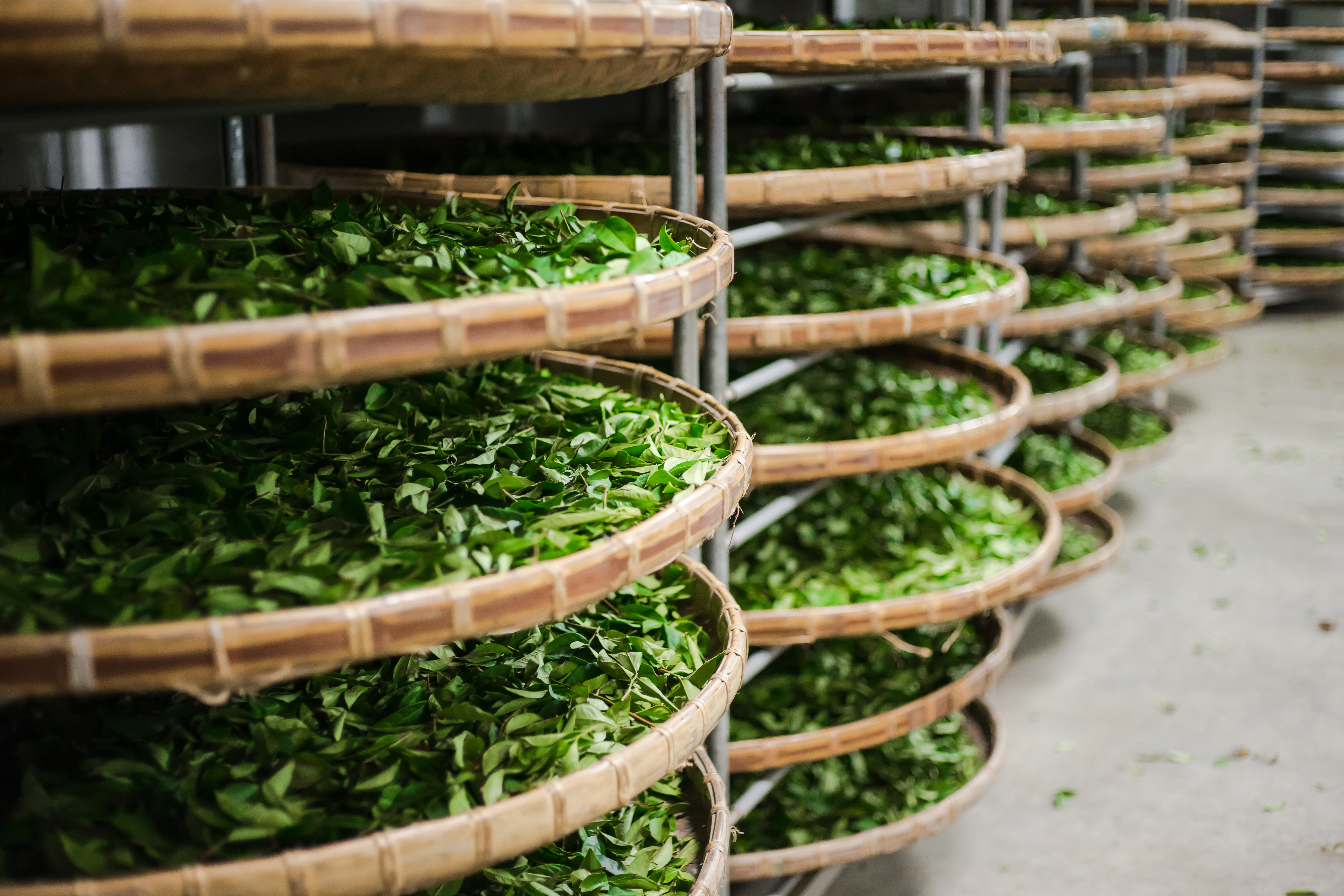
Harvesting begins with selecting young shoots—typically a bud and one or two tender leaves. These are prized for their concentration of aromatic compounds and relatively low bitterness. The most celebrated Chinese green teas are often picked in early spring, when growth is slow and the leaves are especially tender.
After picking, the leaves may undergo a short withering period, mainly to reduce surface moisture and improve pliability. In many Chinese green teas, this step is minimal or skipped entirely.
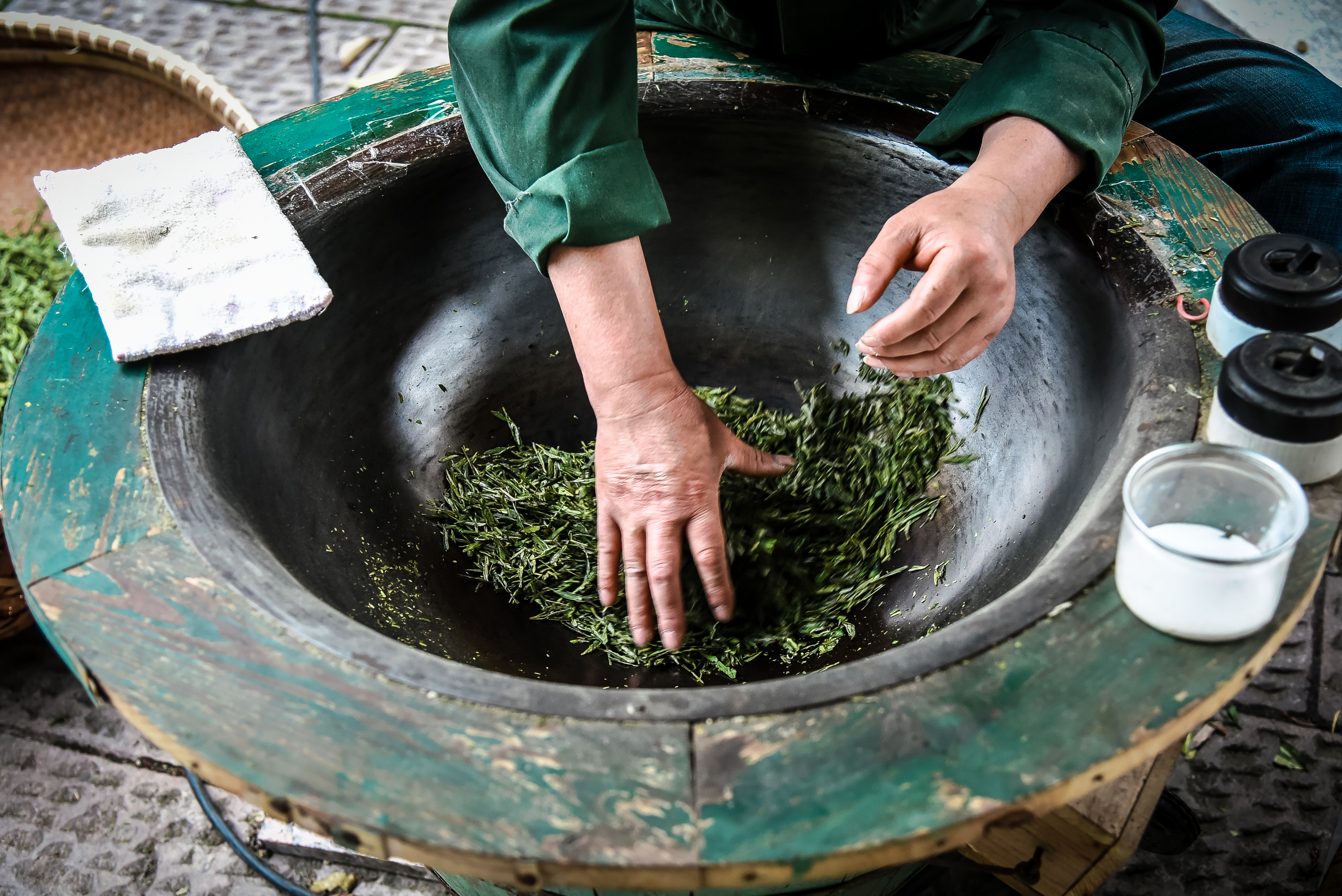 The most critical stage follows: “kill-green,” or sha qing. Here, leaves are rapidly heated in a wok or rotating drum. This heat deactivates enzymes responsible for oxidation, preserving the leaf’s green color and fresh, vegetal aroma. It is this step that fundamentally distinguishes green tea from oolong or black tea.
Once enzyme activity is halted, the leaves are shaped through rolling. This process helps release internal juices, enhancing flavor during brewing, while also forming the distinctive appearances of different regional teas—flat, curled, twisted, or needle-like.
Finally, the tea is dried to remove remaining moisture and stabilize it for storage. Depending on the style, this may involve additional pan-firing or controlled hot-air drying.
Together, these steps follow a simple principle: apply heat early to prevent oxidation, then shape and dry the leaf to preserve and refine its character. The result is a tea that remains close to the original freshness of the leaf.
A Few Remarkable Green Teas from Across China
Although unified by processing, Chinese green teas are remarkably diverse. They are produced across a wide range of climates, elevations, and regional traditions, resulting in an extraordinary variety of shapes, aromas, and flavor profiles.
Some teas are made from large, mature leaves, while others rely on tender buds. Some are soft and delicate, opening quickly in water, while others are firmer and more structured. Their forms vary just as widely—flat, spiral-shaped, needle-like, or tightly curled—each reflecting local tradition and technique.
Flavor differences are wide and vary from region to region. Differences in soil, water, climate, and elevation have given rise to many iconic green teas, each with its own distinct personality. If we had to pinpoint the provinces most renowned for green tea, four stand out: Zhejiang, Jiangsu, Anhui, and Sichuan.
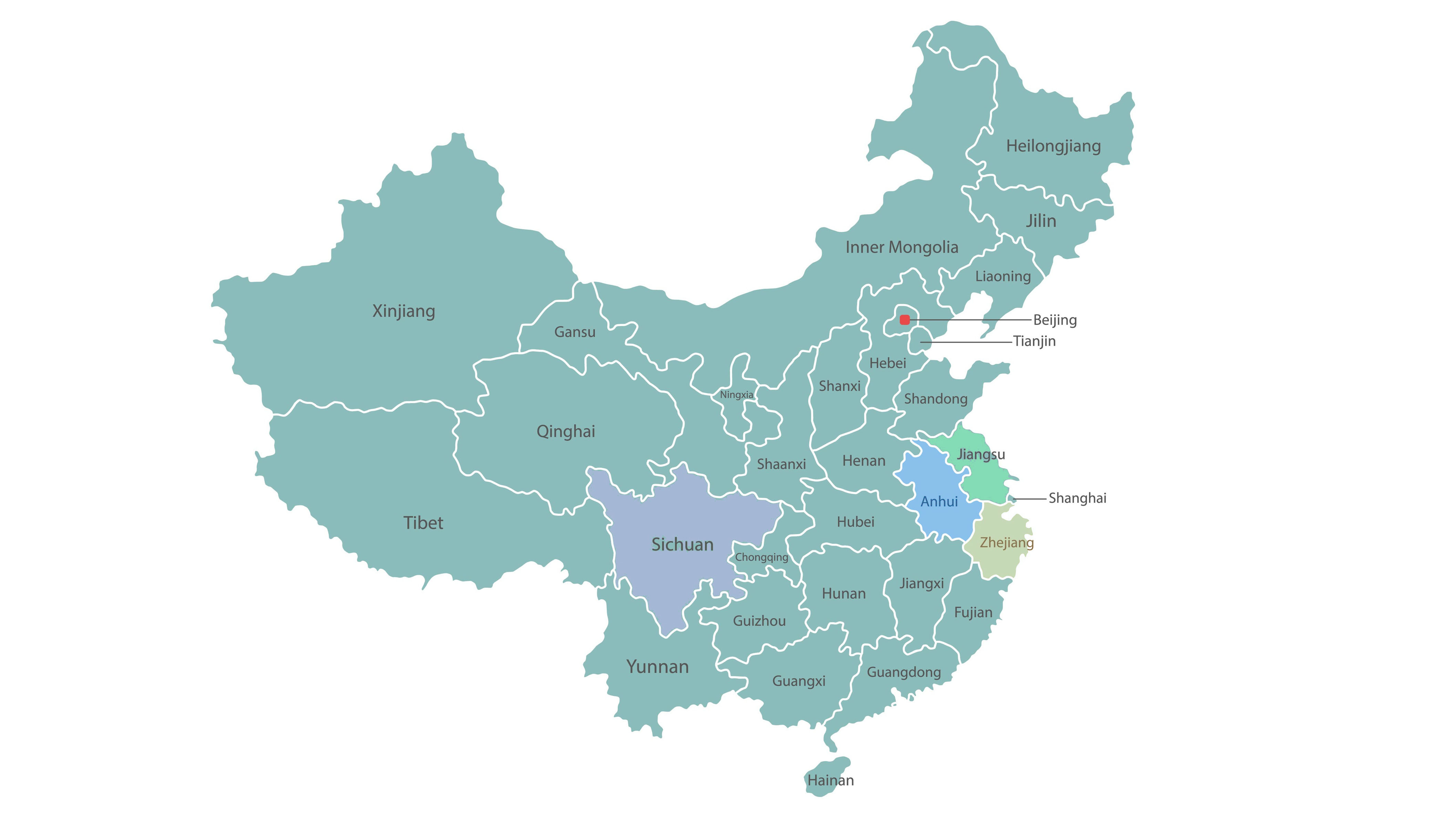
Zhejiang → Teas from Zhejiang often carry sweet, chestnut-like notes with a smooth texture.
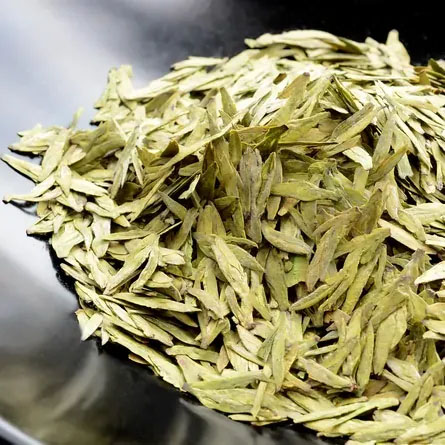
Shi Feng Longjing:
Probably the most famous Chinese green tea and one of the most celebrated teas in the world. They say Longjing menifests the "Four Perfections" – brilliant color, rich aroma, refreshing sweetness, and beautiful leaves. The pan-fry processing gives it the famous chestnutty character.
☞ $24.84 / 10 g Sazen BAG
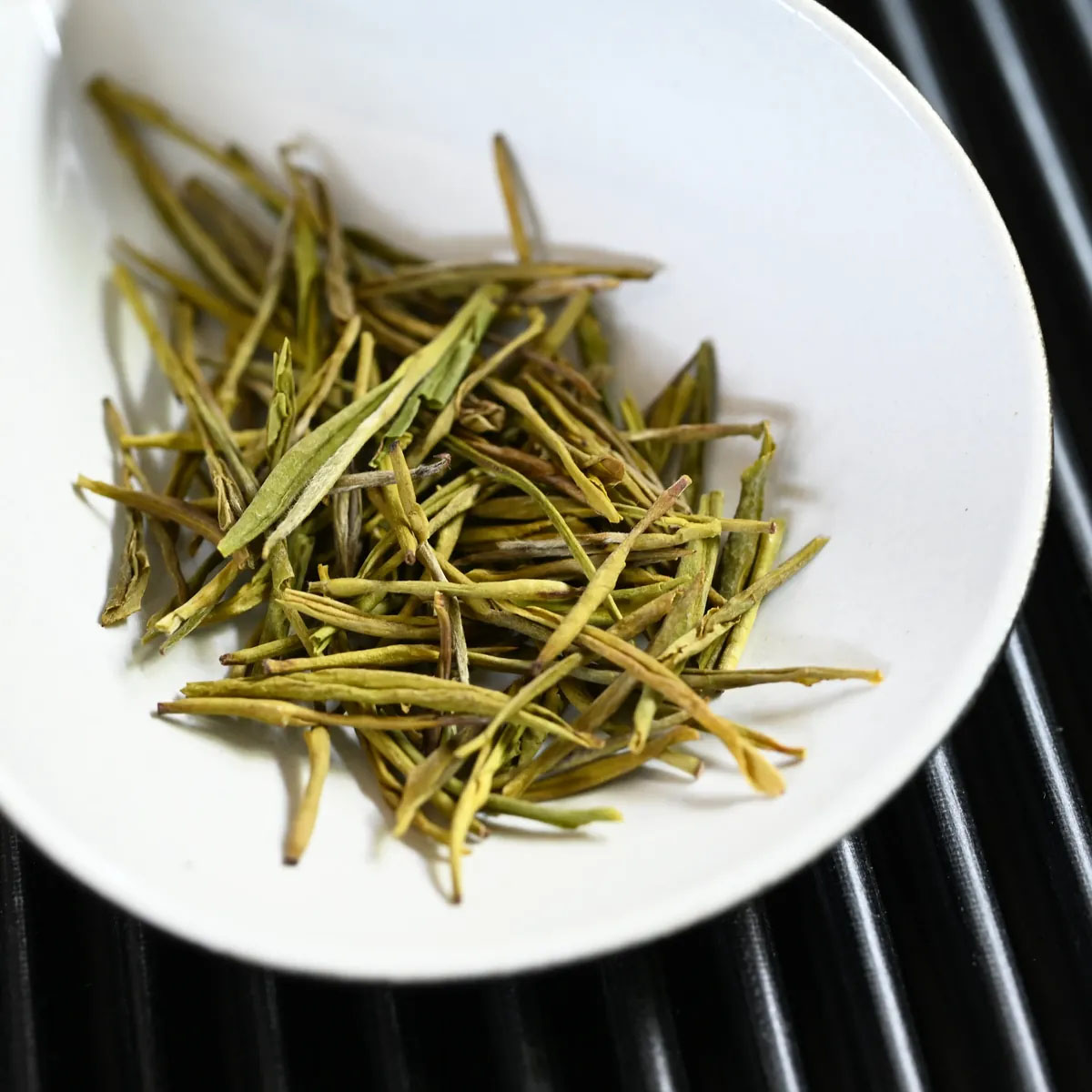 H
HOne of the most interesting specialty teas from Zhejiang famous for its unusually high amino-acid content and striking appearance. It's weet but refreshing, verdant, and gently minty, with a subtle spicy edge.
☞ $15.12 / 10 g Sazen BAG
Jiangsu → Many well-known teas from Jiangsu lean toward a more aromatic, fruit-forward profile.
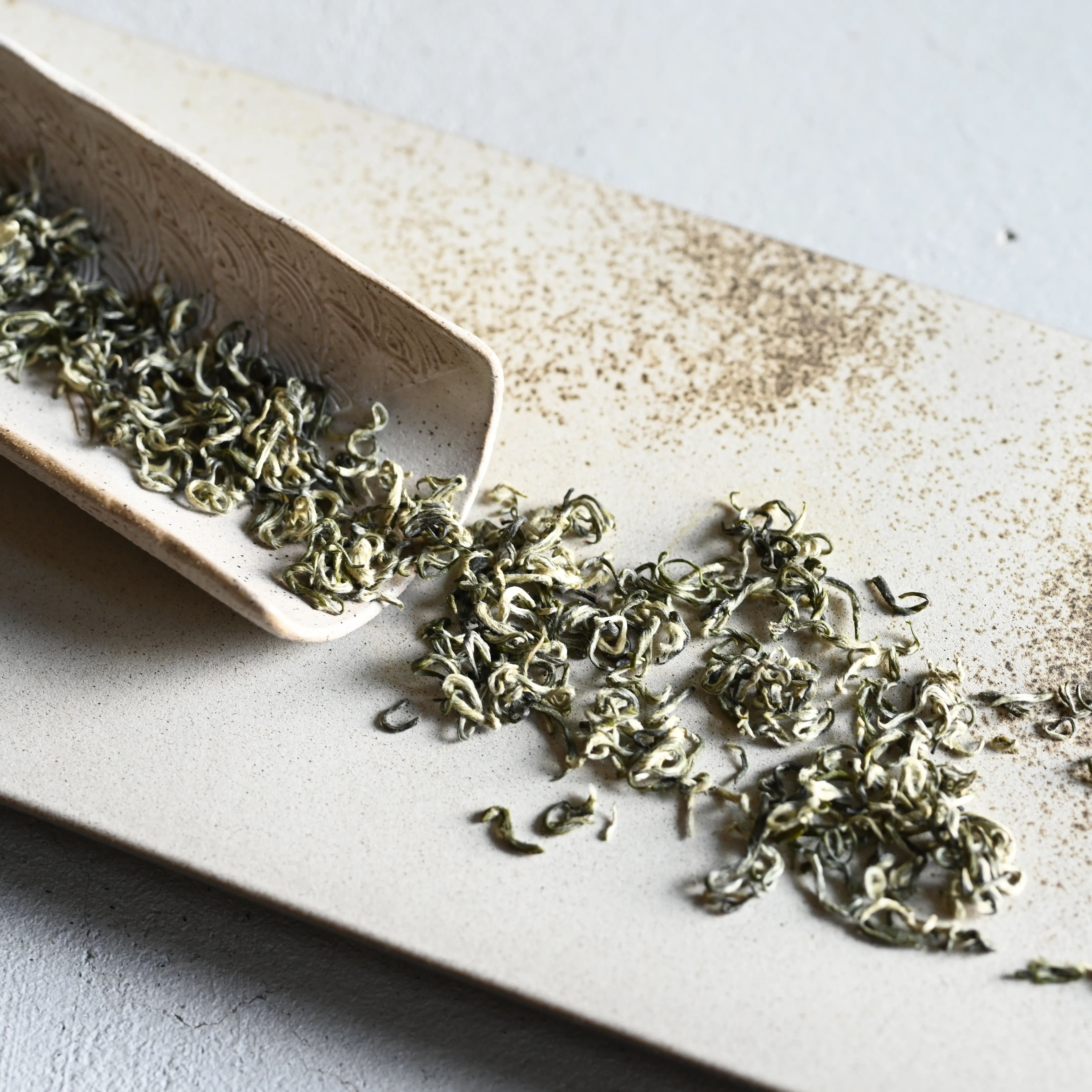 Dong Ting Bi Luo Chun
Celebrated among the best Chinese green teas, it is is nectary sweet and fruity with the notes of dried fruit, jam, and fresh mango. Traditional Bi Luo Chun tea gardens are often interplanted with fruit trees such as peach, plum, apricot, and loquat. it's believed these surroundings contribute to the tea's distinctive fruity aroma.
☞ $19.44 / 10 g Sazen BAG
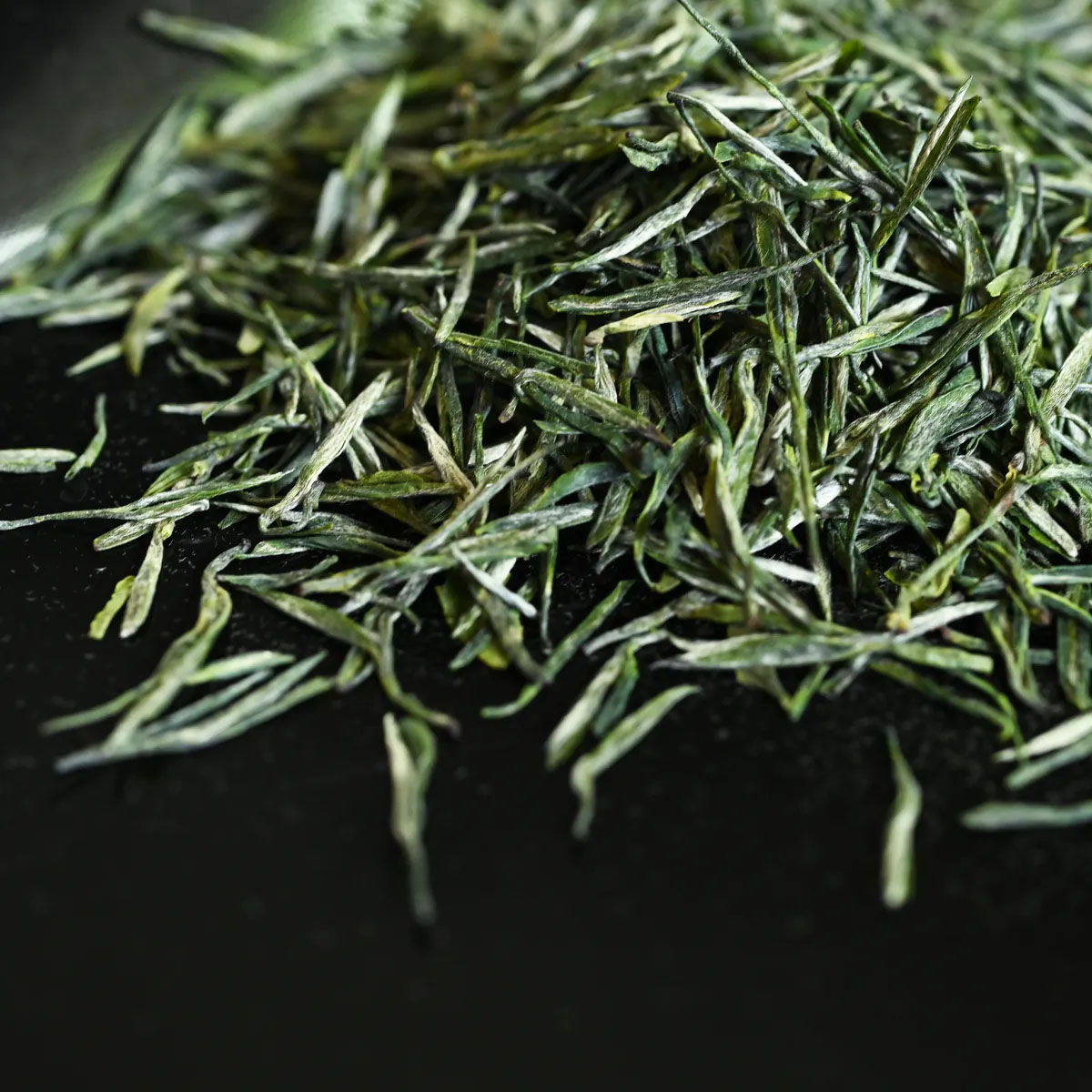 Nanjing Yu Hua Cha
A modern classic but considered similarly precious as the iconic Bi Luo Chun. Bright and mellow, with crisp green, cucumber notes and delicate floral undertones.
☞ $20.52 / 10 g Sazen BAG
Anhui → Teas from Anhui tend to be floral and elegant in character.
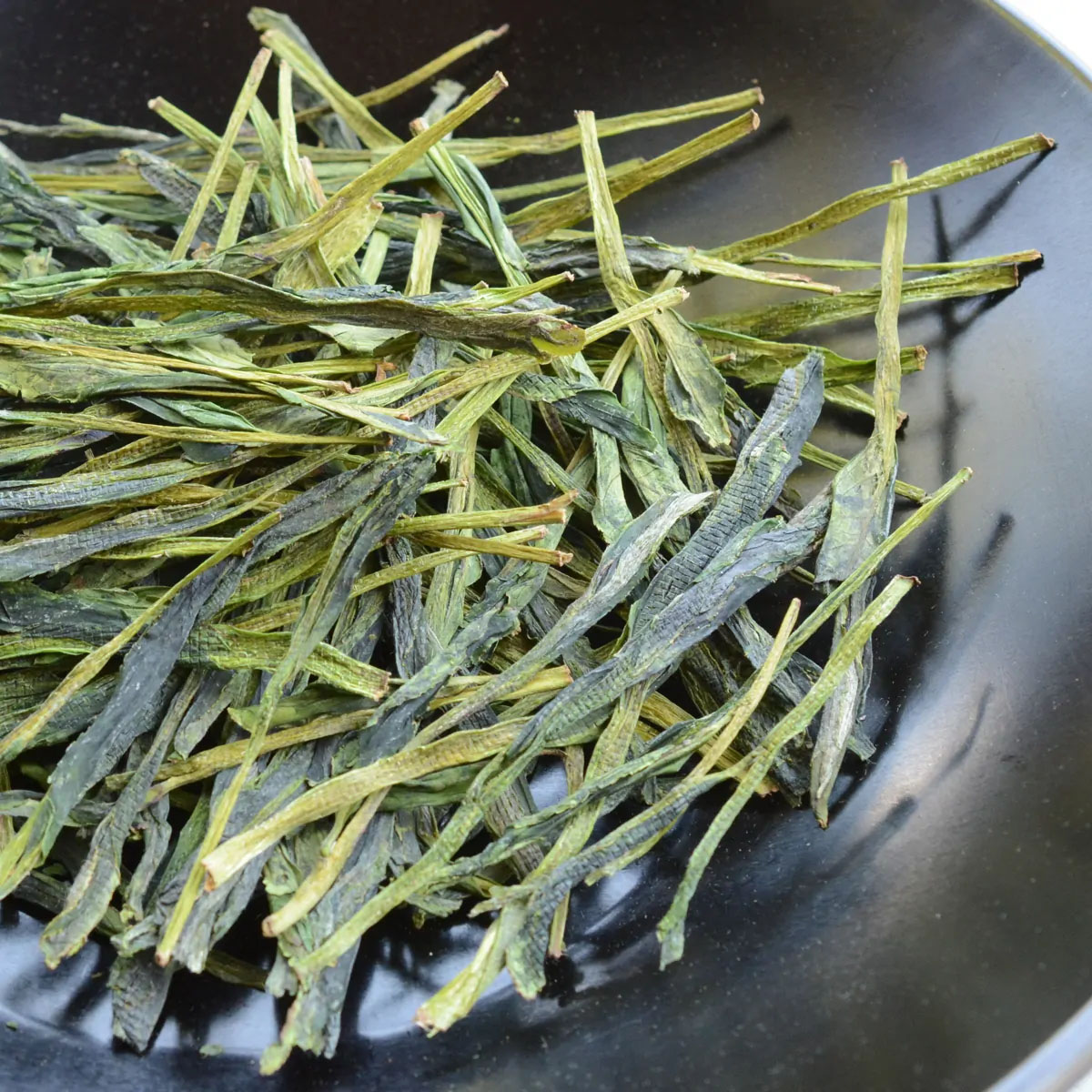 Tai Ping Hou Kui
A unique tea known for its beautiful, long, lush green leaves. The tea is famous for its orchid aroma and vegetal flavor notes. It is often brewed in a tall glass cup, with fresh water added repeatedly before the cup is emptied, leaving a small amount of water at the bottom each time.
☞ $32.40 / 10 g Sazen BAG
Sichuan → Teas from Sichuan are often lighter and softer, with a mellow sweetness and refined character.
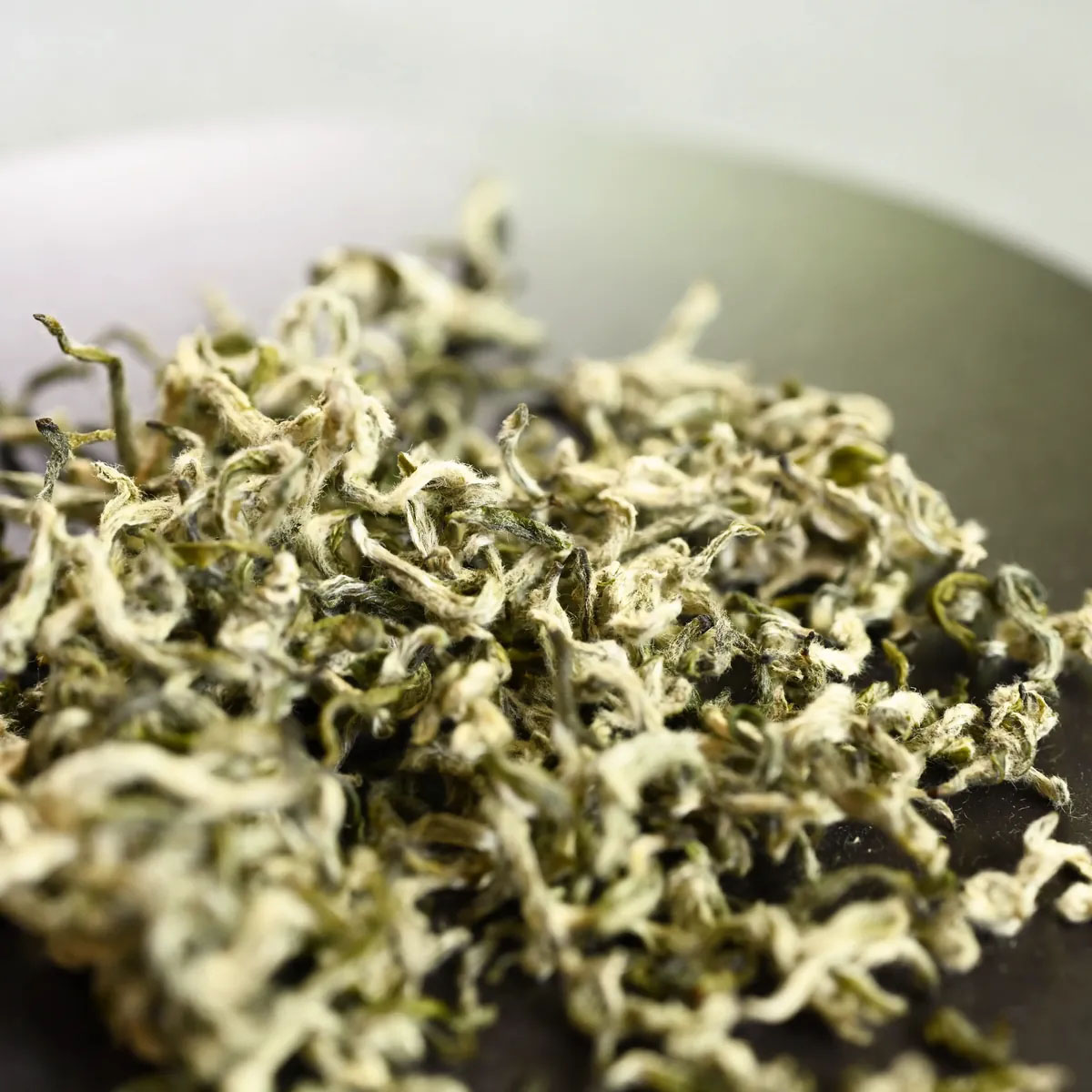 Meng Ding Gan Lu
One of the oldest and most historically significant teas in China. It's characterized by rounded-shape leaves covered in fine fur. A creamy-silky, sweet tea with the grip of sour, baked nuts, like pine or sunflower nuts.
☞ $21.60 / 10 g Sazen BAG
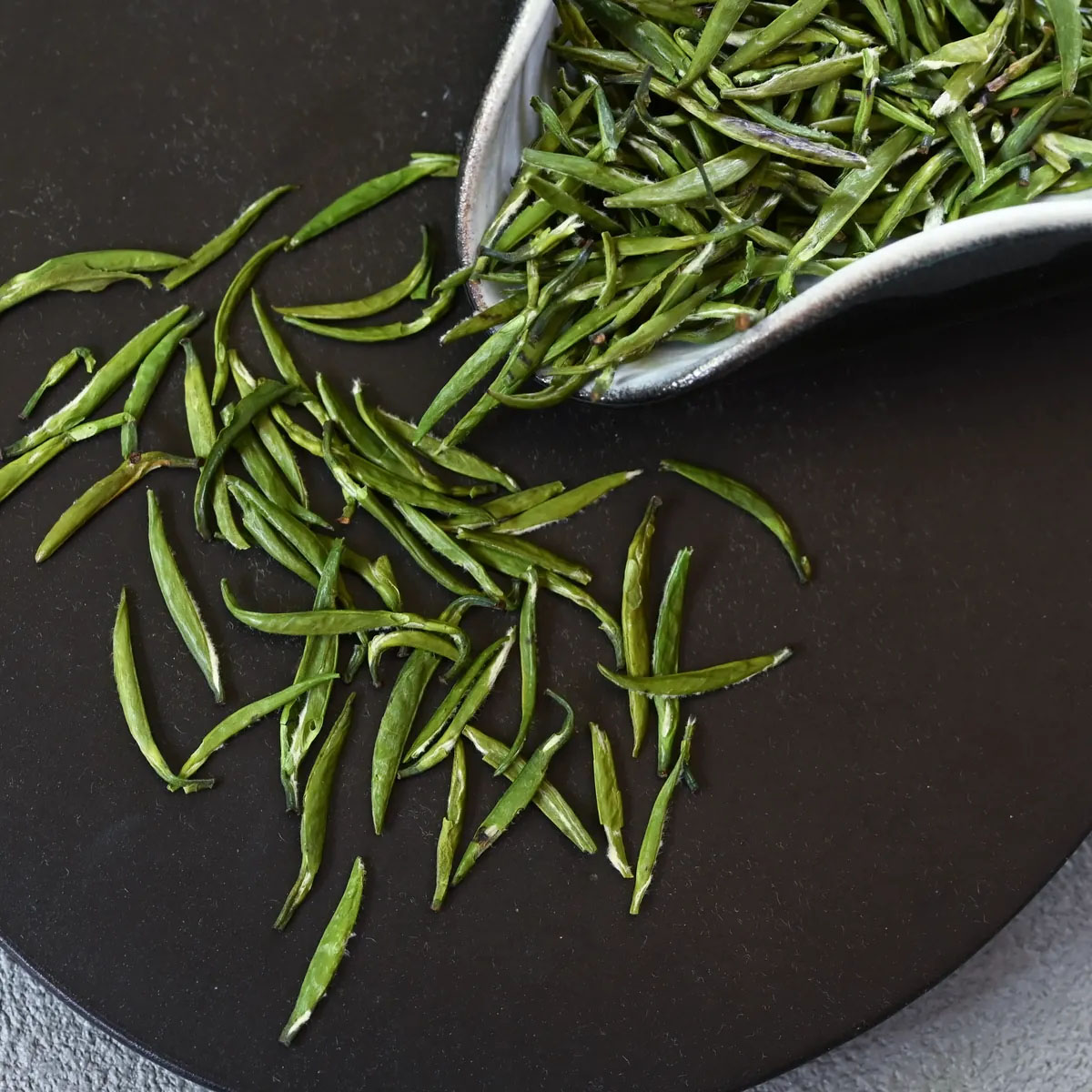 Emei Zhu Ye Qing
A full-bodied, mildly spicy but refreshing green tea with pepper and cucumber notes.
☞ $19.44 / 10 g Sazen BAG
Despite this diversity, all green teas share an important feature: subtlety and sophistication.
HOW TO CHOOSE YOUR FIRST CHINESE GREEN TEAS?
Chinese green tea surprises many first-time drinkers is that high-quality examples are rarely intensely bitter. When brewed carefully, they tend to be sweet, soft, aromatic, and textured.
A good way to begin exploring Chinese green tea is to try small amounts of several different teas. If you already know the flavors you enjoy—whether toasty, fruity, floral, grassy, or nutty—look for teas that match those taste notes.
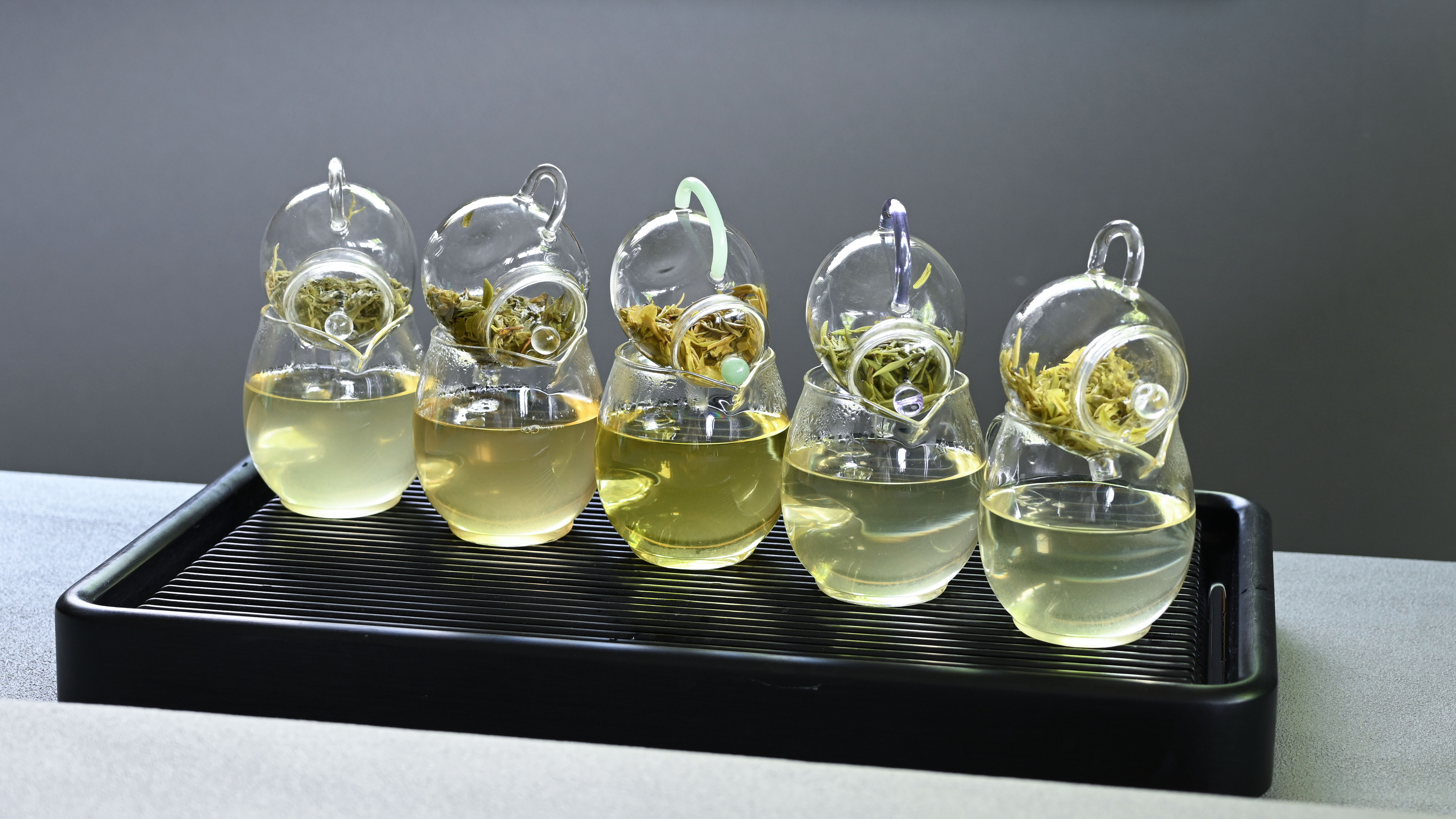
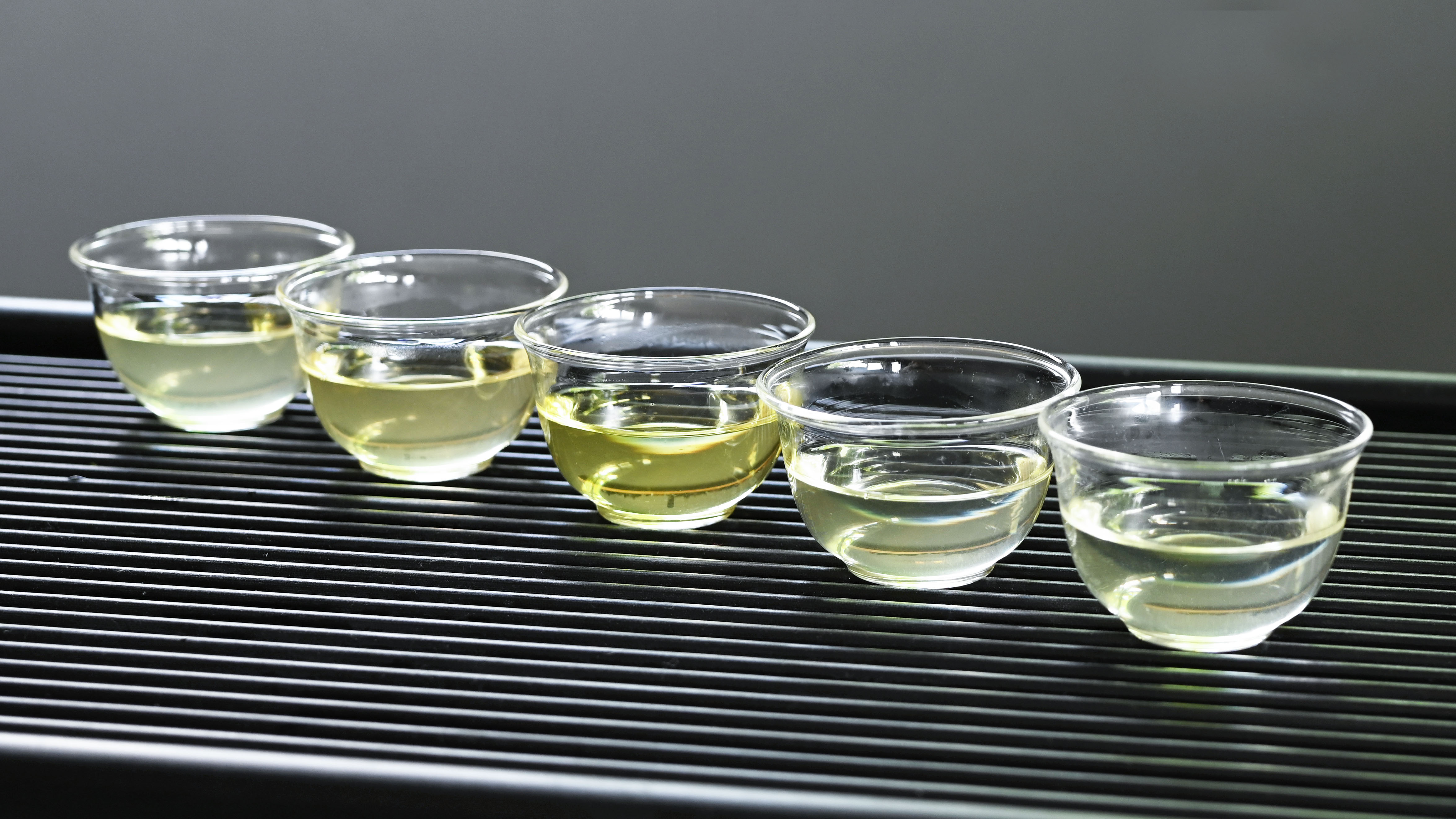
If you are still discovering your preferences, a tea set is often the easiest place to start. By sampling teas with different characters side by side, you can quickly learn which styles appeal to you most. Sazen also prepared a tea set that focuses on the versatility of Chinese green teas.
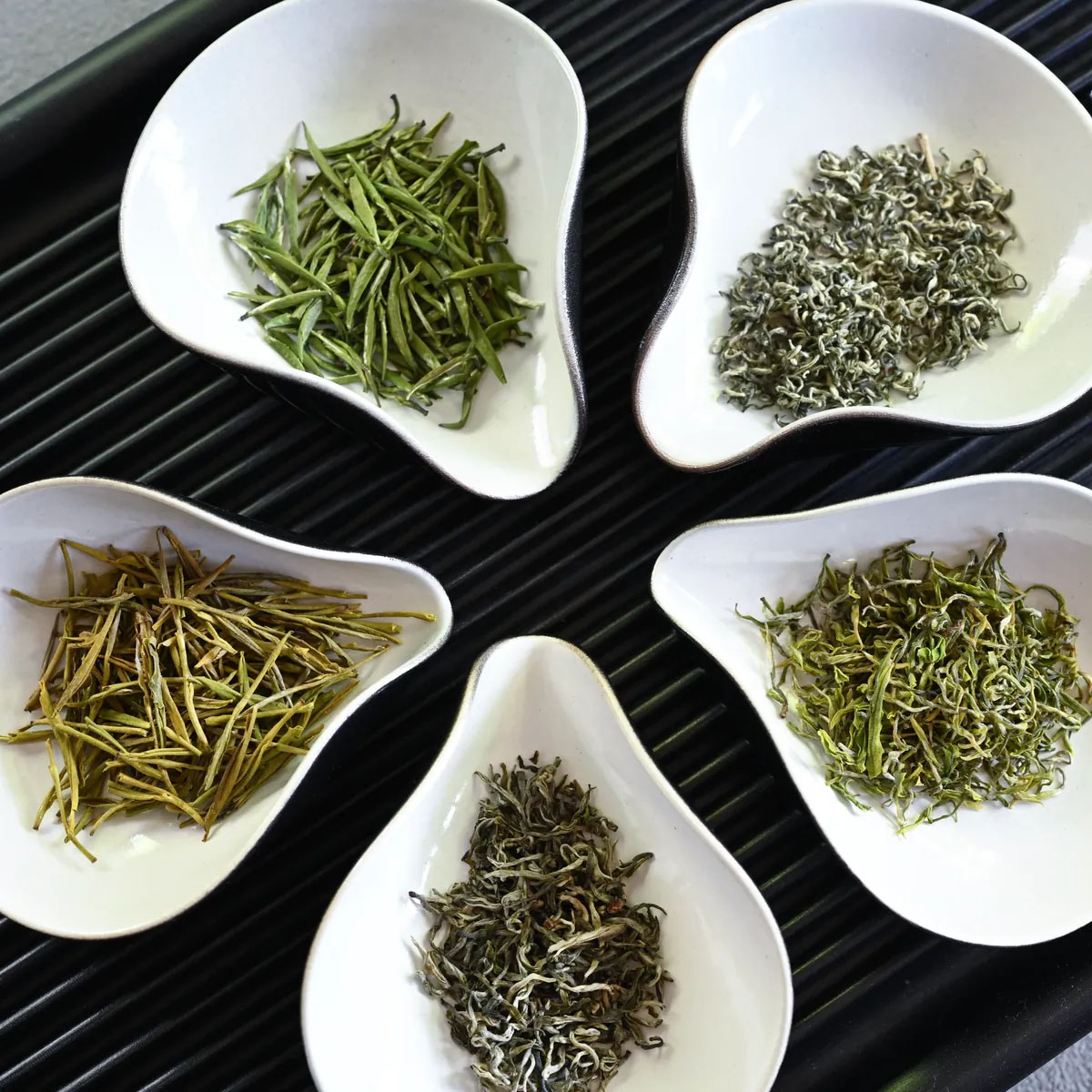
5 premium Chinese green teas, all iconic types with different characters to help explore the versatility of Chinese green teas, while deepening your understanding and appreciation of the nuances that distinguish these beautiful varietals.
☞ $19.44 / 10 g Sazen BAG
How to brew Chinese green tea
Although there are several ways to brew green tea and no single method fits all, there are some general steps that are helpful to follow.
STEP 1) Warm Your Teapot
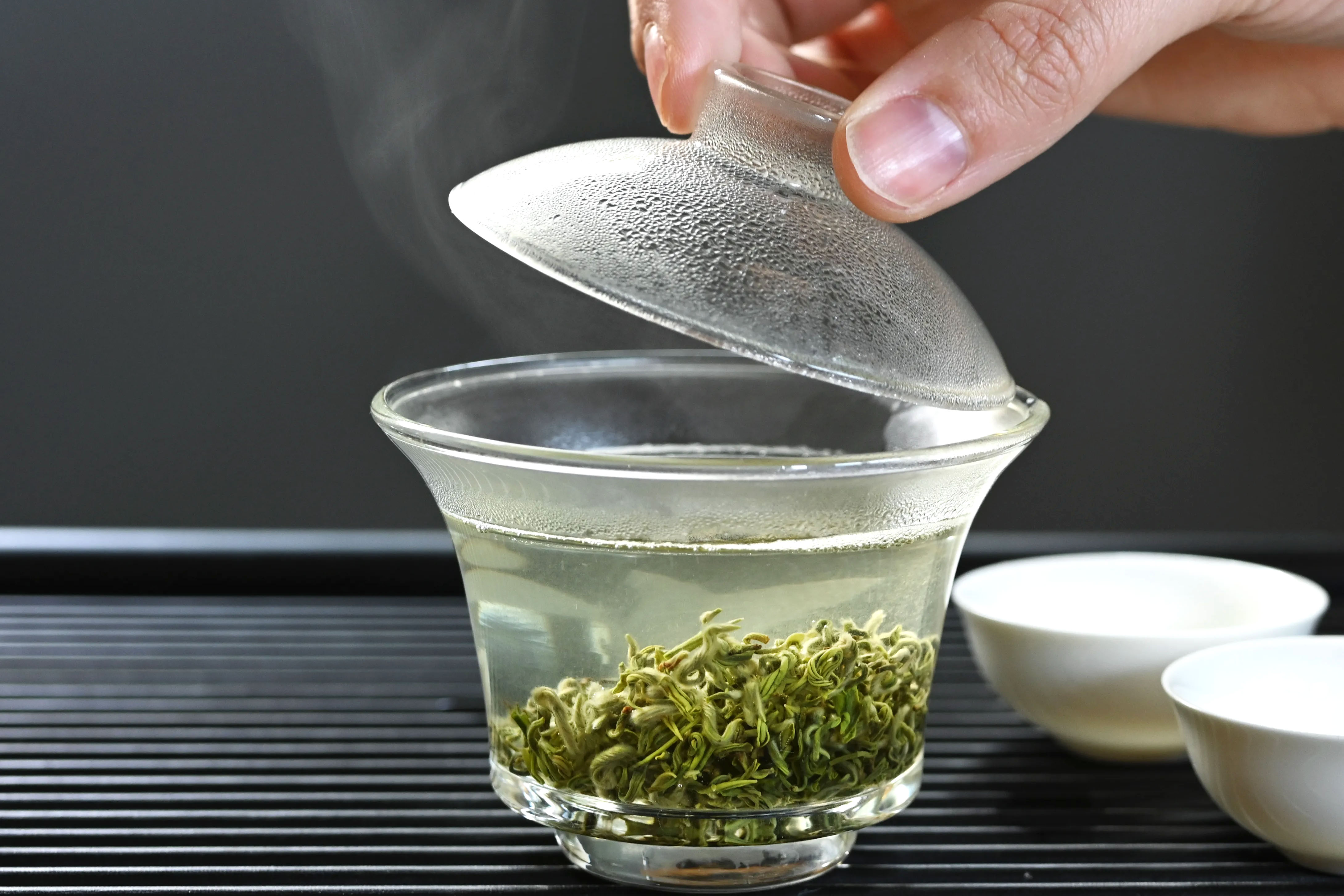
Pour boiling water into your gaiwan or teapot, let it sit for a short while, then discard the water.
This step is important for two reasons. First, a warmed vessel prevents the brewing water from cooling down too quickly, allowing you to maintain better control over the brewing temperature. Second, tea leaves release their wonderful aroma when placed in a preheated vessel, and it would be a shame not to indulge in that experience.
STEP 2) Add the Tea Leaves
Fill your gaiwan or teapot with tea leaves. For green tea, we often use a ratio of 1 gram of tea per 40 ml of water.
STEP 3) Pour the Water and Brew
Use low-mineral or moderately soft water. For most green teas, it is best to use slightly cooled water, around 90°C. Different teas may require slightly different temperatures, however. The same goes for brewing time.
As a starting point, we recommend a first infusion of about 20 seconds.
 STEP 4) Serve the Tea
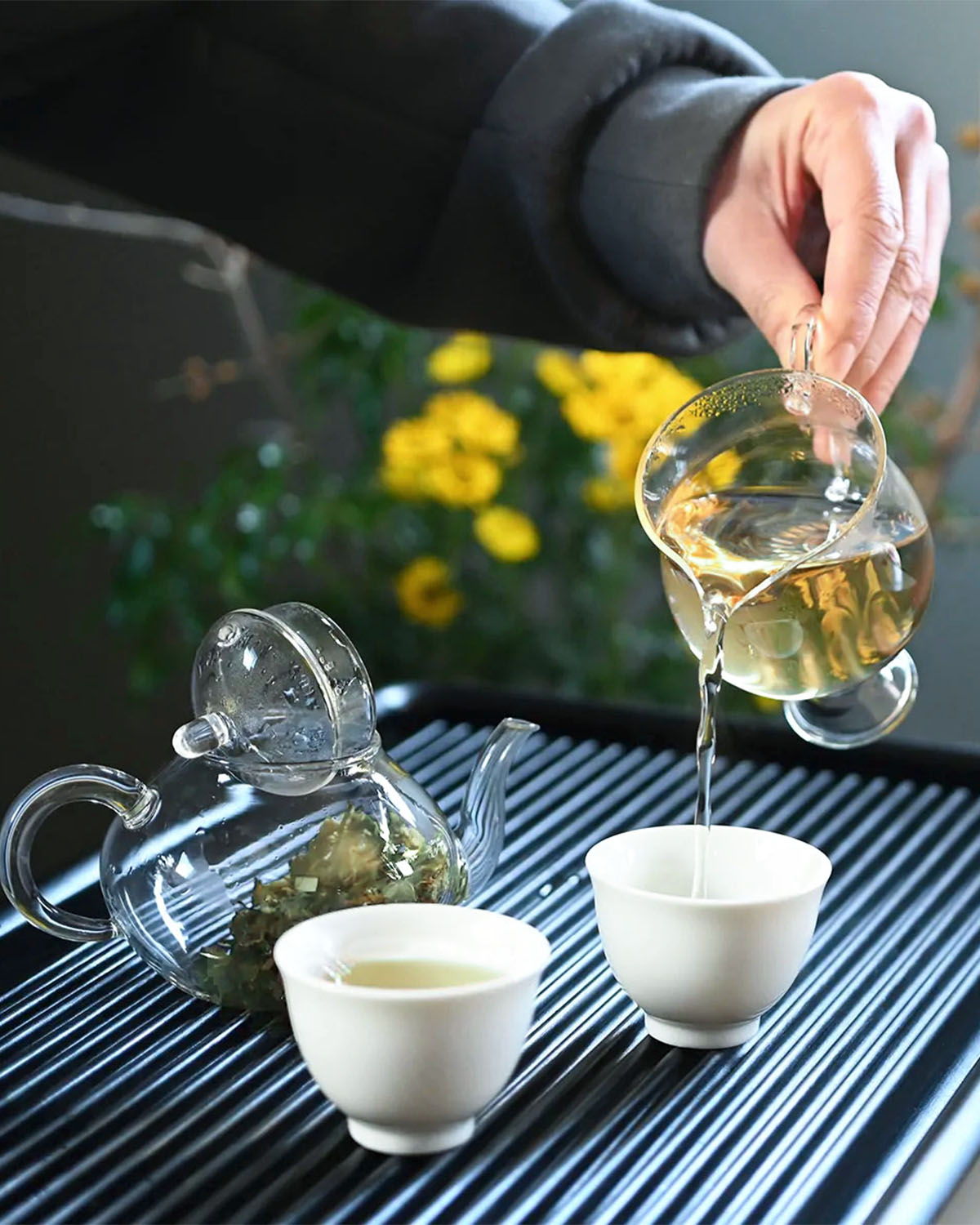
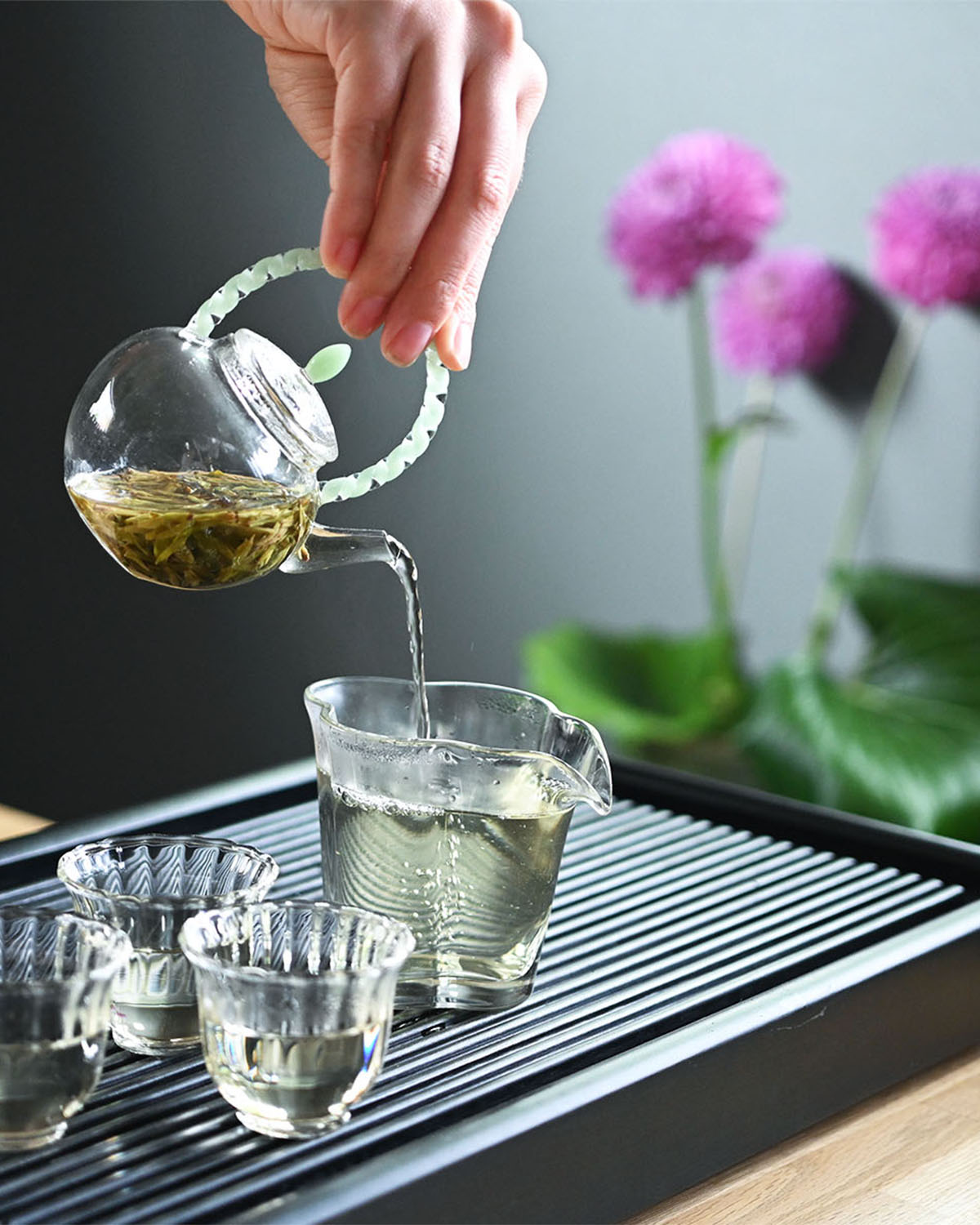
Pour the tea into a pitcher, then serve it into cups. Between brews, leave the lid off your teapot or gaiwan. This helps release excess heat and prevents the tea leaves from continuing to cook and over-extract.
STEP 5) Brew Again
Sazen's green teas stand up remarkably well to repeated infusions and can often be brewed 5–6 times. For the second infusion, use a slightly shorter brewing time. For the remaining infusions, gradually increase the brewing time as the leaves continue to open and release their flavor. The infusions are often collected in a pitcher and enjoyed as a blend. Since each brew has a slightly different character, you can also enjoy them separately to experience how the tea changes over time.
Extra tip:
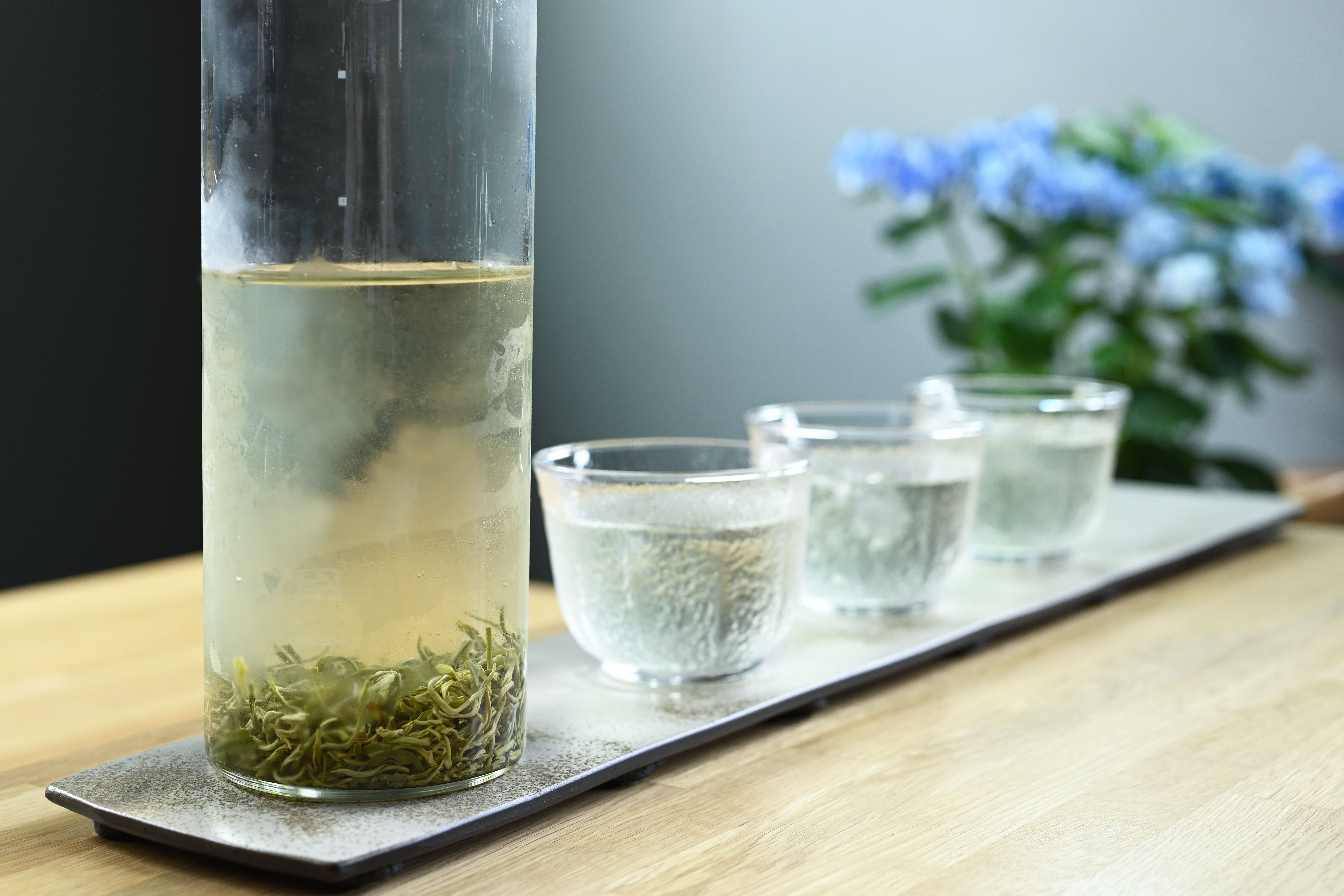
Chinese green tea is especially refreshing as a cold brew, and it feels wonderful to drink in summer. In traditional Chinese medicine, green tea is believed to be a "cooling" beverage because it helps lower body temperature.
Put 6 g of Chinese green tea of your choice into 750 ml of water and brew it overnight.
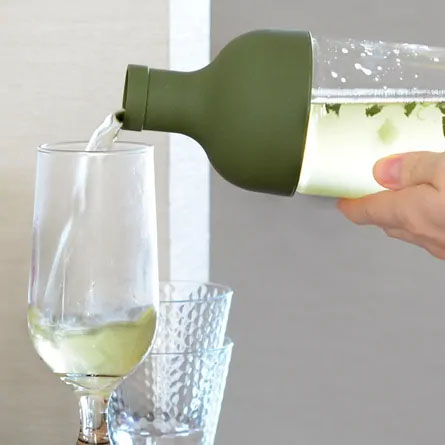
Shaped like a wine bottle, this filter-in cold brew tea bottle is designed to let you enjoy tea with your meals, just like you would with wine. It features a built-in filter in the spout, allowing you to pour directly with ease.
☞ $22.00 / piece
Teaware for Chinese green tea
 There is a shared understanding among tea lovers that, with care and attention, great tea can be made anywhere and with almost anything. At the same time, certain tools can make the process easier and allow the tea to shine.
A simple setup usually includes a brewing vessel, a pitcher, and cups. Each plays a role: the vessel for extraction, the pitcher for control, and the cup for perception.
MATERIALS
The material of the brewing vessel influences how tea is expressed.
Clay
Clay teapots tend to soften texture and round out edges. This can be desirable for more robust teas, but for green tea it may obscure clarity and mute delicate aromatics. Because of this, clay is often better suited for more expressive or oxidized teas.
Porcelain and glass
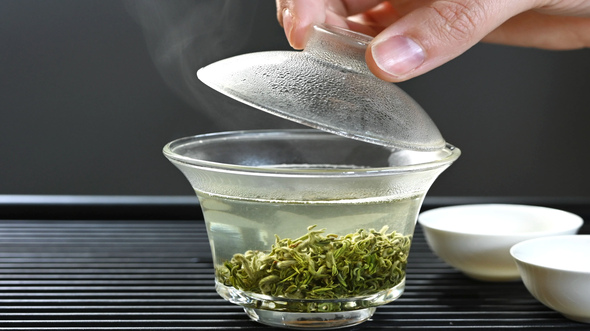
Porcelain and glass are neutral materials. They do not absorb flavor and allow the tea to express itself without interference. This makes them especially well suited for green tea, where clarity is essential. Glassware is especially recommended for Chinese green teas, as these teas often have visually striking leaves that open beautifully during brewing. A glass vessel allows us to fully appreciate this process, watching the leaves open and come to life in the water.
RECOMMENDED TEA WARE FOR CHINESE GREEN TEA
Gaiwan
If we had to recommend just one vessel for green tea, the gaiwan would be the best place to start exploring Chinese green tea. While it may take a few tries to become comfortable using it, it is actually one of the simplest tools for controlling the brew. A gaiwan offers excellent control over pouring speed and steeping time, and its open shape gives even larger tea leaves plenty of space to unfurl and fully open.
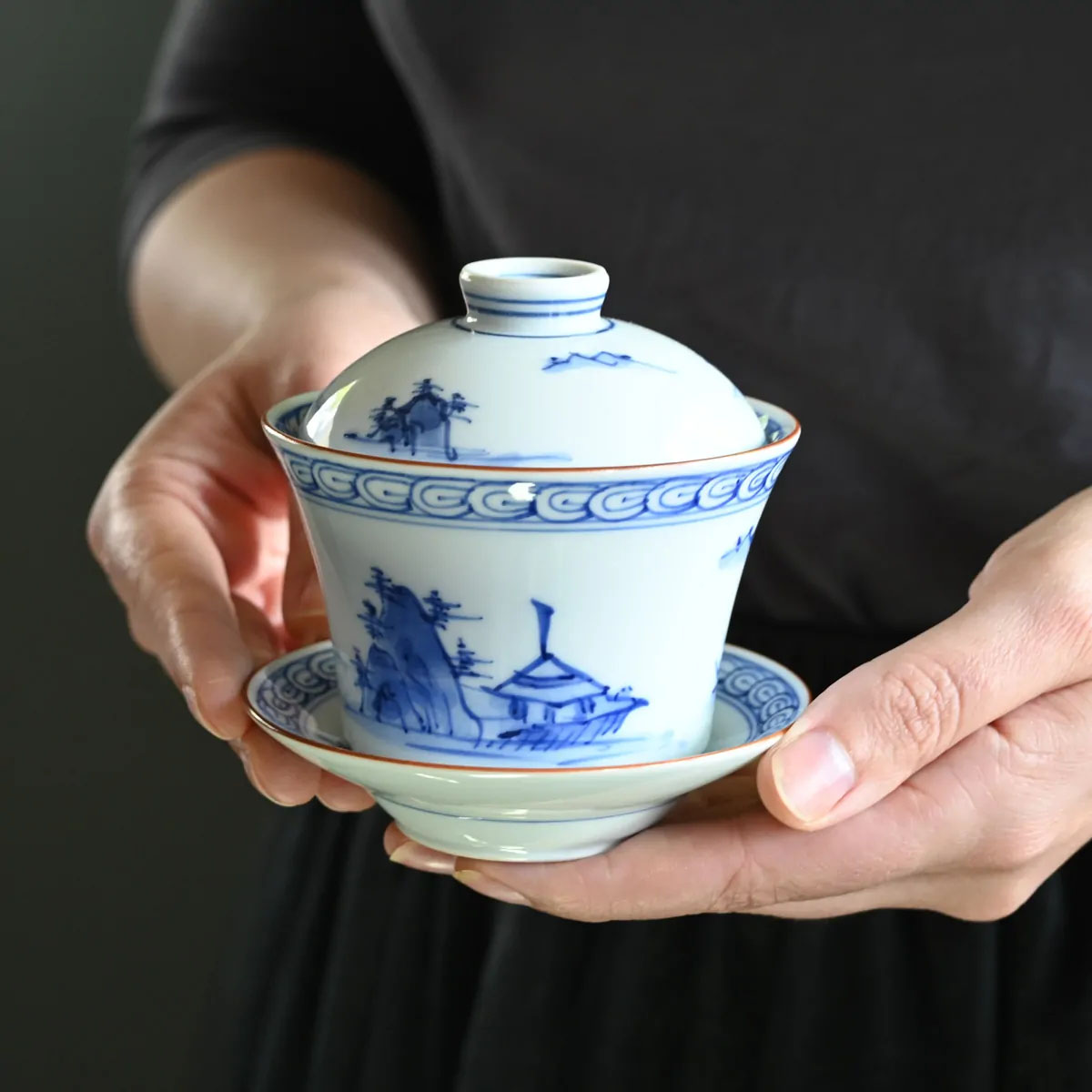
This handmade and hand-painted Hasamiyaki porcelain gaiwan features a serene landscape motif of mountains and water. Hasamiyaki porcelain originates from the town of Hasami in Japan, with a history spanning over 400 years.
☞ $66.00 / piece
Handled teapots
A handled teapot with a relatively fast pour is another excellent vessel for brewing green tea. A capacity of around 150 ml is suitable for most green teas, offering a good balance between control and ease of use.
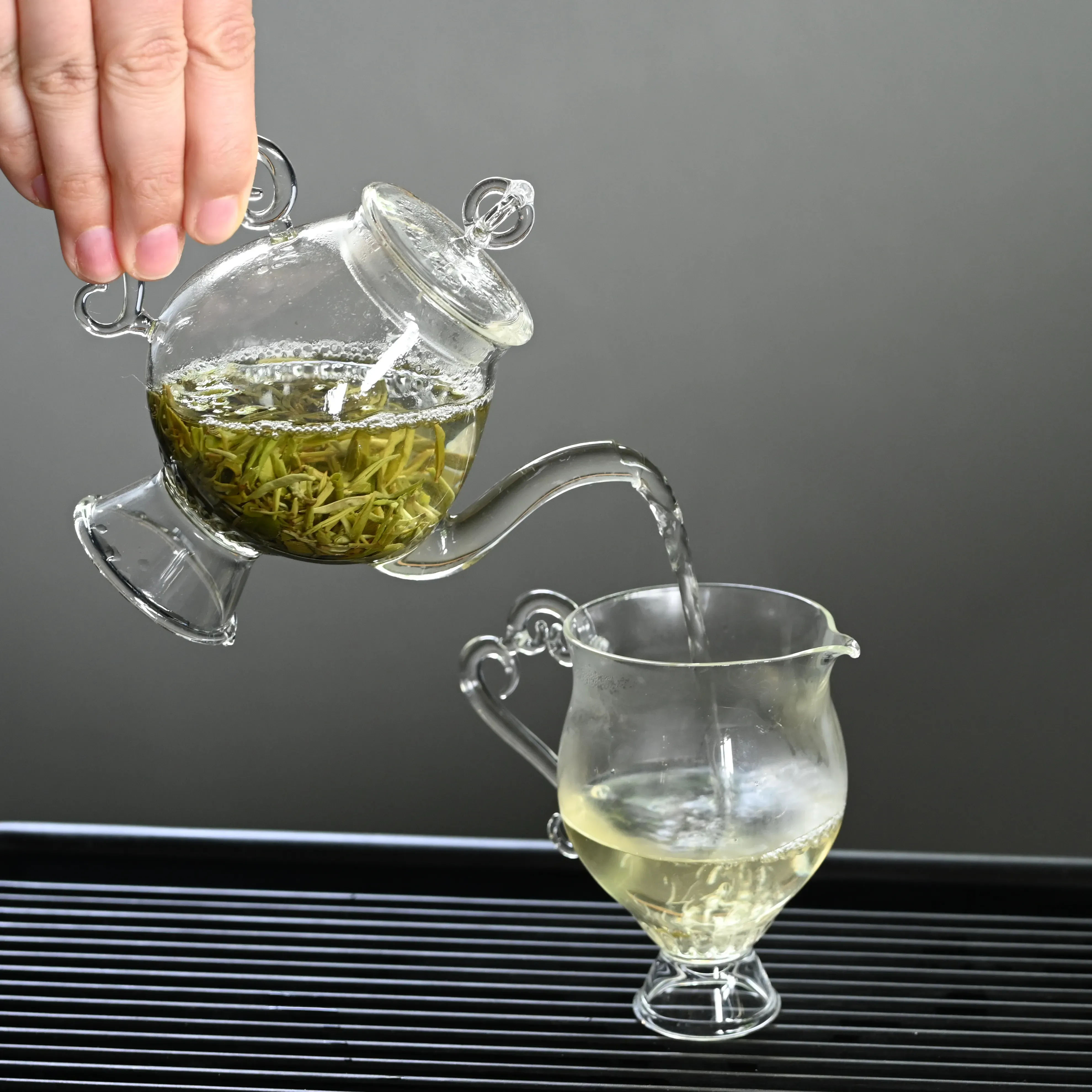
Delicately crafted glass teapot featuring a built-in glass strainer and a precise finish for a beautiful pour.
☞ $88.00 / piece
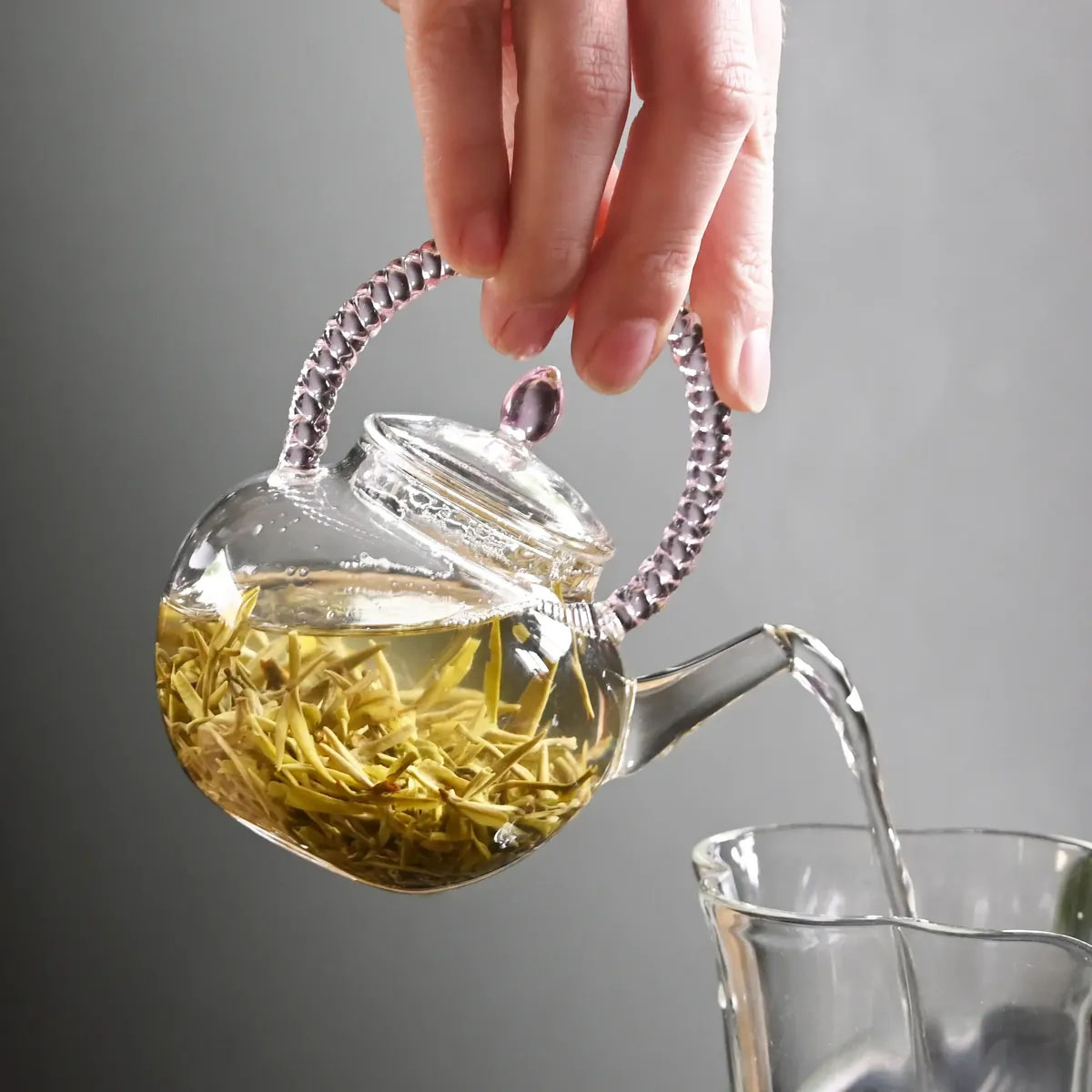
This teapot features a built-in glass strainer and a top handle that rests comfortably in the hand, making the pouring feel smooth and effortless.
☞ $49.50 / piece
Pitcher
The pitcher is mainly used for collecting the brewed tea or for preparing a larger amount when serving guests. The size is up to you, but it is a good idea to match it to the capacity of your teapot.
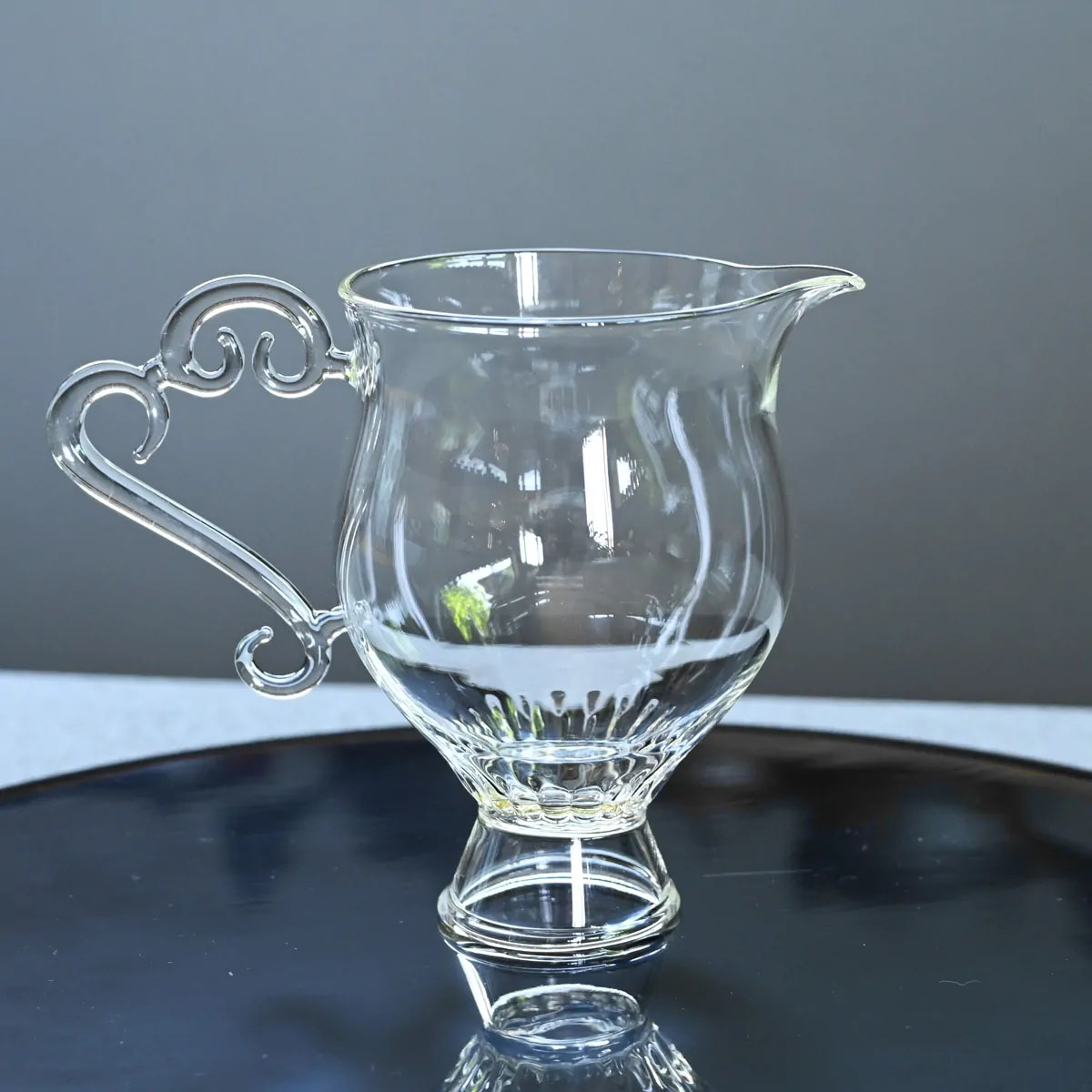
Glass tea pitcher with delicate details and beautiful pour.
☞ $66.00
Tea Cup
In many tea cultures, tea cups tend to be on the larger side. In Chinese tea sessions, however, smaller cups are preferred.
It is believed that a smaller cup allows the aroma to be appreciated more fully, while smaller sips help us focus on the tea and its unique character. There is also a strong emphasis on caring for guests. When a guest empties their cup, it is refilled right away. This creates a sense of constant attentiveness and allows the tea to be enjoyed while it is still steaming hot. Hakuji Hira Cup is a perfect size and shape for Chinese green tea rituals.
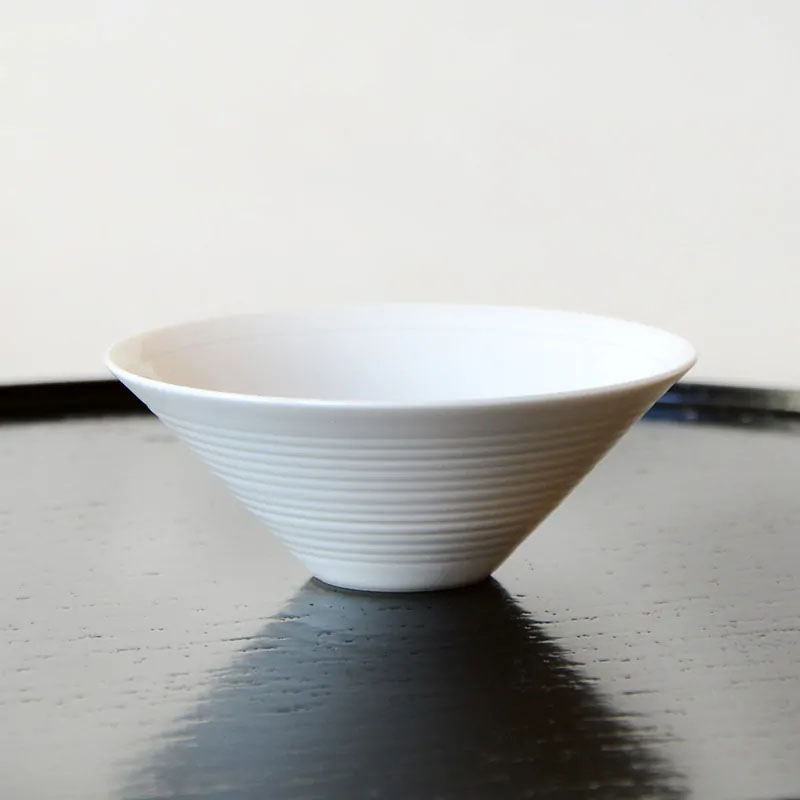
Handmade porcelain cup by Kawai Masamitsu known for his beautiful, elaborate style and his teaware's sophisticated, precise finish.
☞ $27.50 / piece
Tea Tray
Although a tea tray can be replaced with any tray or even a table runner, it is one of the key elements that makes a tea session both easy and immersive. In traditional Chinese tea sessions, water is often poured over the teapot to keep it warm and stray droplets are part of the ritual. It allows us to handle water freely without worrying about spills, making the process feel more fluid, natural, and relaxed.
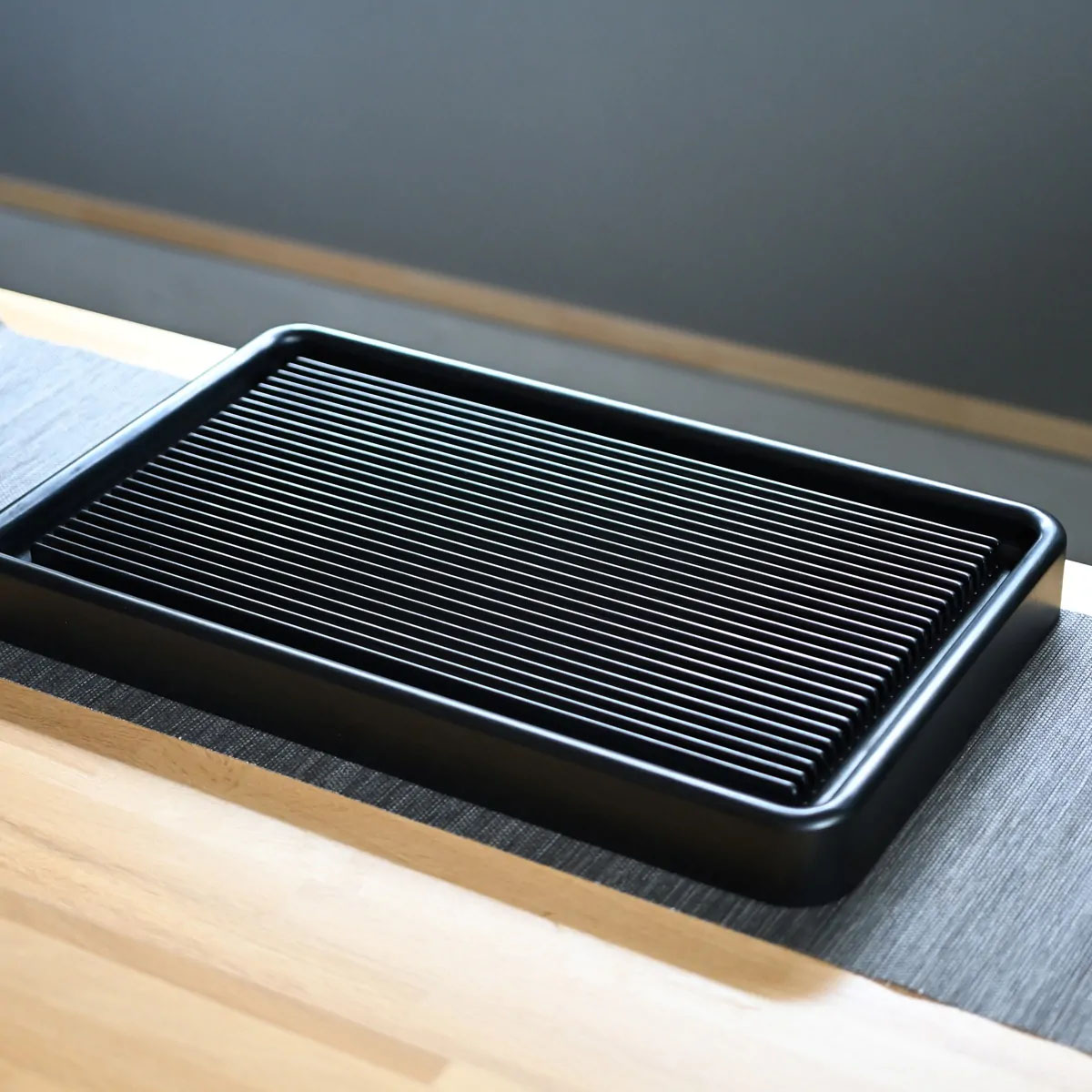
This tray is made of bakelite - thousands of layers of fine, silk-like cotton gauze compressed under high pressure to form a dense, durable material unlike any ordinary wood. The tray features a built-in water storage system that collects excess water during use. A removable plastic drainage pipe helps guide the water away, making cleanup easy and practical.
☞ $528.00 / piece
Since the appearance of the tea leaves is an important part of a Chinese green tea session, the leaves are often presented before brewing on small ceramic or bamboo display plates. This gives both the host and guests an opportunity to appreciate the shape, color, and aroma of the dry leaves. To transfer and display the tea, we use a small tea tool called a chaka.
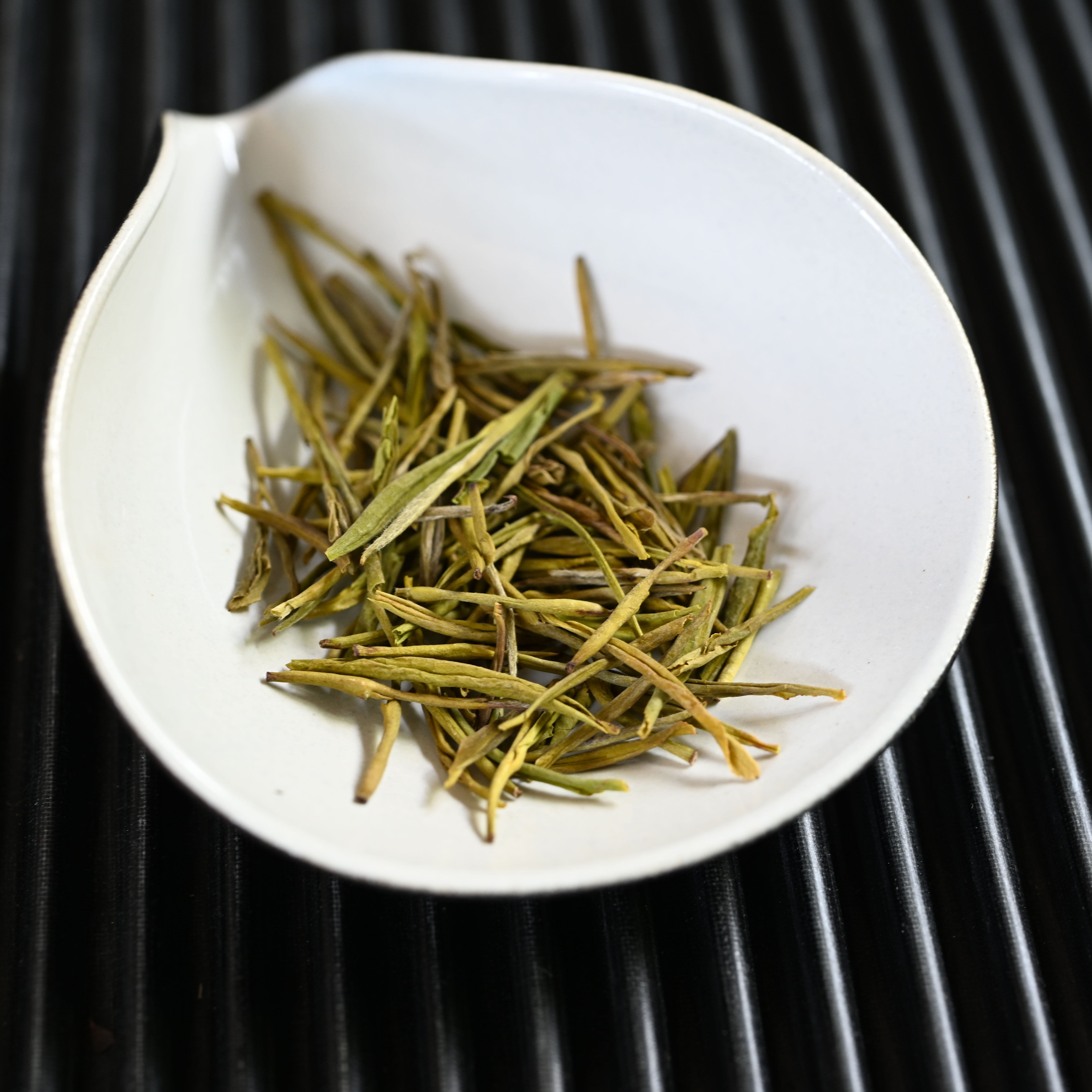
Shinichi Fuchinogami's artwork, designed with the supervision of master Morooka, a Chinese tea specialist and holder of the highest grade tea master certificate (高級茶藝技師) issued by China.
☞ $38.50 / piece
Green Tea Storage Guidelines
Green tea is best enjoyed fresh, and proper storage is key to preserving its delicate aroma and taste. Because Chinese green tea is minimally oxidized, it is especially sensitive to air, light, heat, and moisture. Even small changes in storage conditions can noticeably affect its quality over time.
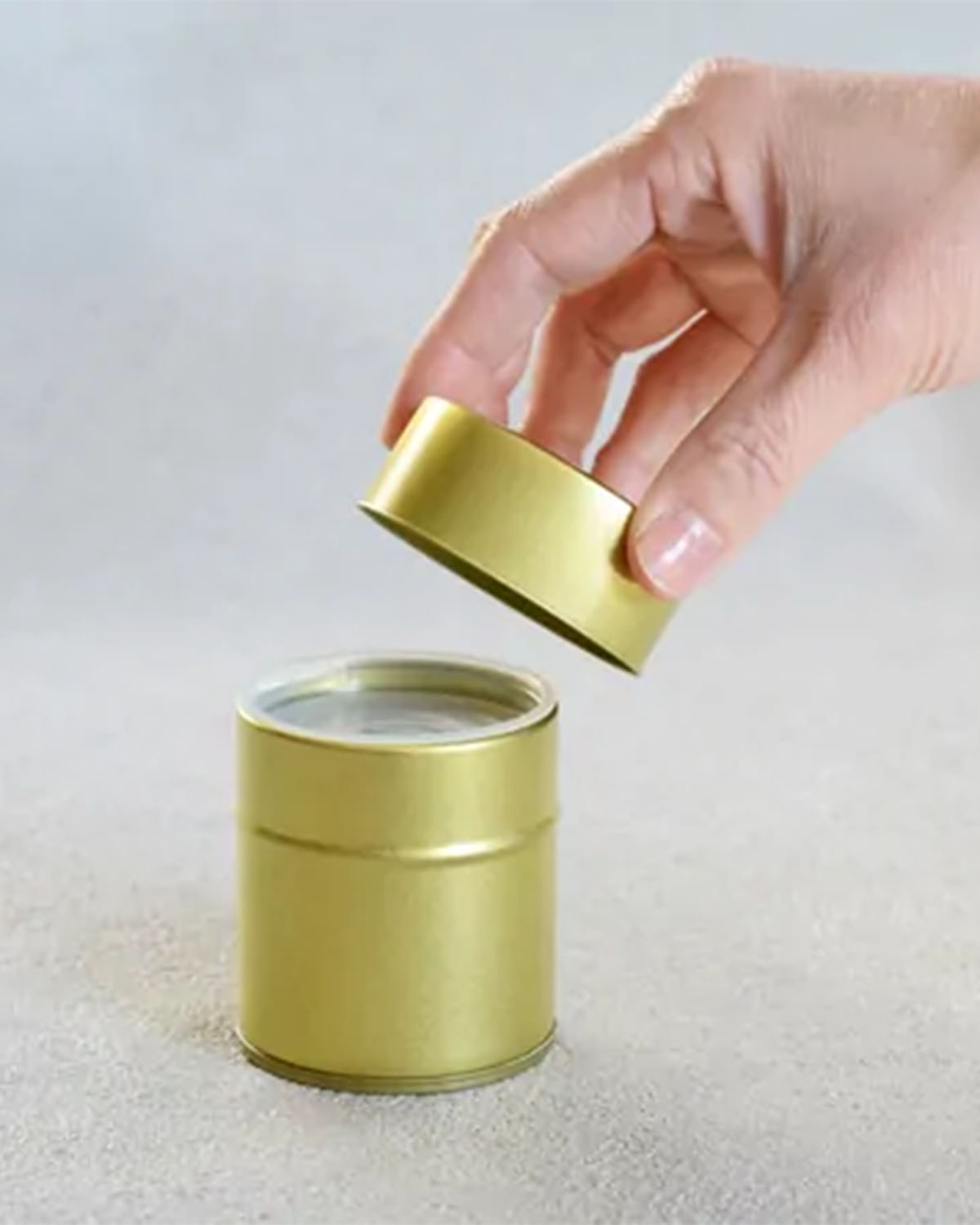 To keep your tea in good condition, a few simple principles are worth following:
- Use an airtight container
Store green tea in a well-sealed tin, jar, or pouch. This protects it from oxygen, which slowly flattens aroma and flavor. - Keep it away from light
Choose an opaque container and store it in a dark place. Light exposure can degrade the freshness of the leaves. - Store in a cool, stable environment
Avoid heat sources such as stoves, ovens, or direct sunlight. A kitchen cabinet or pantry is usually ideal. - Avoid moisture and humidity
Tea easily absorbs moisture, which can damage the leaves and speed up deterioration. - Keep away from strong odors
Tea readily absorbs surrounding smells, so it should not be stored near coffee, spices, or strongly scented foods.
Some tea drinkers also store premium green teas in the refrigerator. This can help preserve freshness, but only if done carefully: the tea must be completely airtight and moisture-proof, and it should be allowed to return to room temperature before opening to avoid condensation forming on the leaves.
As a general guideline, green tea is best enjoyed relatively fresh—ideally within several months to about a year of production, when its aroma is still vivid and lively.
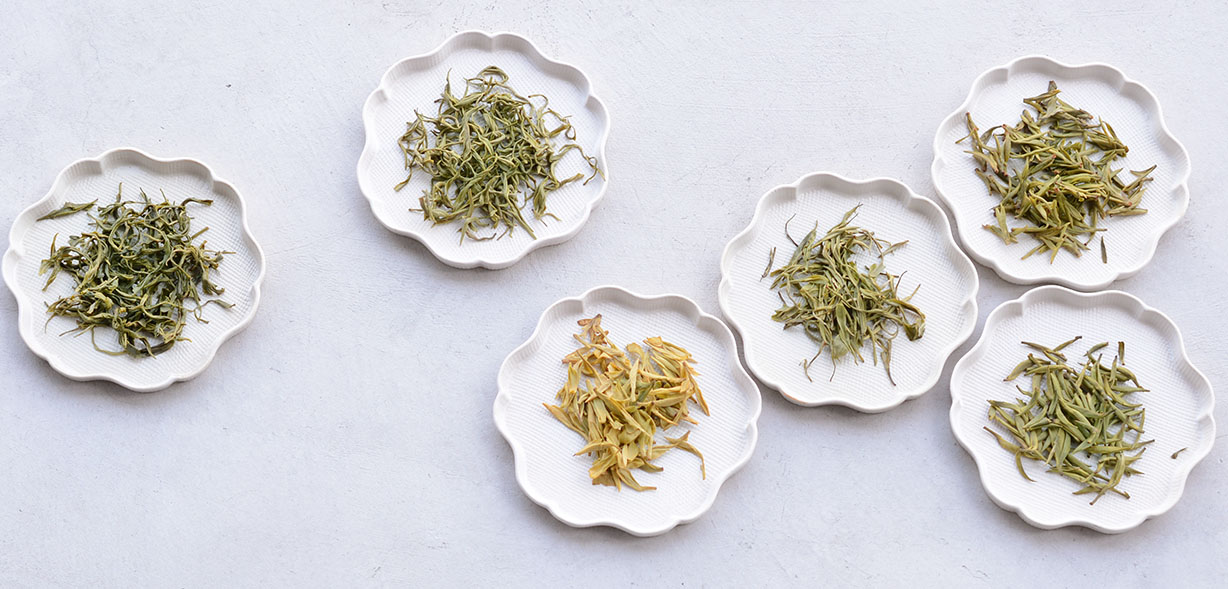
For many tea drinkers outside China, green tea is often seen as a single style. In reality, it is a vast world of regional traditions, landscapes, and flavors. From misty mountains in Zhejiang to historic tea gardens in Sichuan, each tea tells a slightly different story. Exploring Chinese green tea is not simply about discovering a new drink—it is about discovering the remarkable diversity hidden within China's oldest and most enduring tea tradition.
Explore our full selection of Chinese green teas HERE!
Sources
中国茶の教科書 ISBN978-4-416-81283-9
中国茶で、おとな時間 ISBN-13 : 978-4334952877
中国茶図鑑 ISBN-13 : 978-4166601363
中国茶のこころ 茶味的麁相 ISBN-13 : 978-4044002473